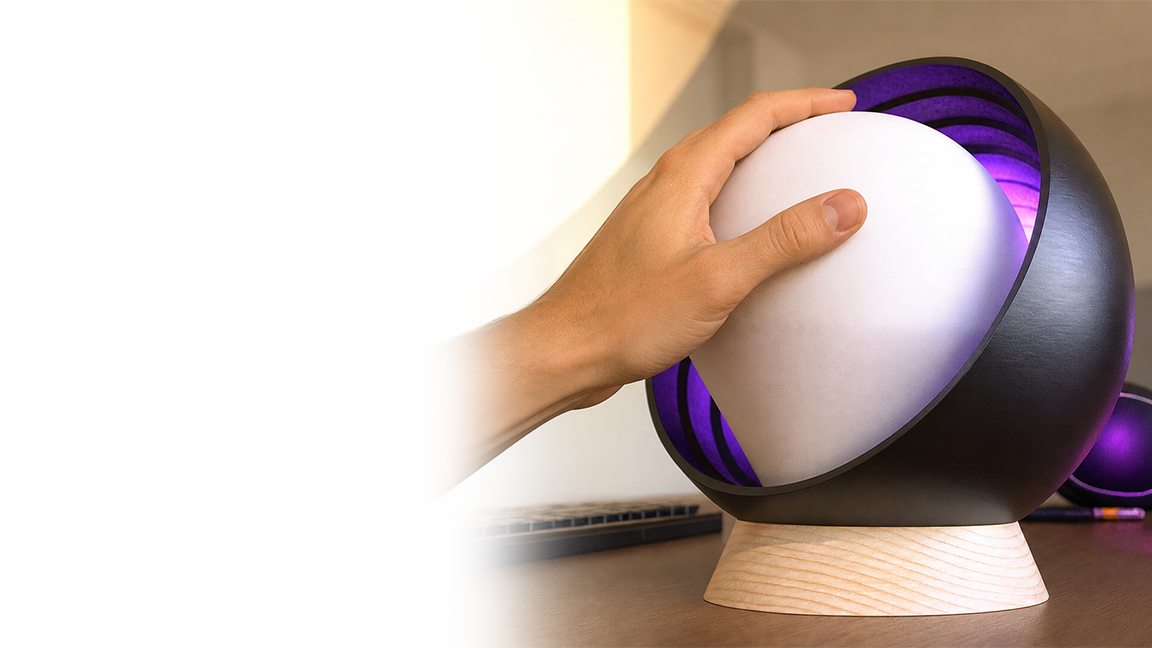
Serenity Sphere
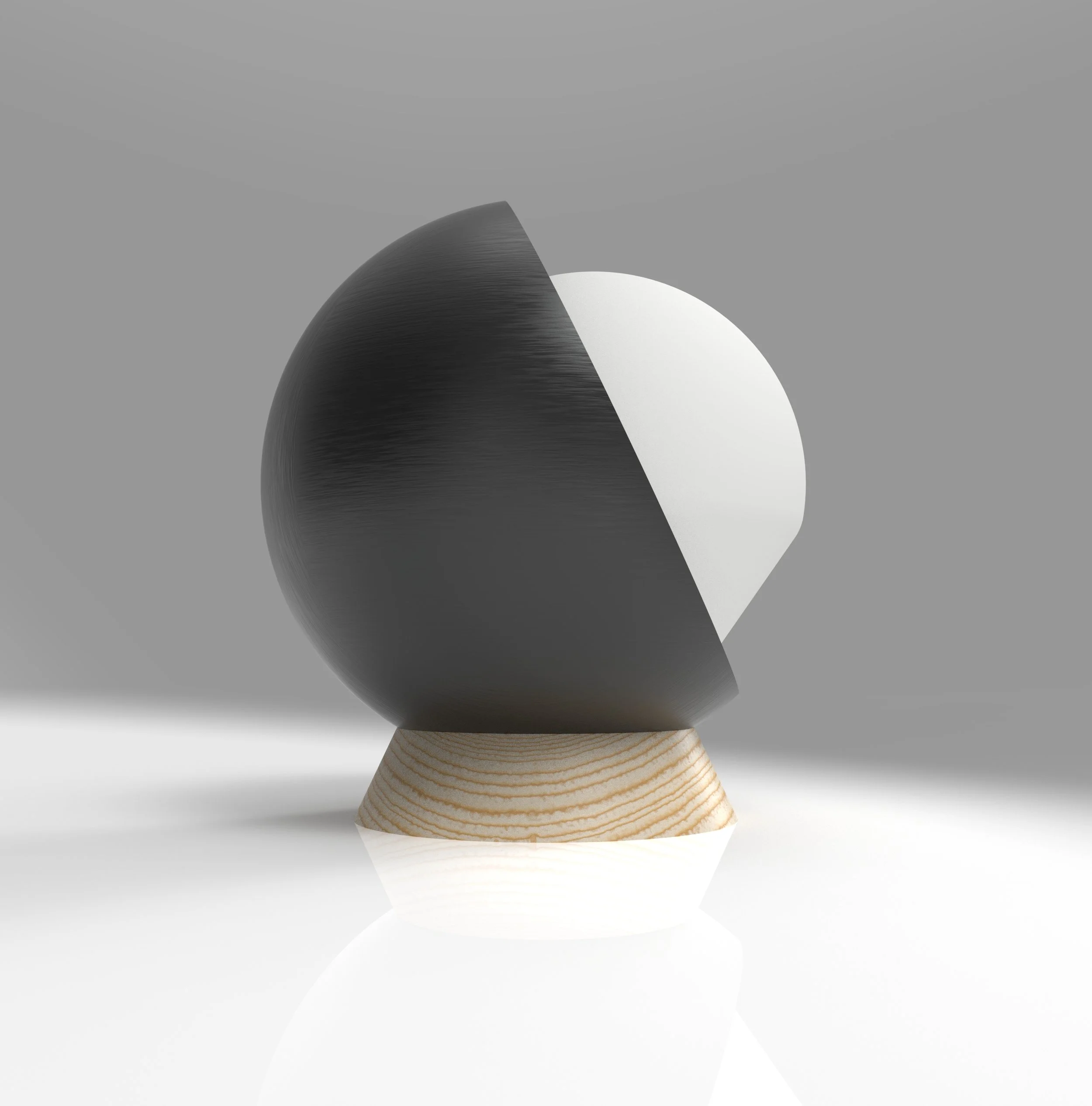
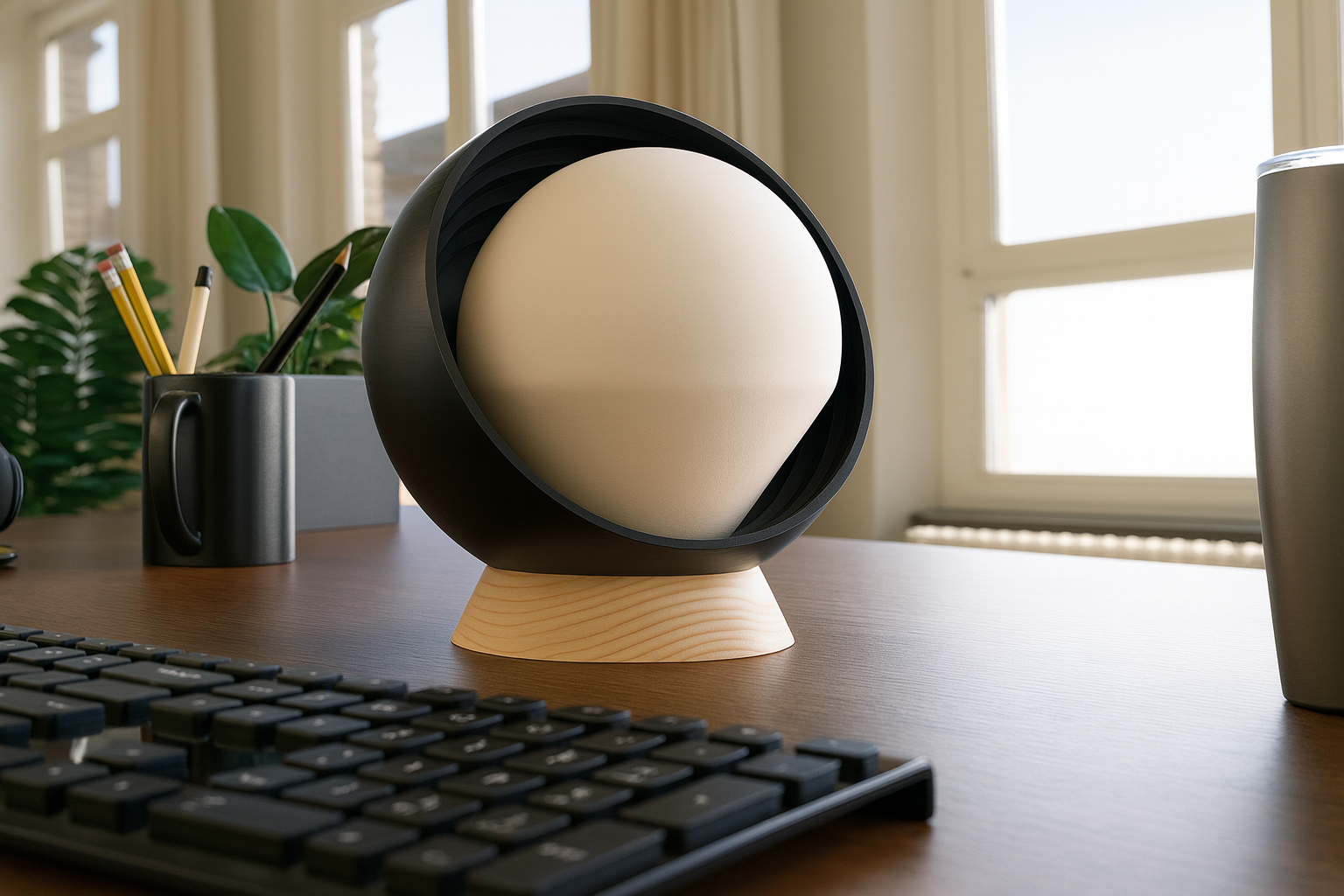
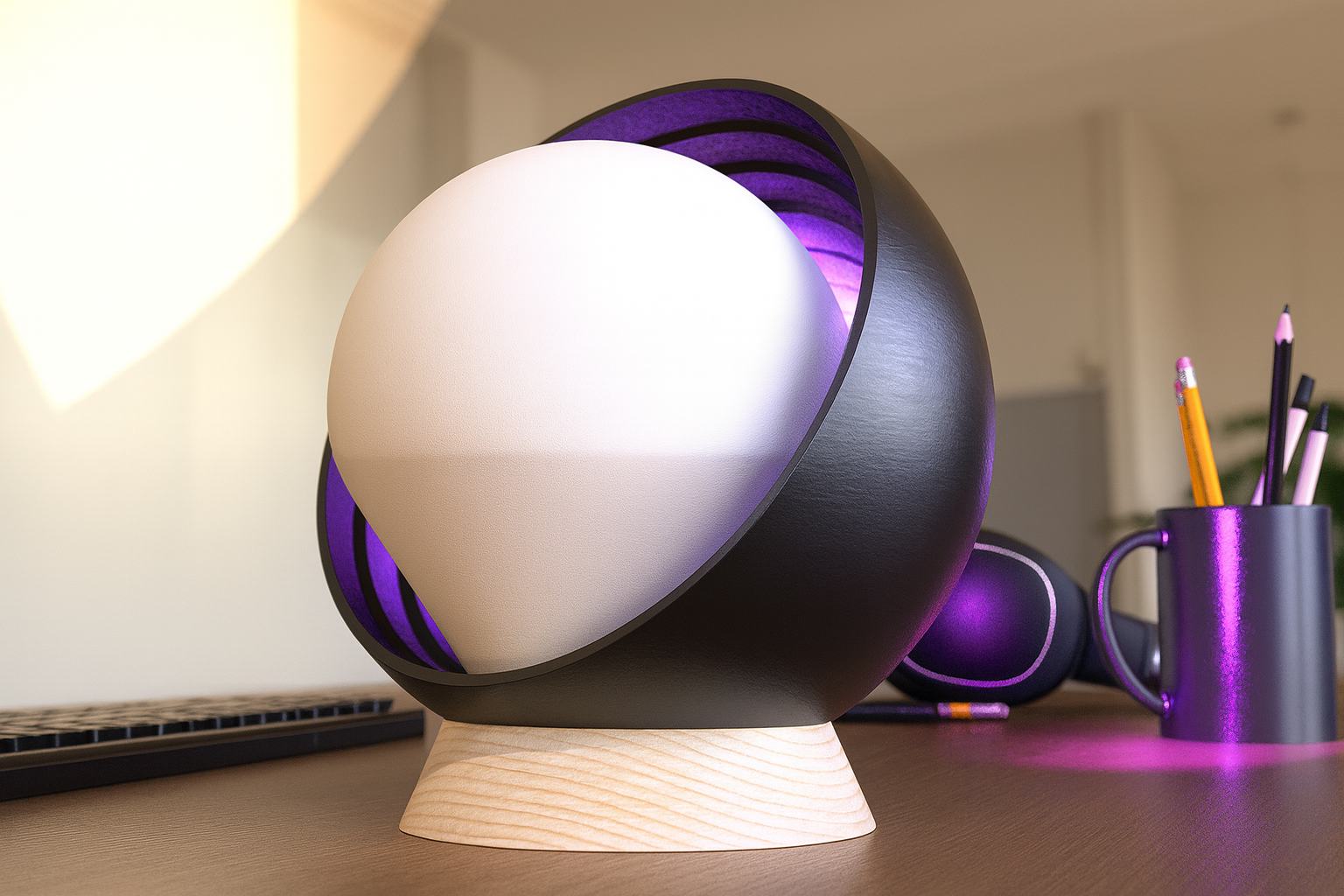
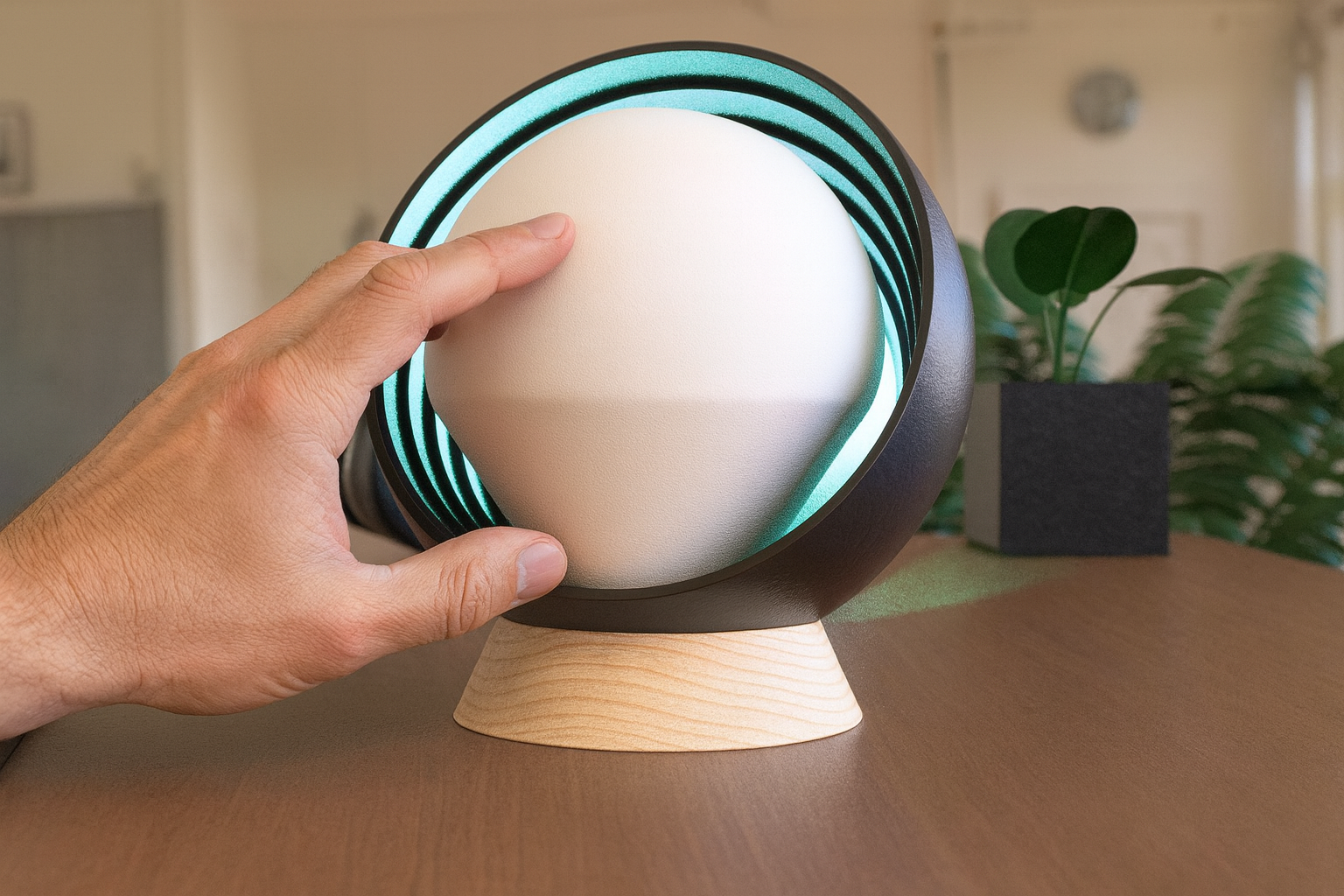
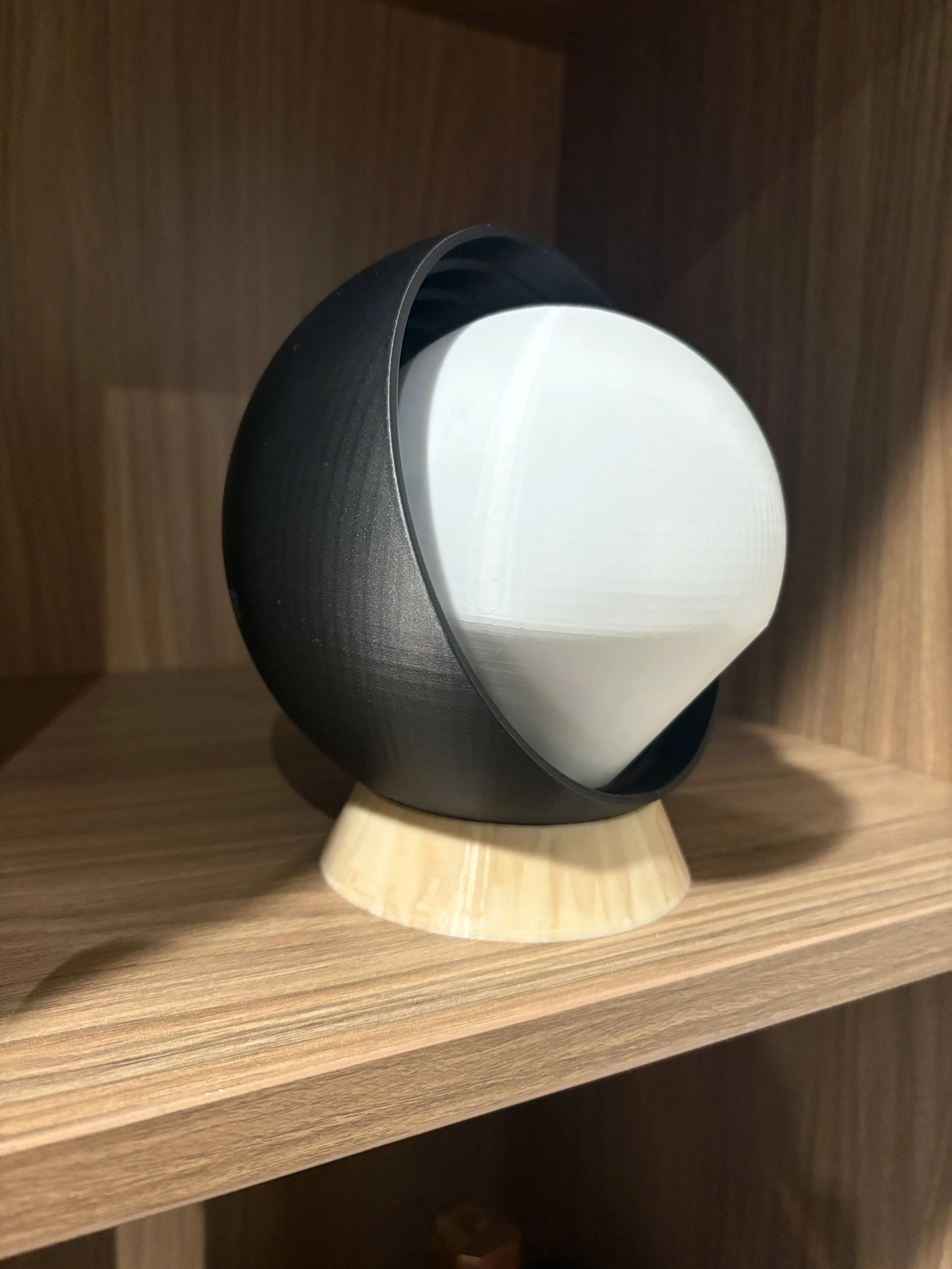
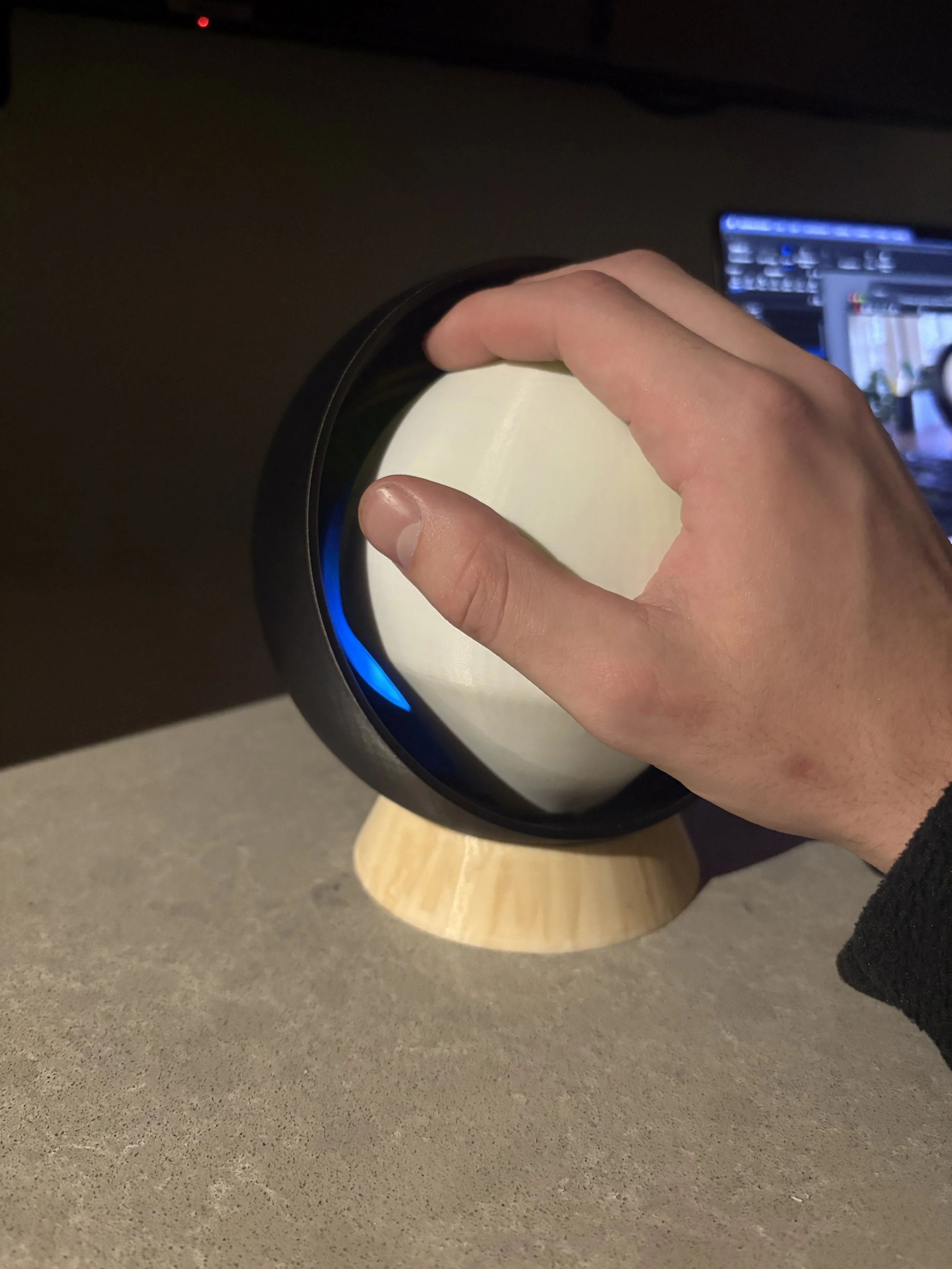
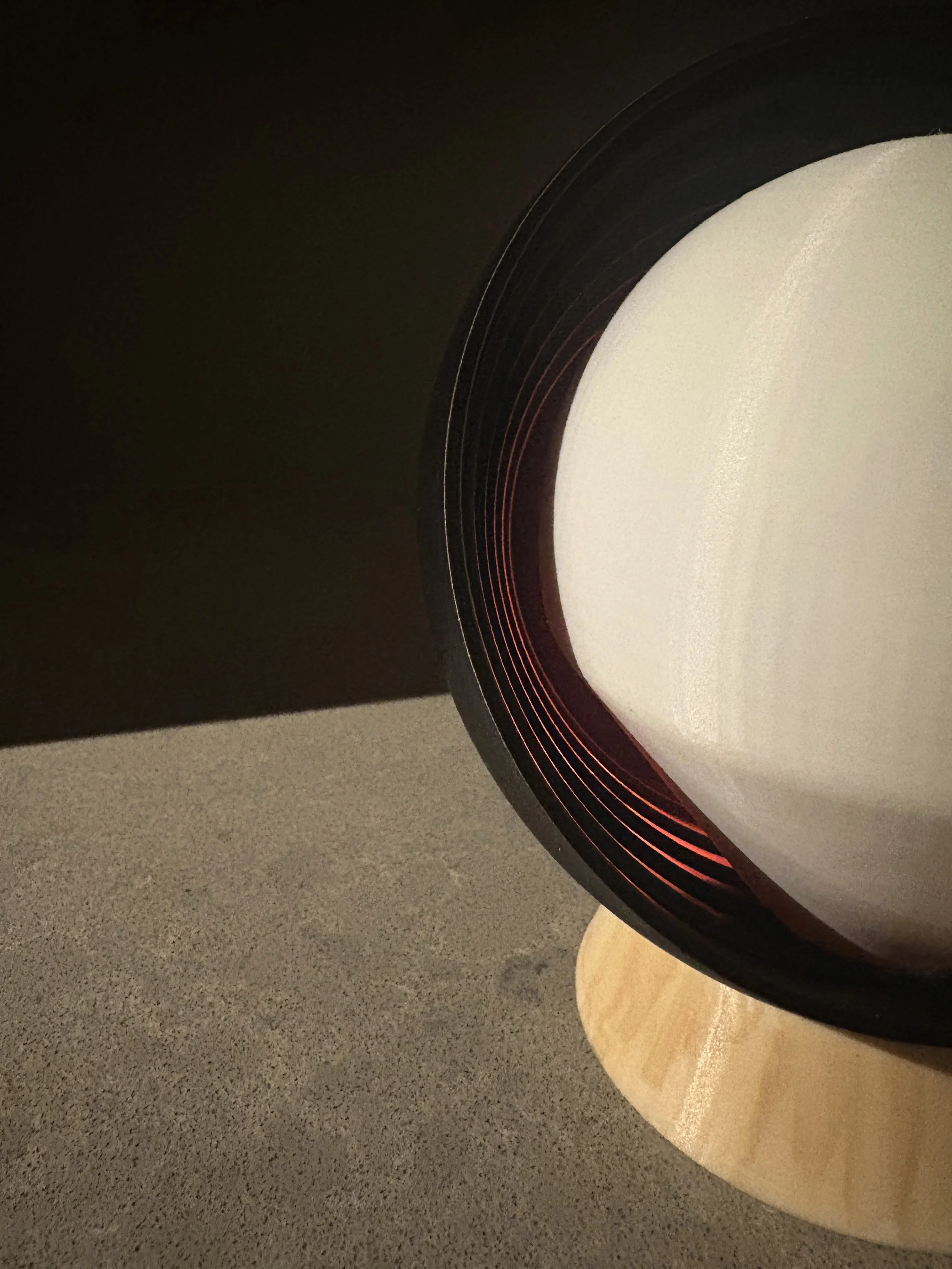
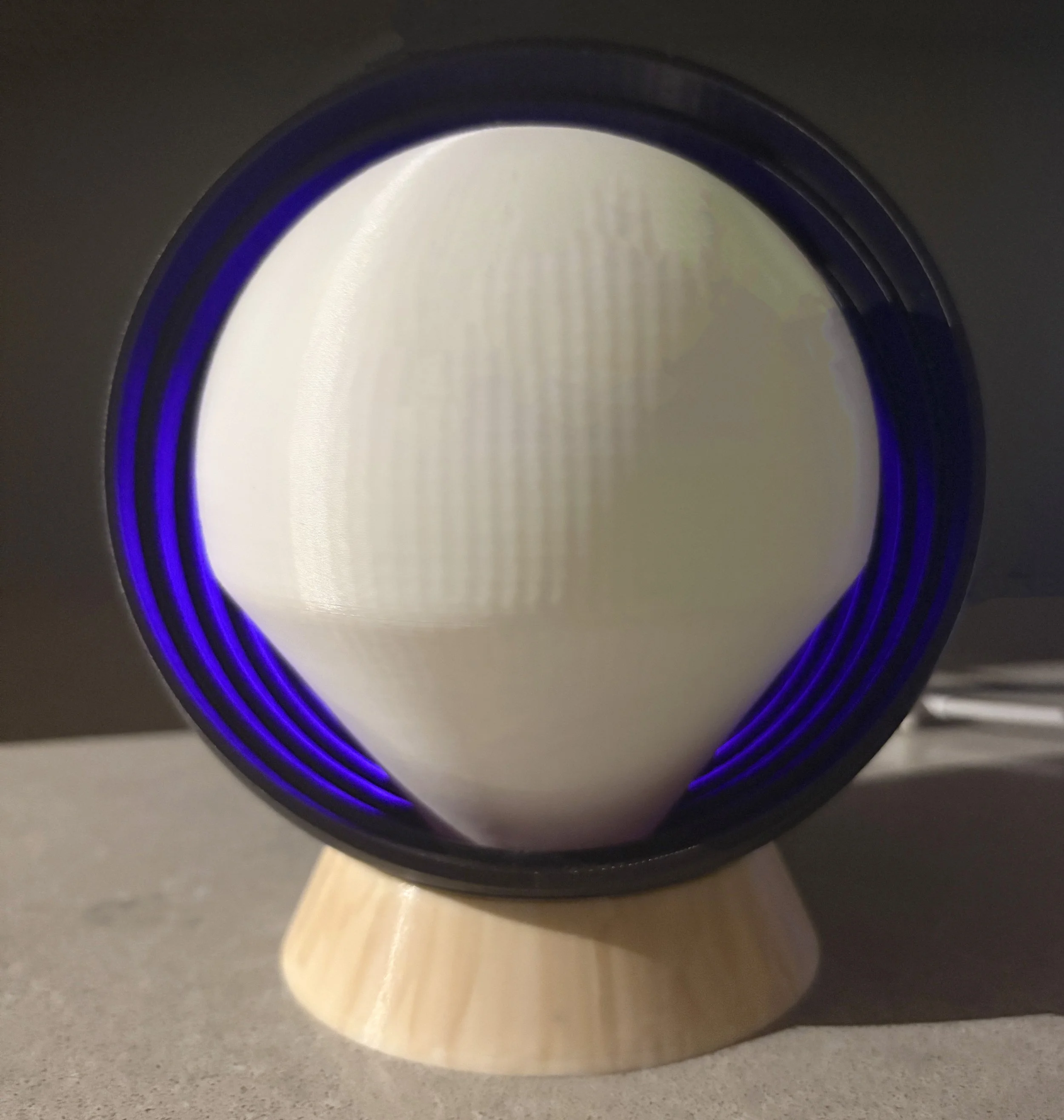
Serenity Sphere is a desktop ambient light device that uses touch and gentle illumination to help guide calm, steady breathing.
Duration - 5 weeks
Skills Used - Research & Usability Analysis, Analog Sketching, Prototyping, CAD, Coding & Circuitry, Keyshot
Project Goals
Create a device that, at its core, explores how ambient light, zen form, and simple interactions can support a healthier study routine.
Modern study environments often prioritize productivity but neglect emotional regulation.
Many students face demanding academic schedules, digital overload, and long hours at their desks.
Conditions like these can lead to shallow breathing, stress, and loss of mental clarity.

Research Analysis
Preliminary Idea
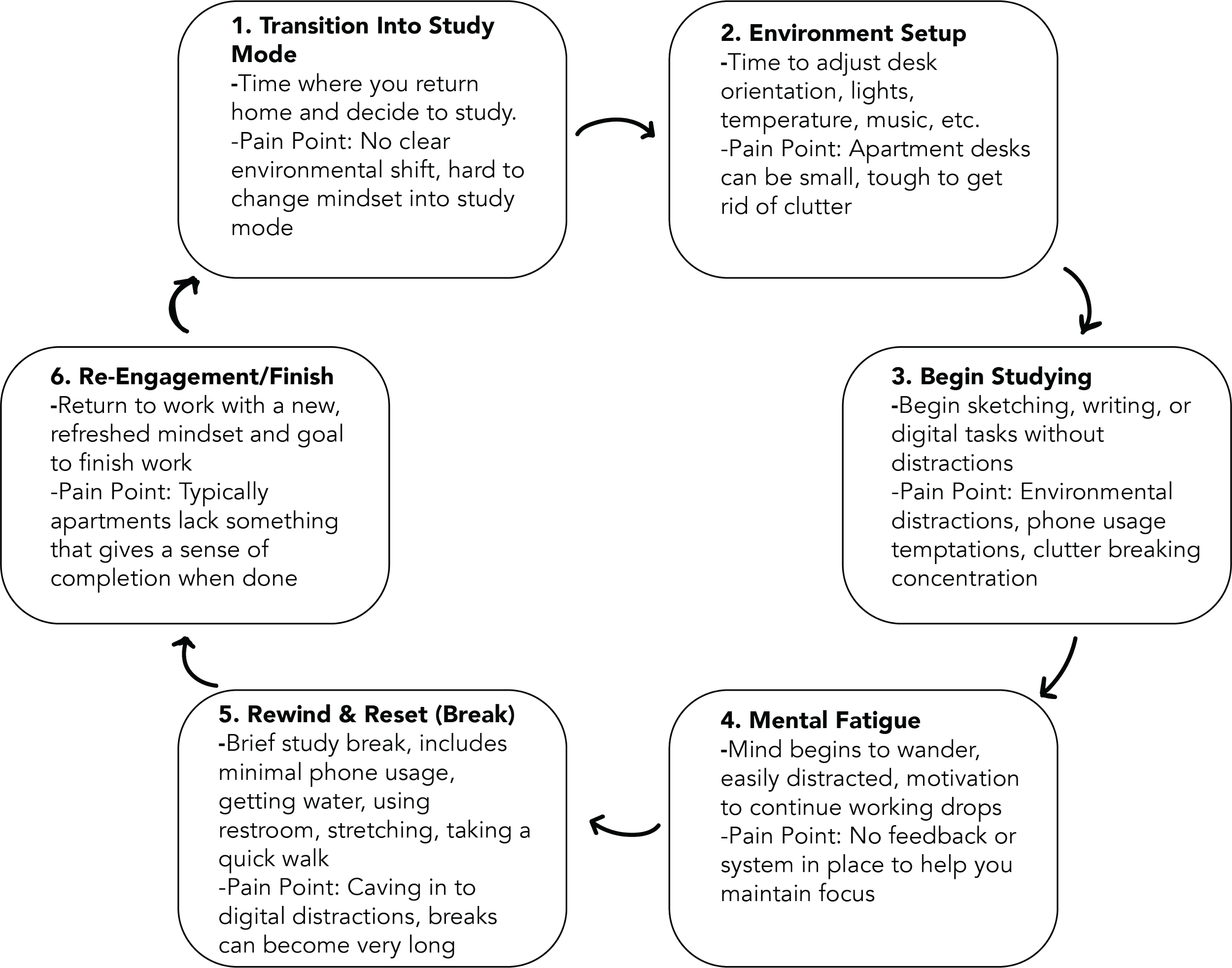
College students often feel stressed and distracted while studying at home. My proposal suggests a touch-activated desk device that uses a slowing pulsing light to guide breathing and promote calm and focus.
Environment Pain-points
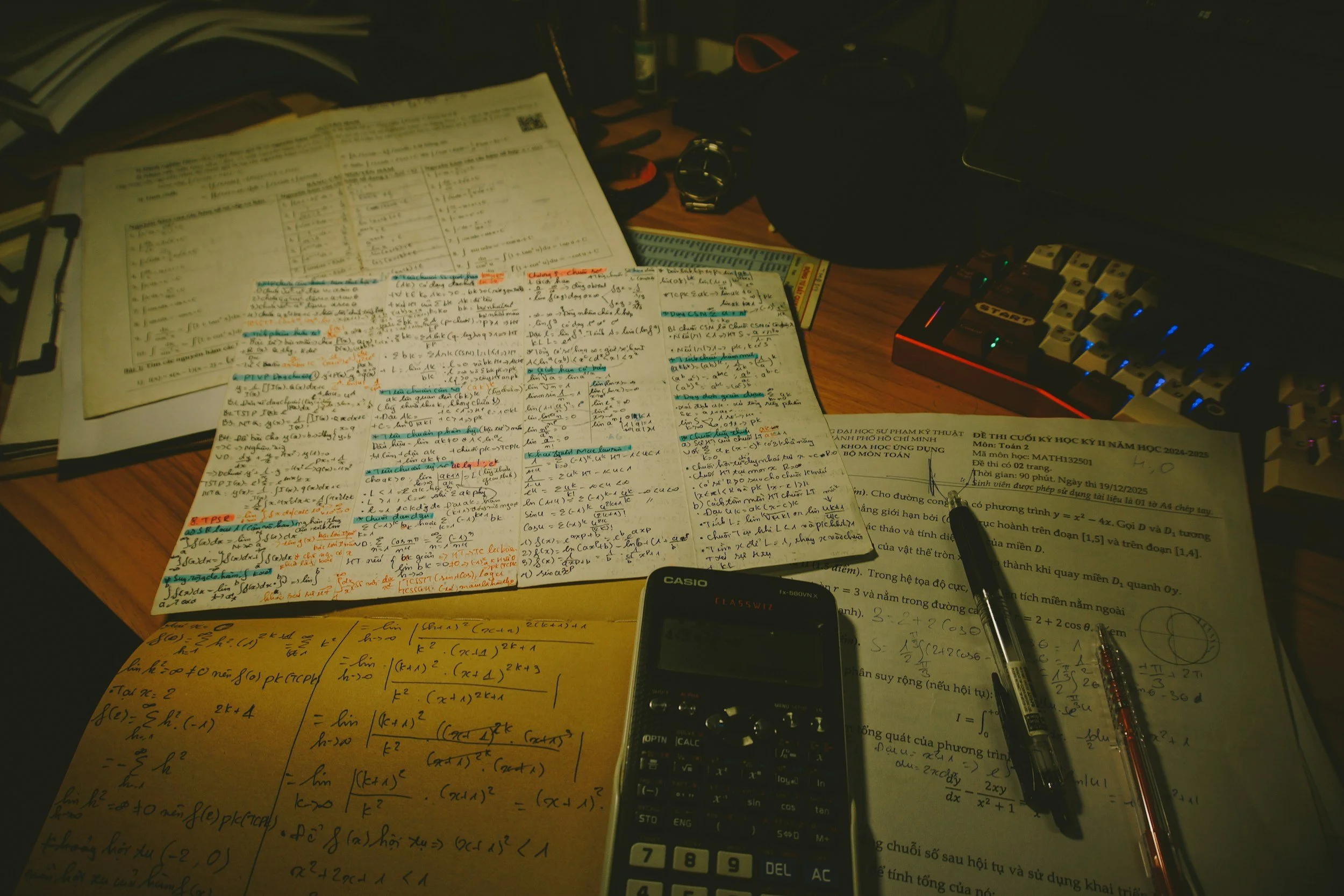
Can be poorly lit
Cluttered
Easily Distractible
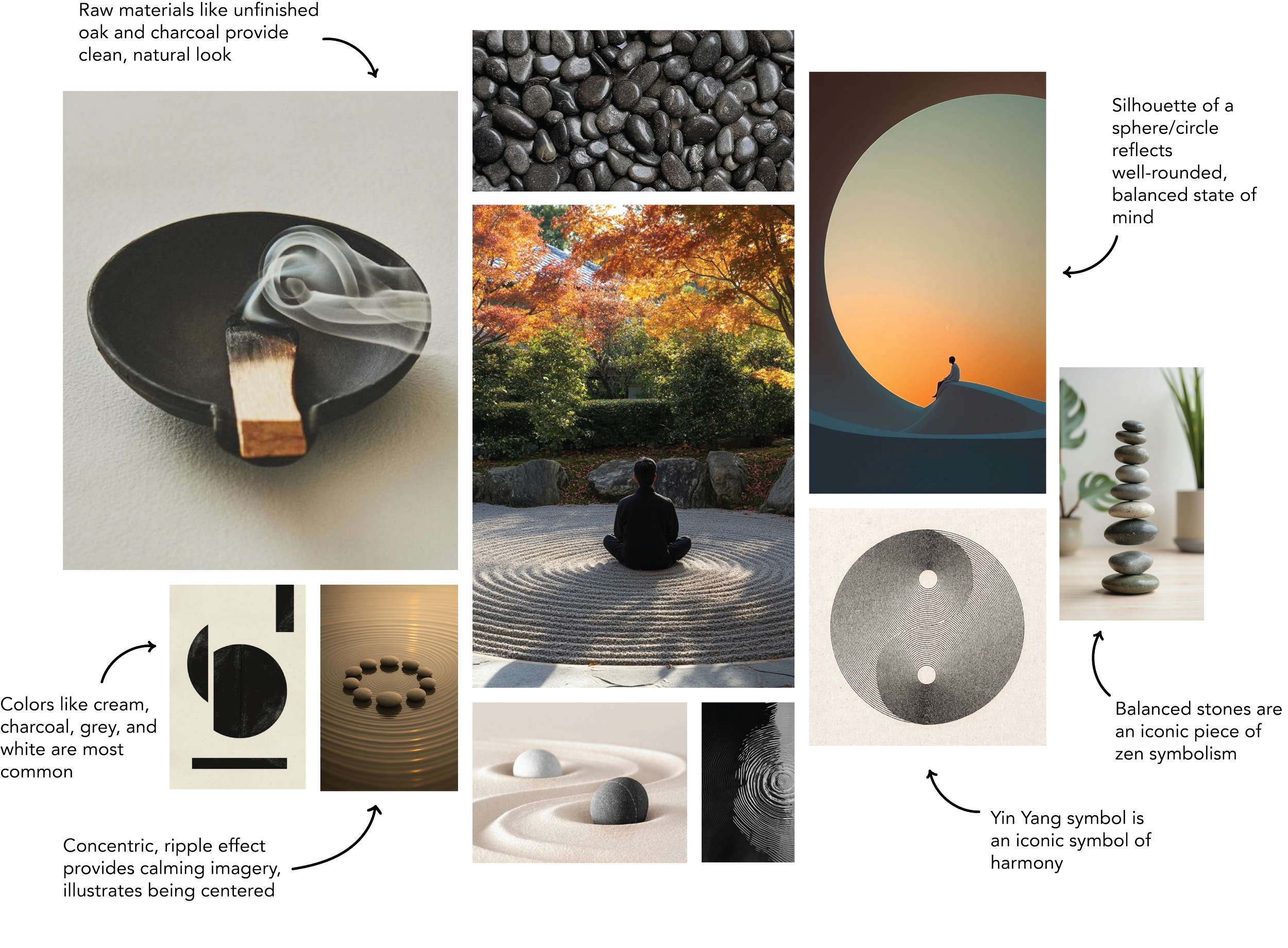
Inspiration
Sketch Phases
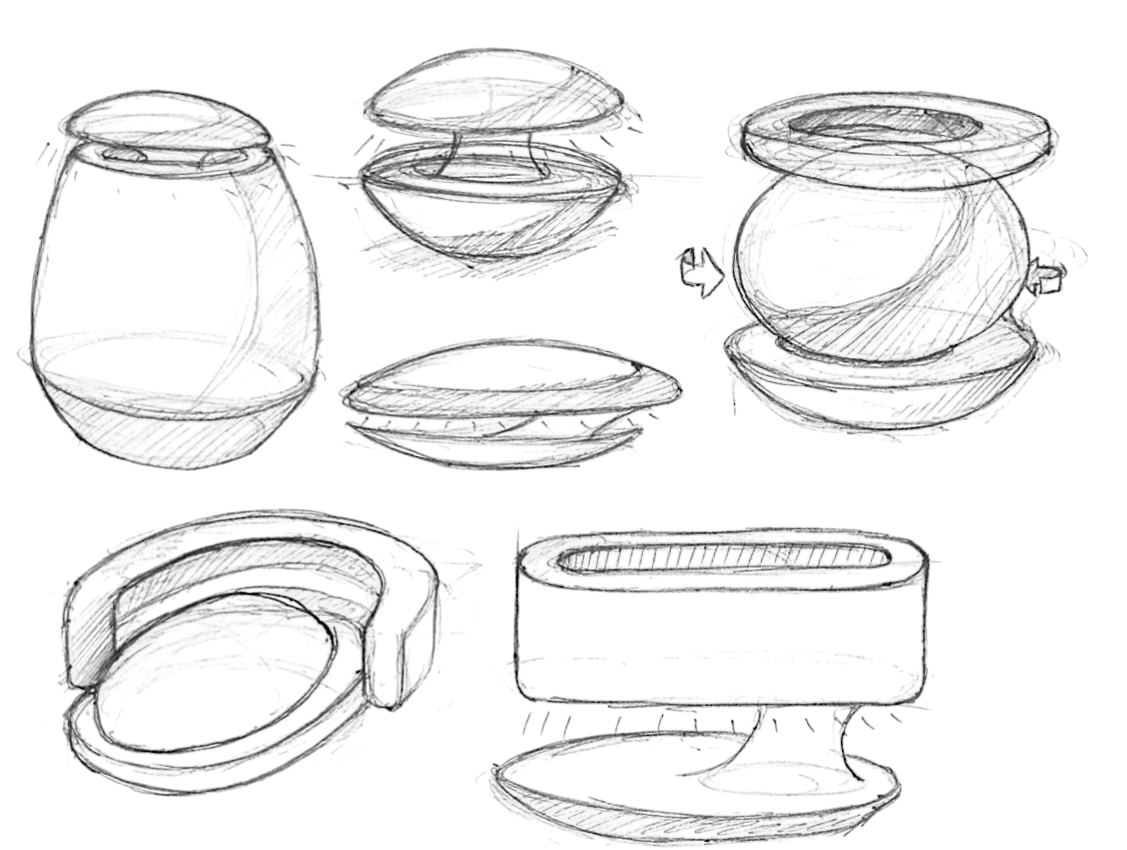
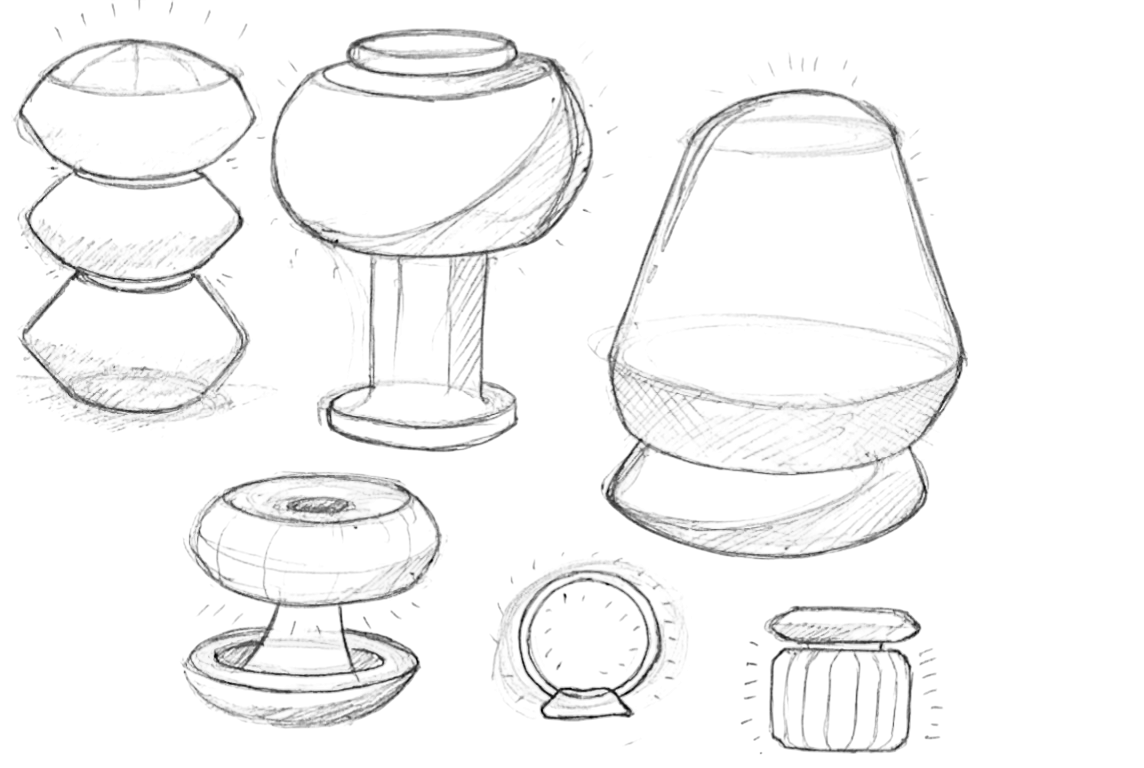
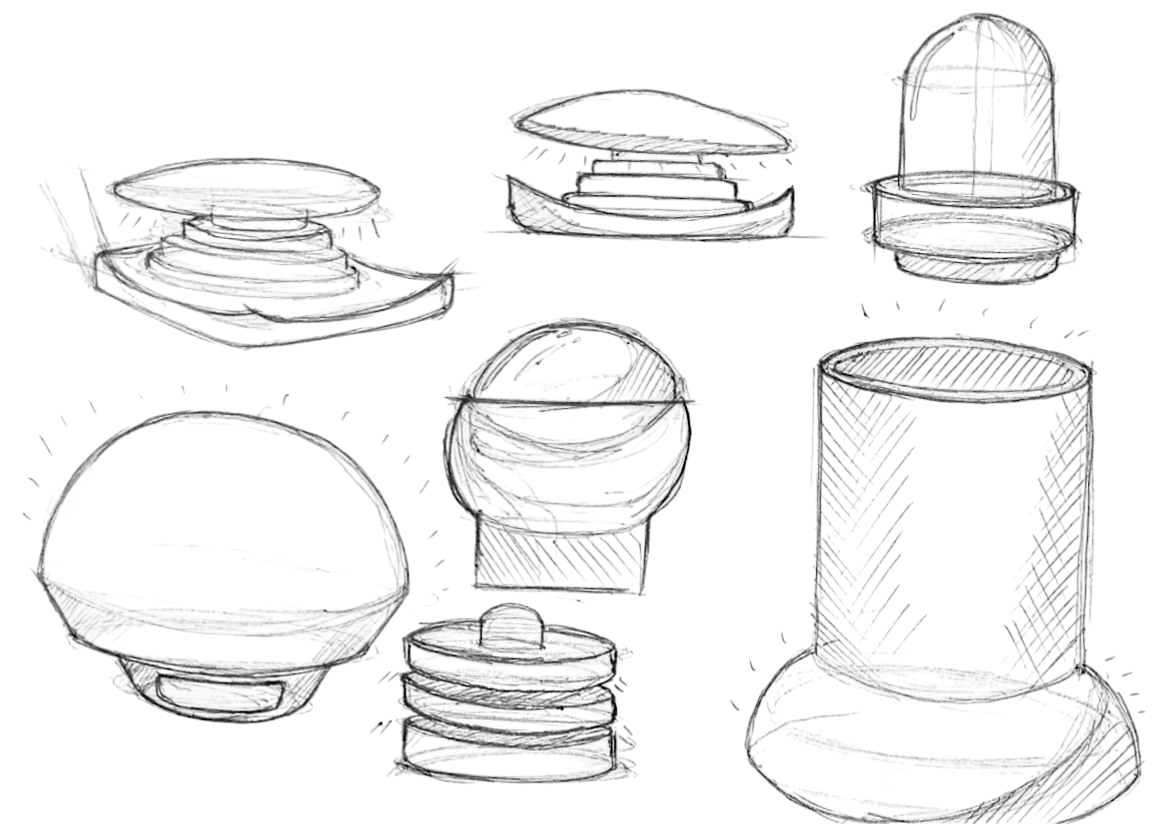
Beginning to move into more sketches that concentrated on iterating the most intriguing and captivating thumbnails that captured the zen form the most.
The initial idea involved having the touch point look and feel like a stone.
With a strong focus on incorporating features in zen culture, I began sketching out some concepts that reflected this look.
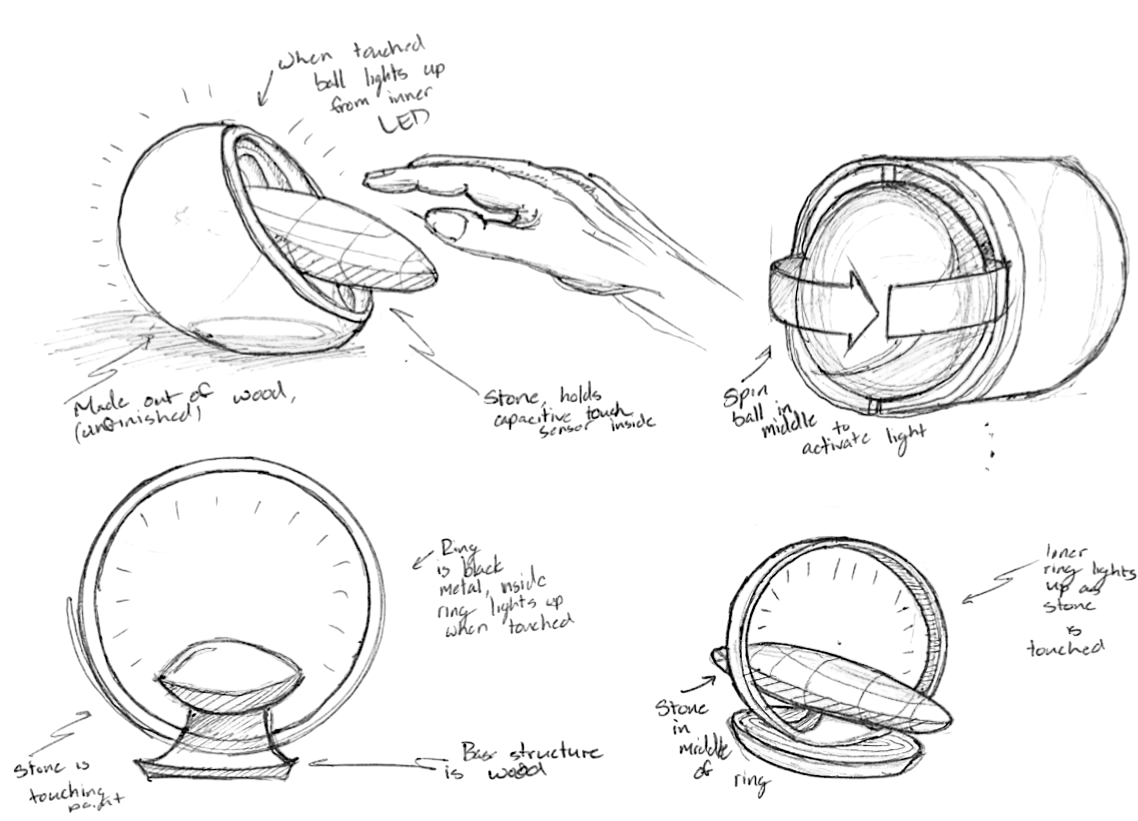
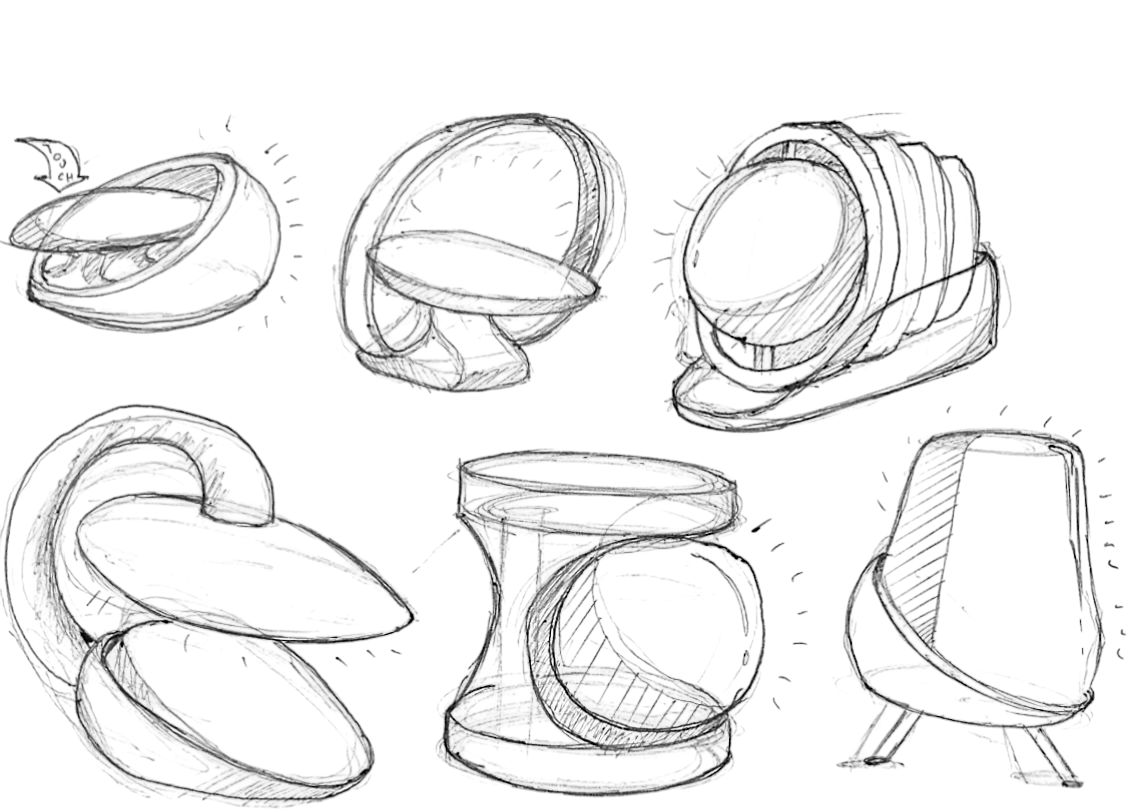
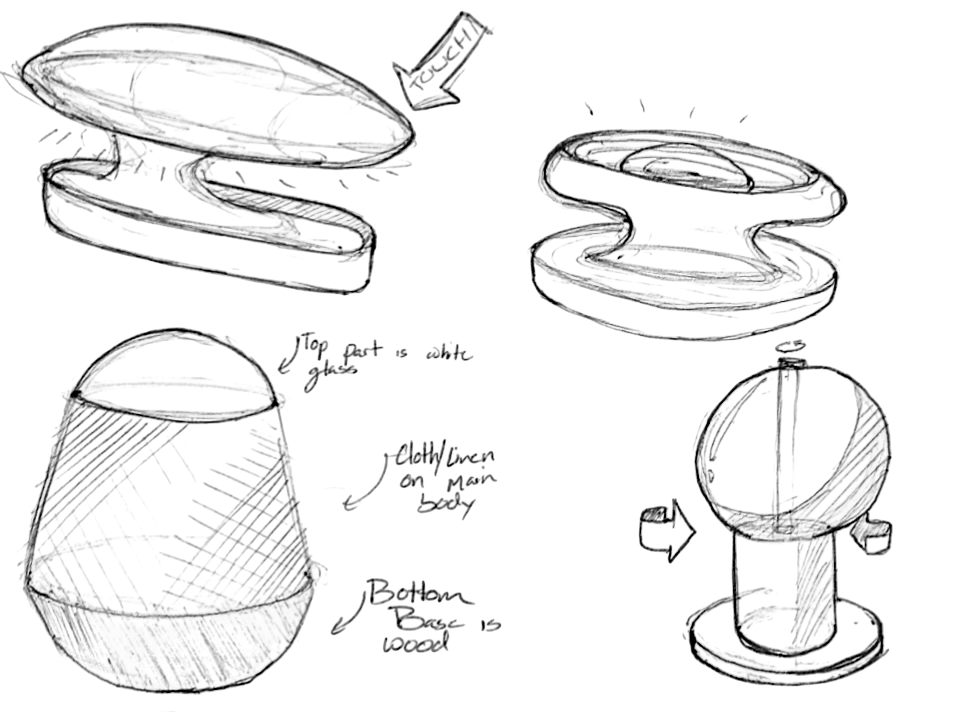
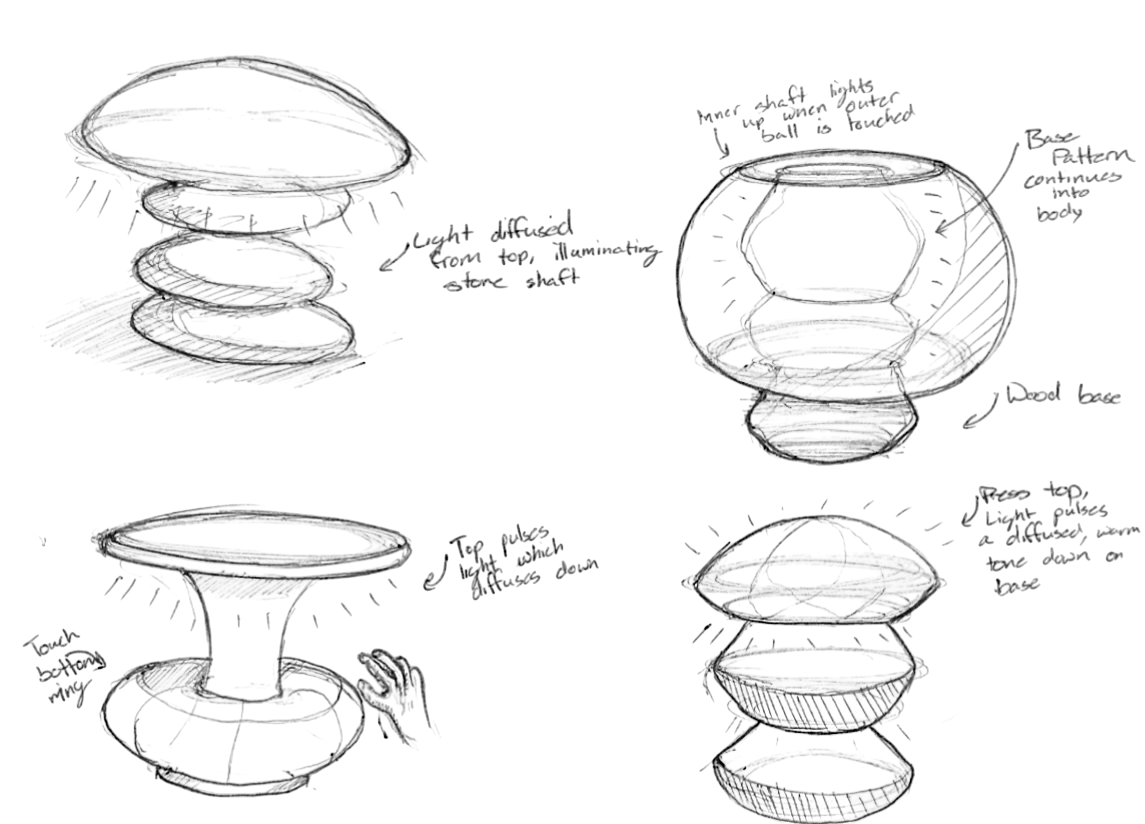
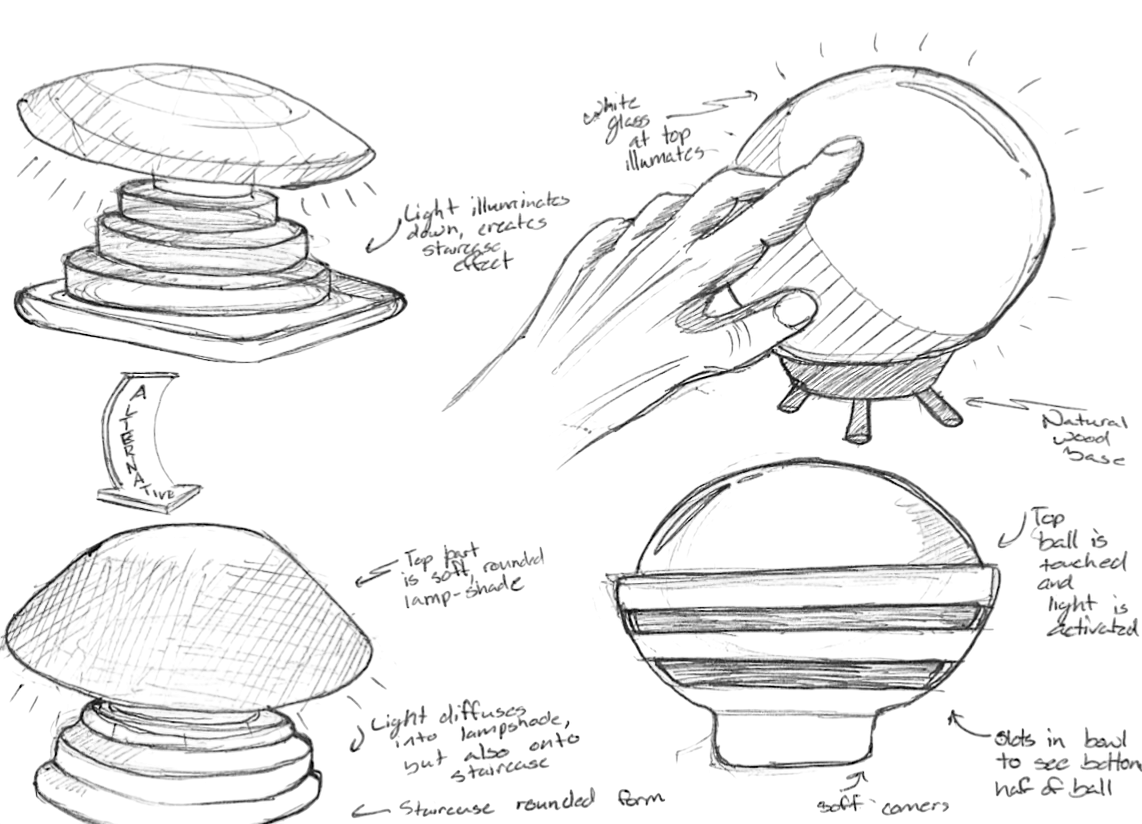
With a clear idea in mind that this device would be touch activated to trigger a lighting effect, I focused on what areas would be touched for this interaction.
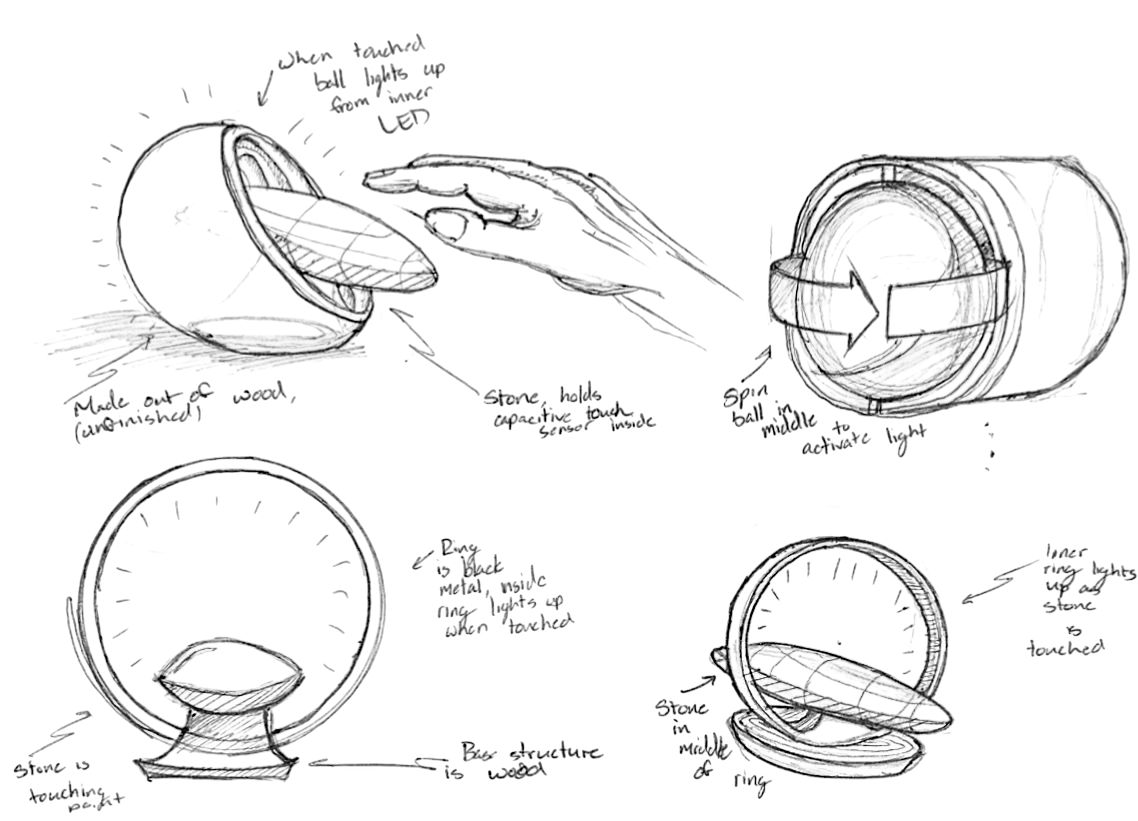
Stone-like shapes, rounded edges, ripple textures, and generally simple forms were the key in maintaining a zen look for this device.
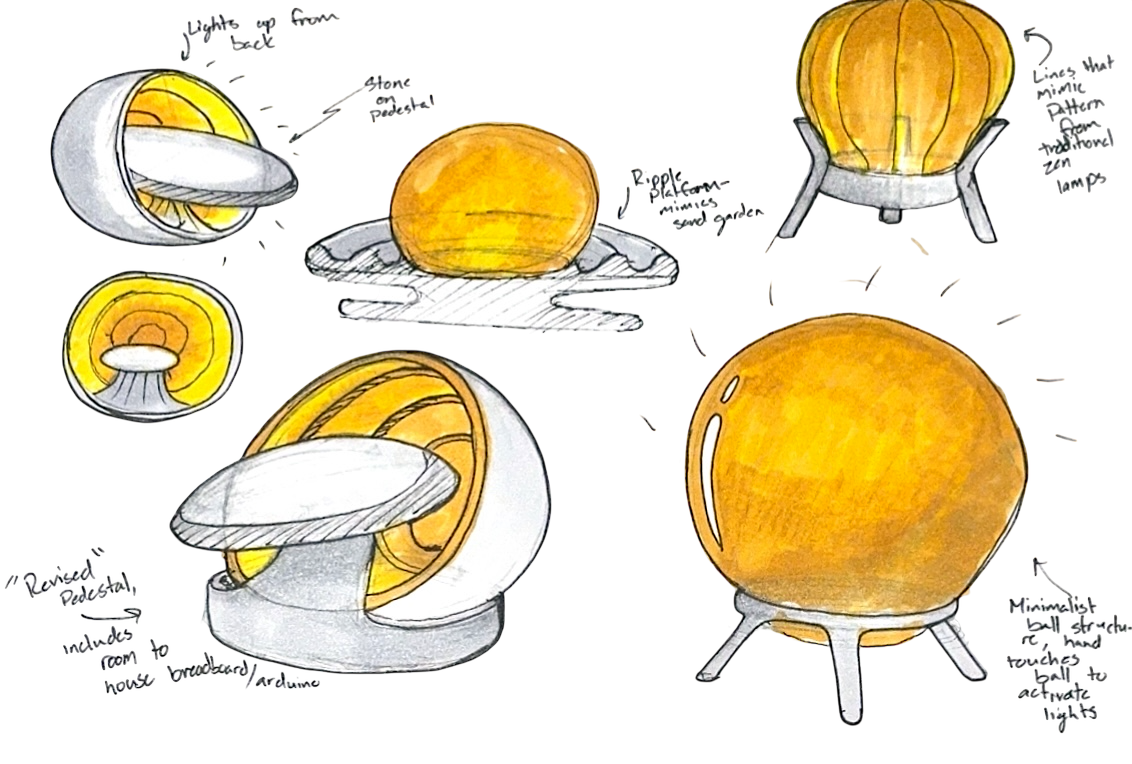
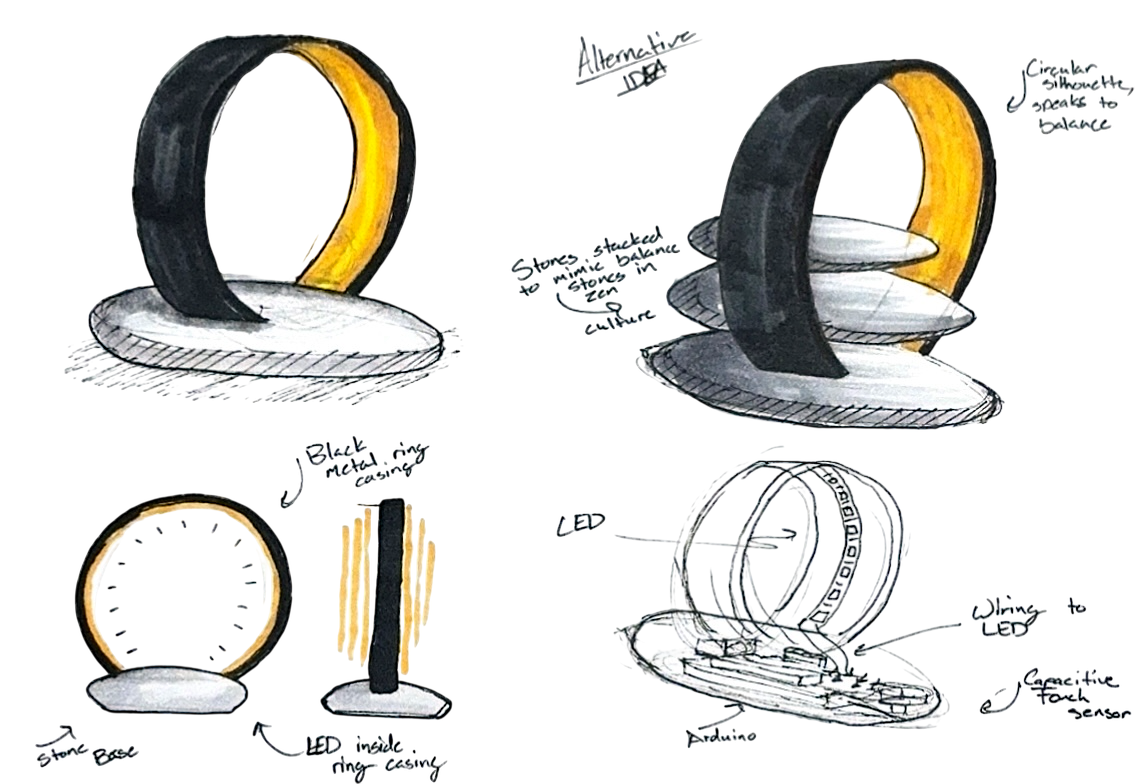
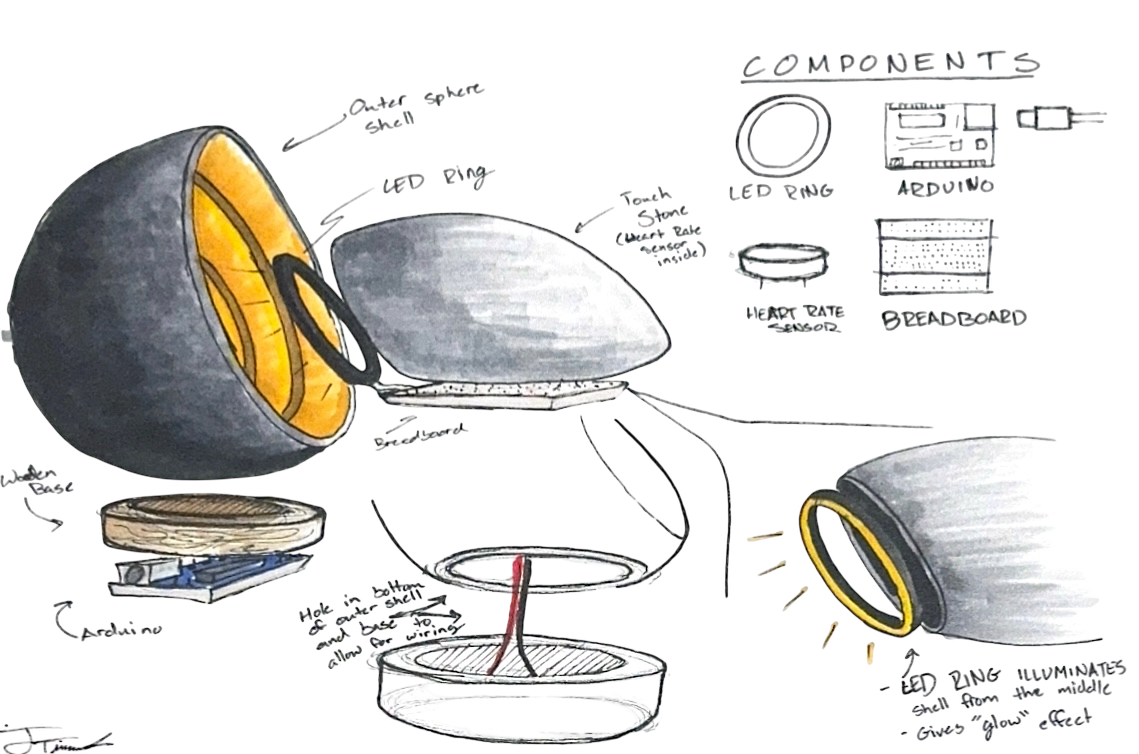
Moving forward with the three concepts that best fit the theme and were most visually intriguing, I added some color and began to detail out the inner components of each design.
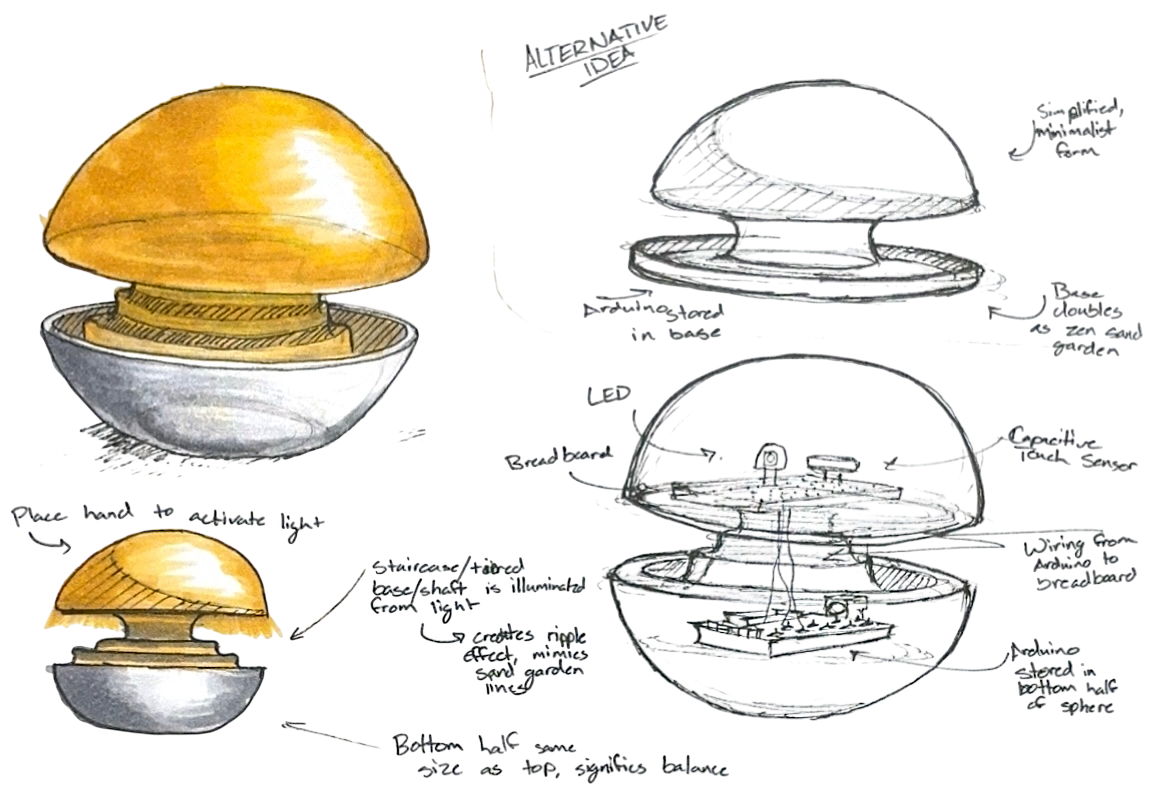
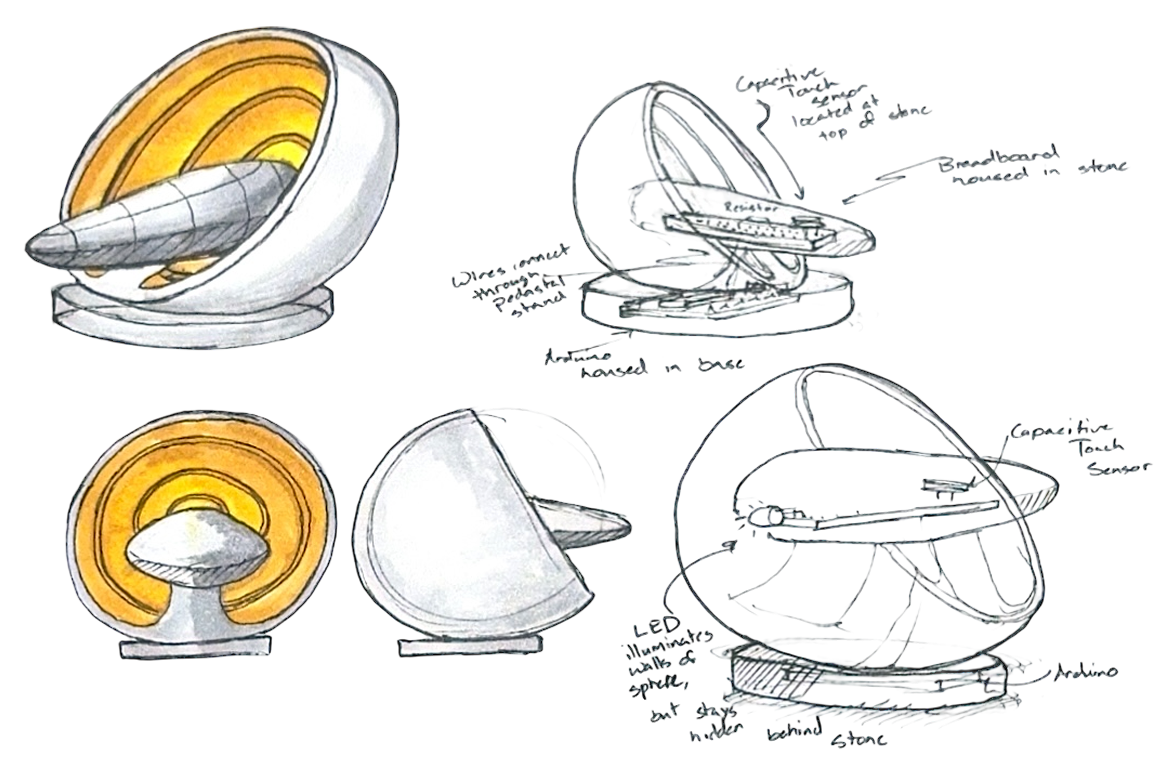
Components I knew I would need to use in order to make this device work consisted of an Arduino Uno, an LED ring, and a touch sensor.
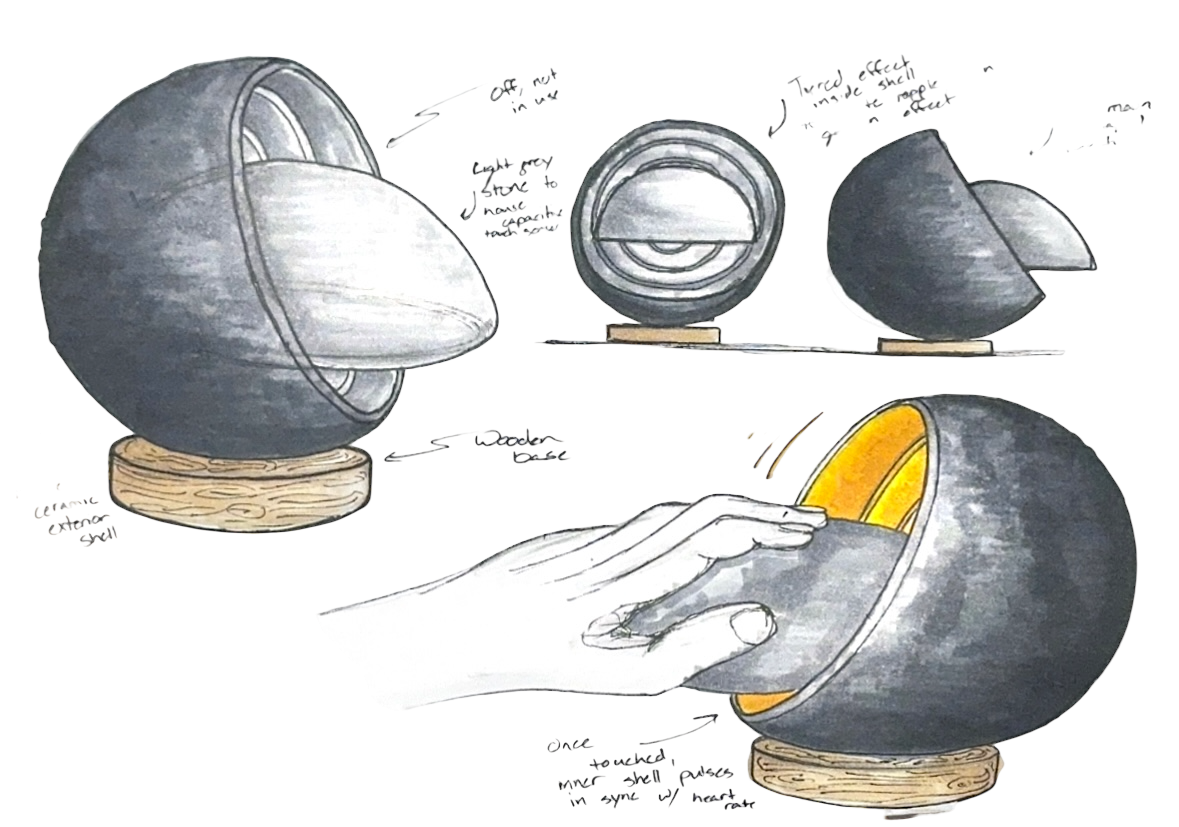
The materials that were intended to be used were raw charcoals, woods, and stone finishes that are strong in instilling a sense of serenity in the user.
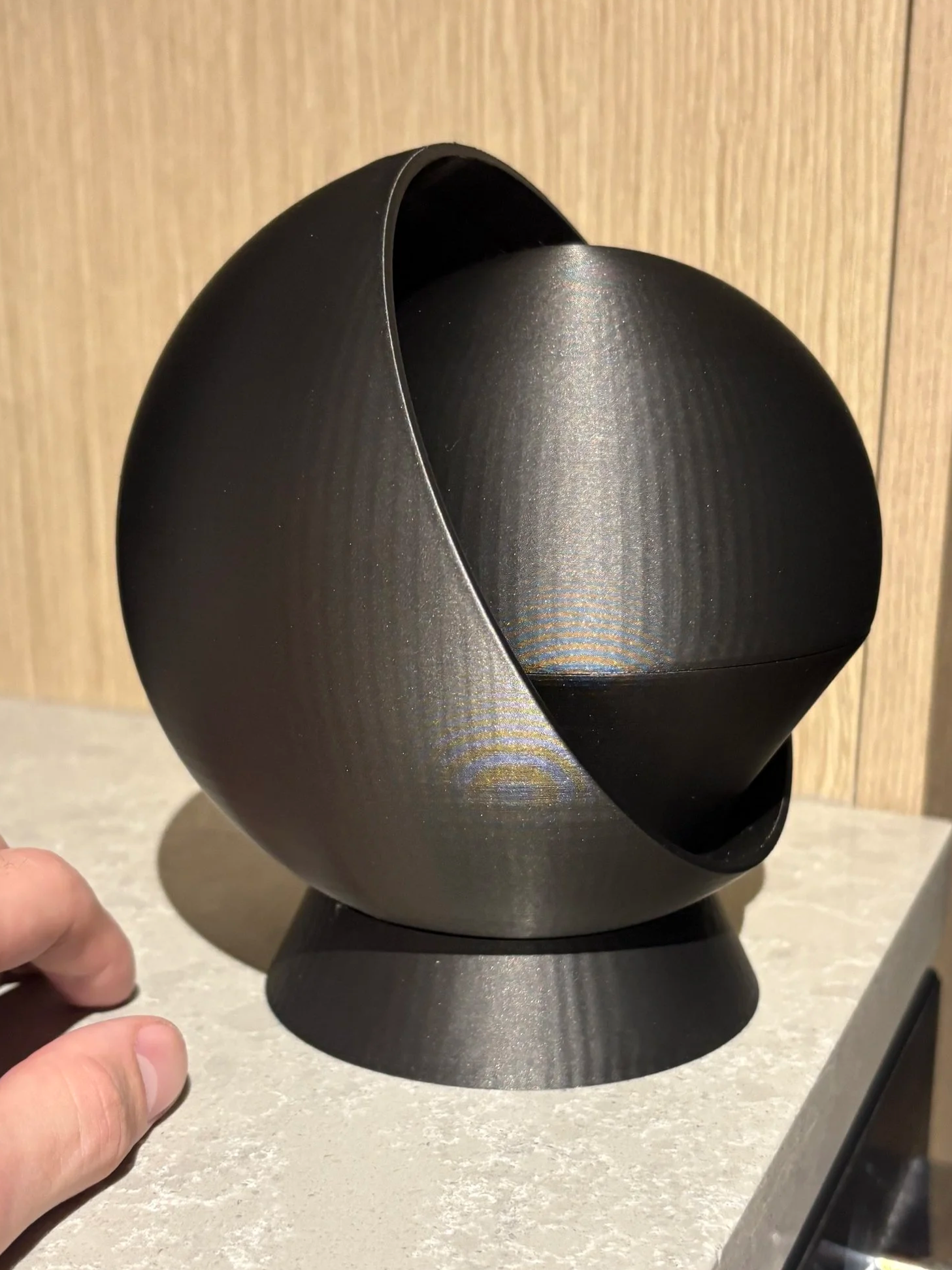
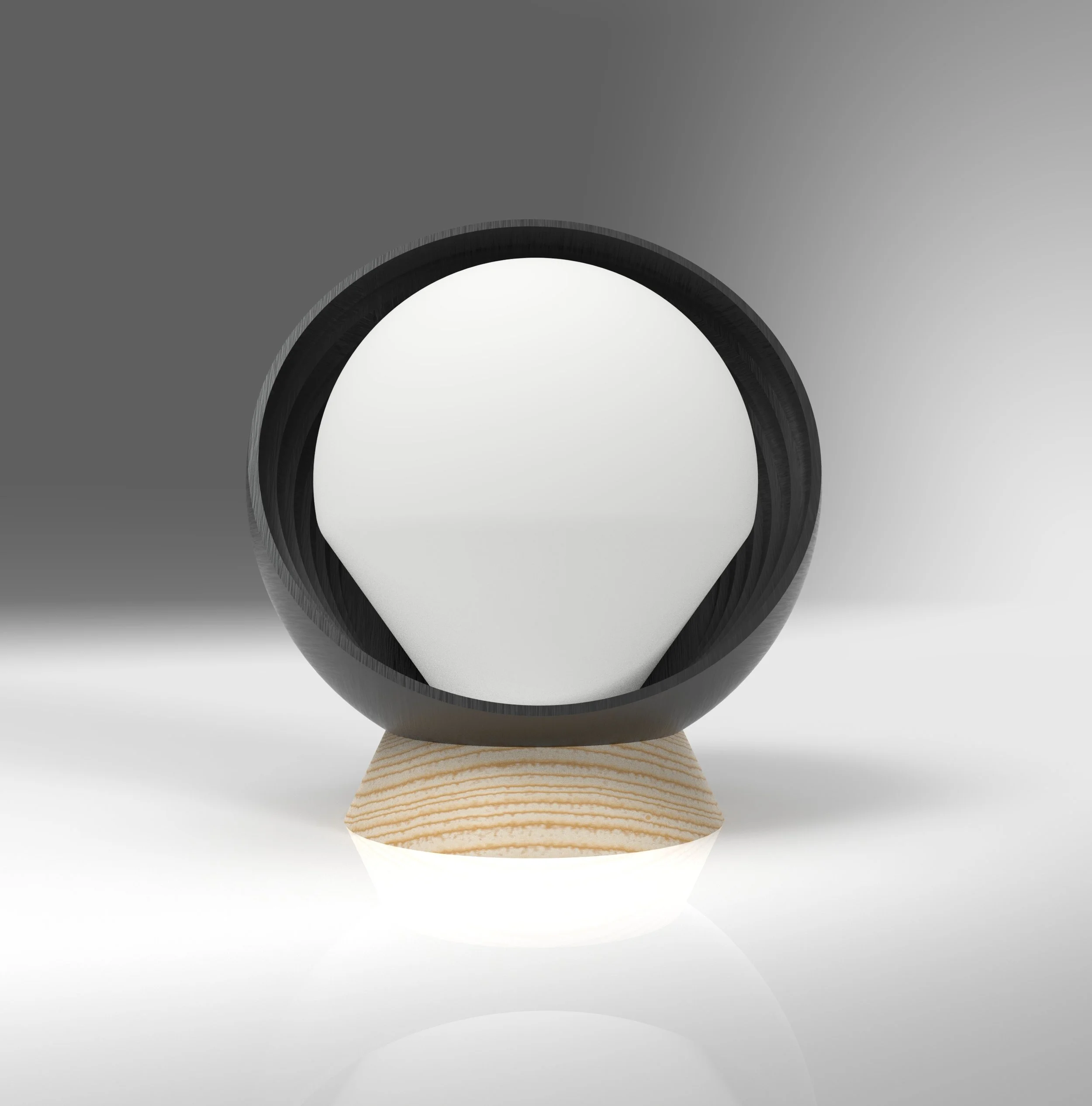
The hollowed out sphere design was the direction that ultimately had the most aesthetic interest, due to how it holistically but naturally captured each feature that is visible in zen culture.
Product Usability Analysis
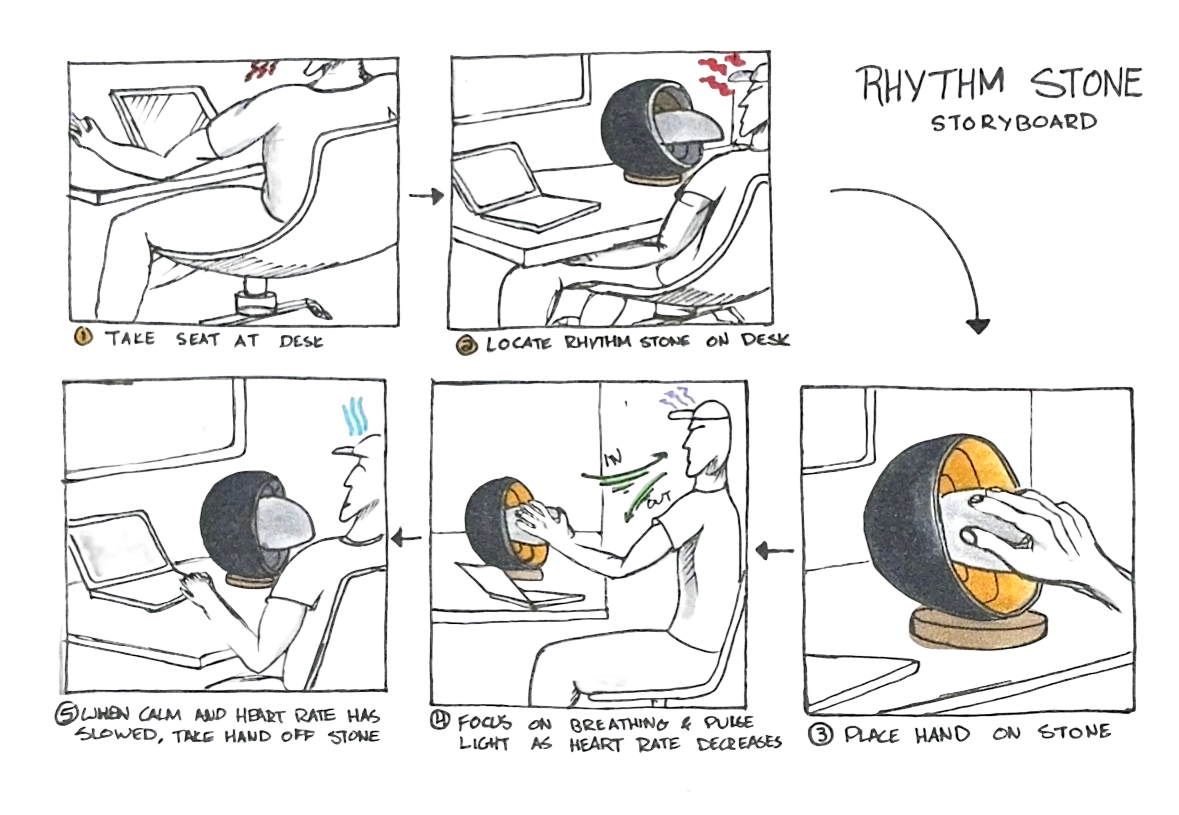
Capturing the big picture of how this device would be used was crucial in understanding how I would later need to code it to work as a breathing rhythm keeper.
CAD Iterating
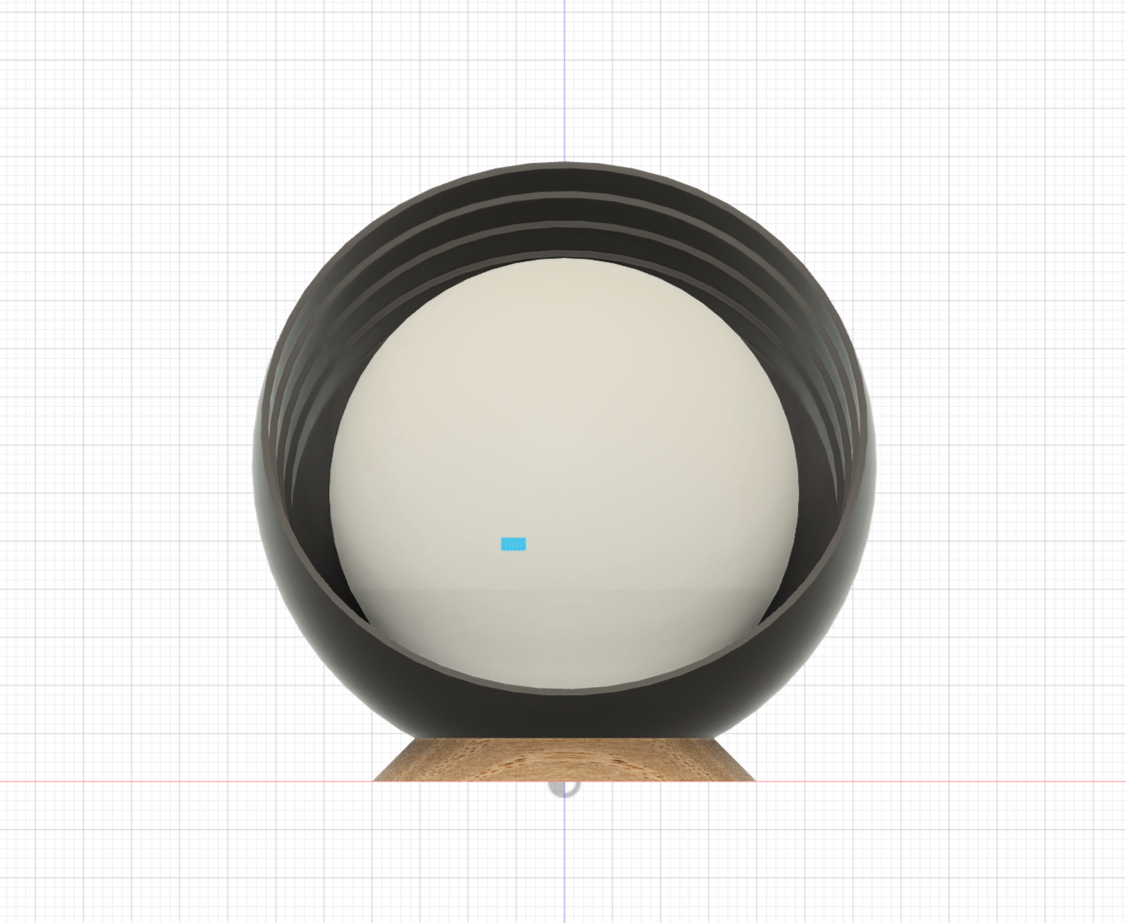
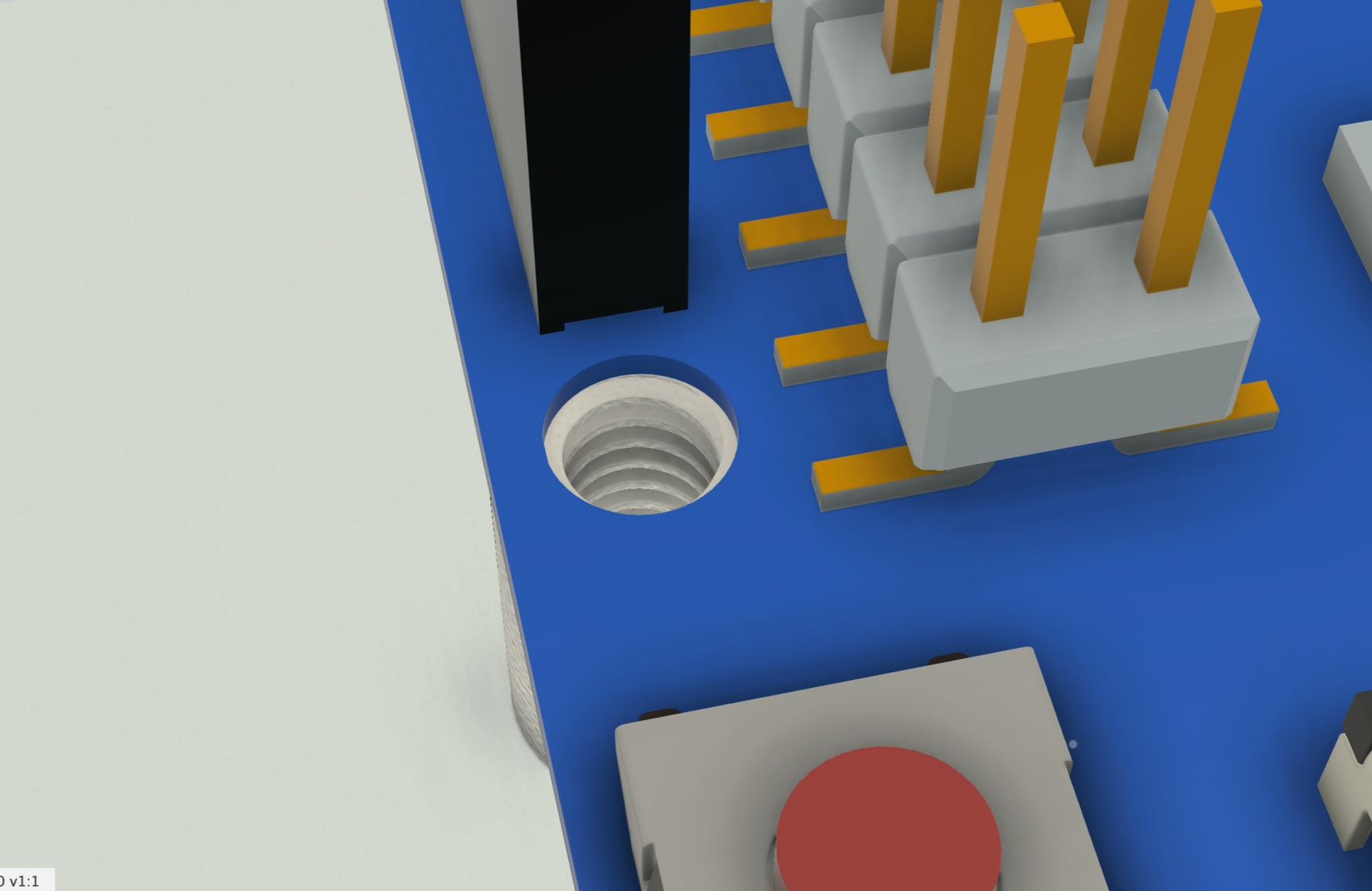
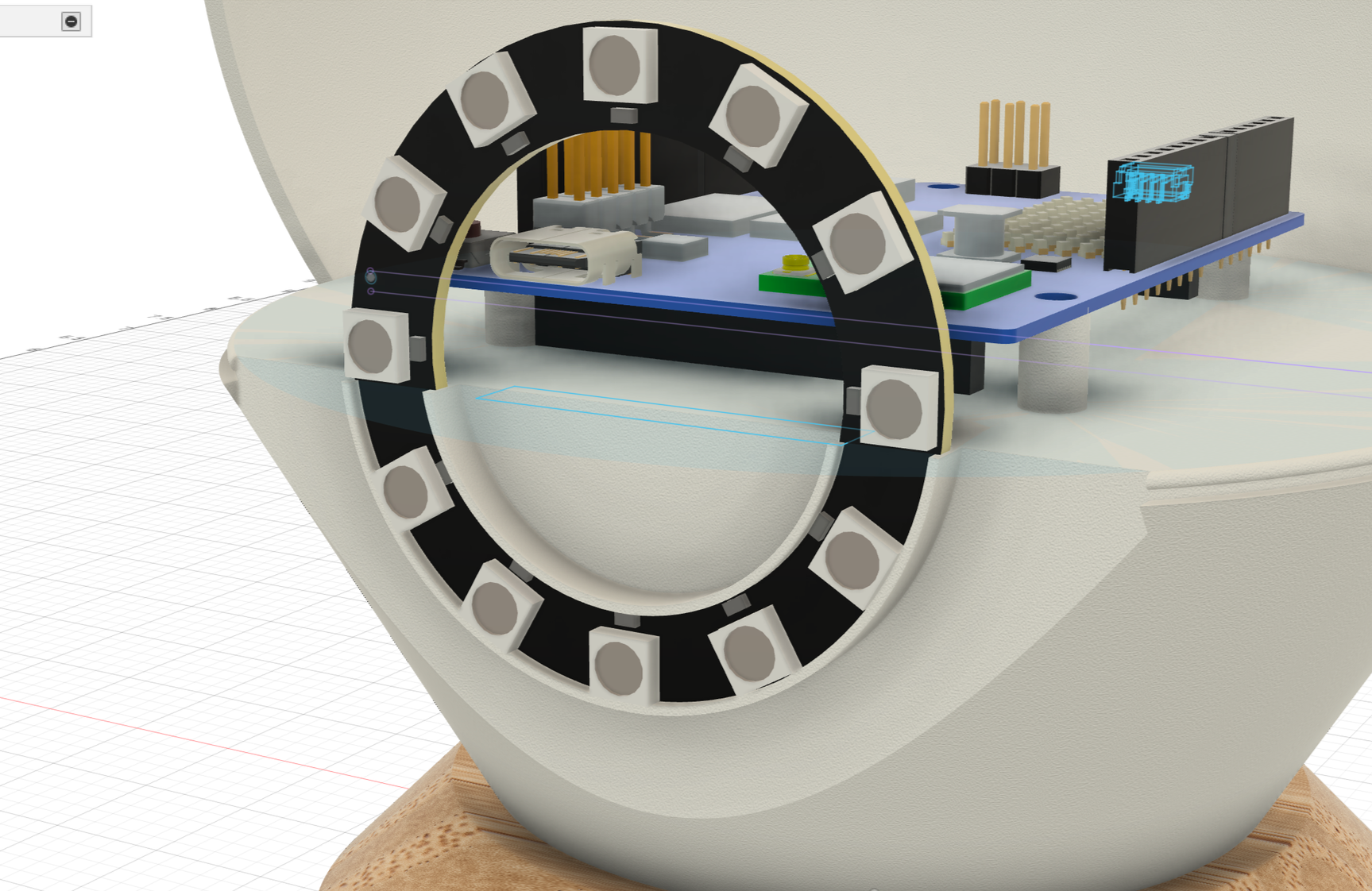
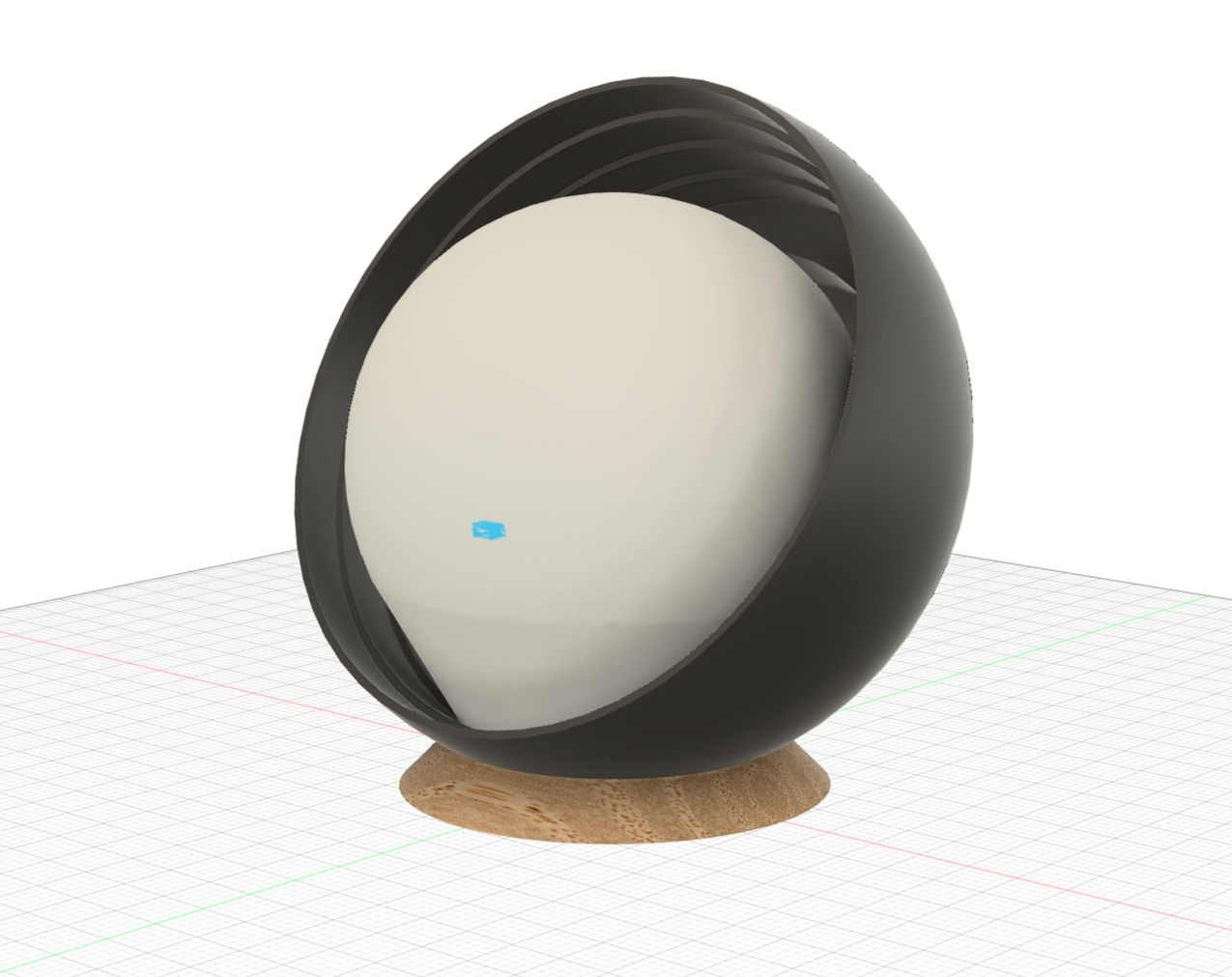
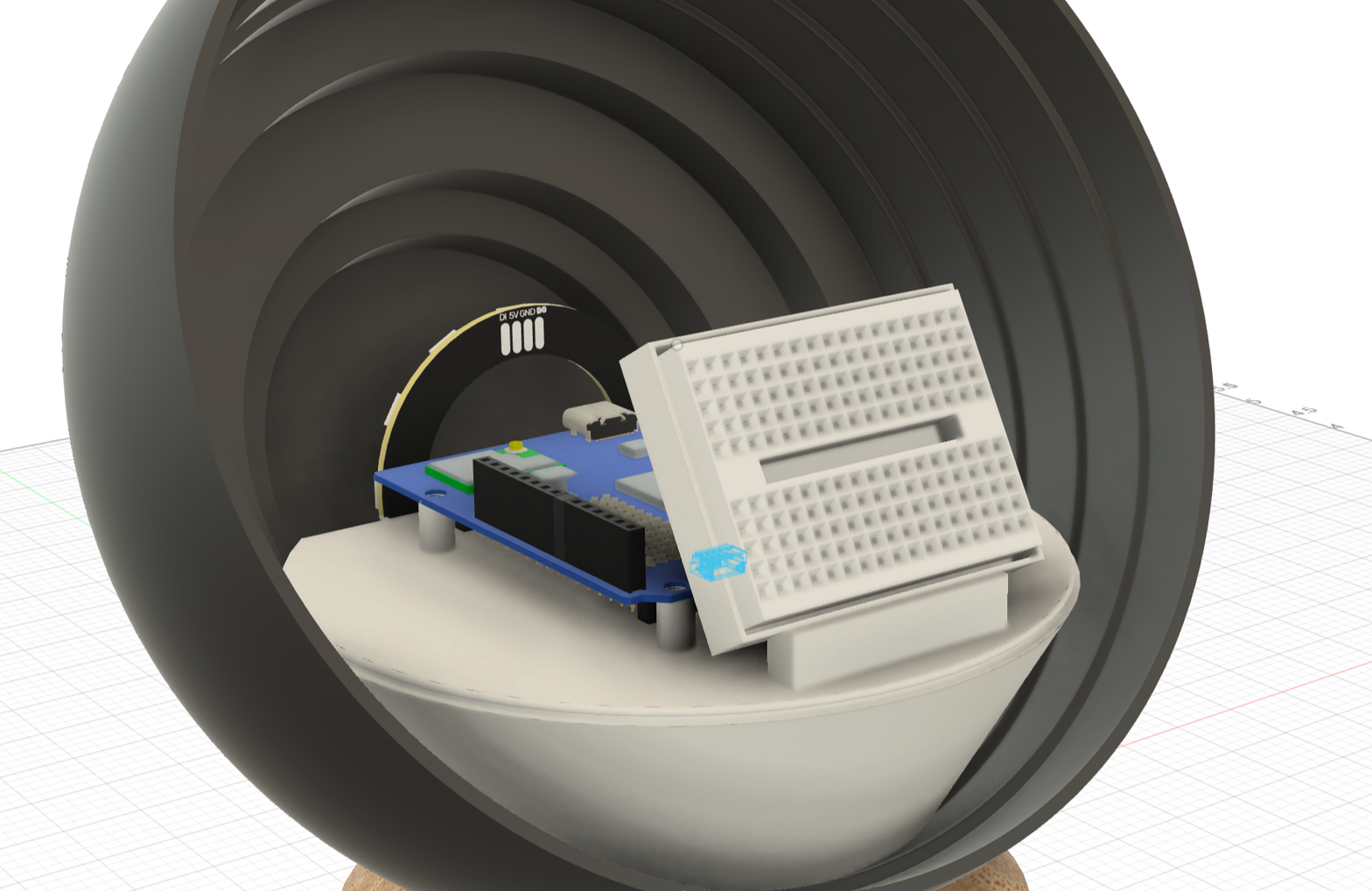
During the first iterations of CAD, it was important to consider the tailoring the model exactly to the components that would be used inside the “touchstone” part to power the device.
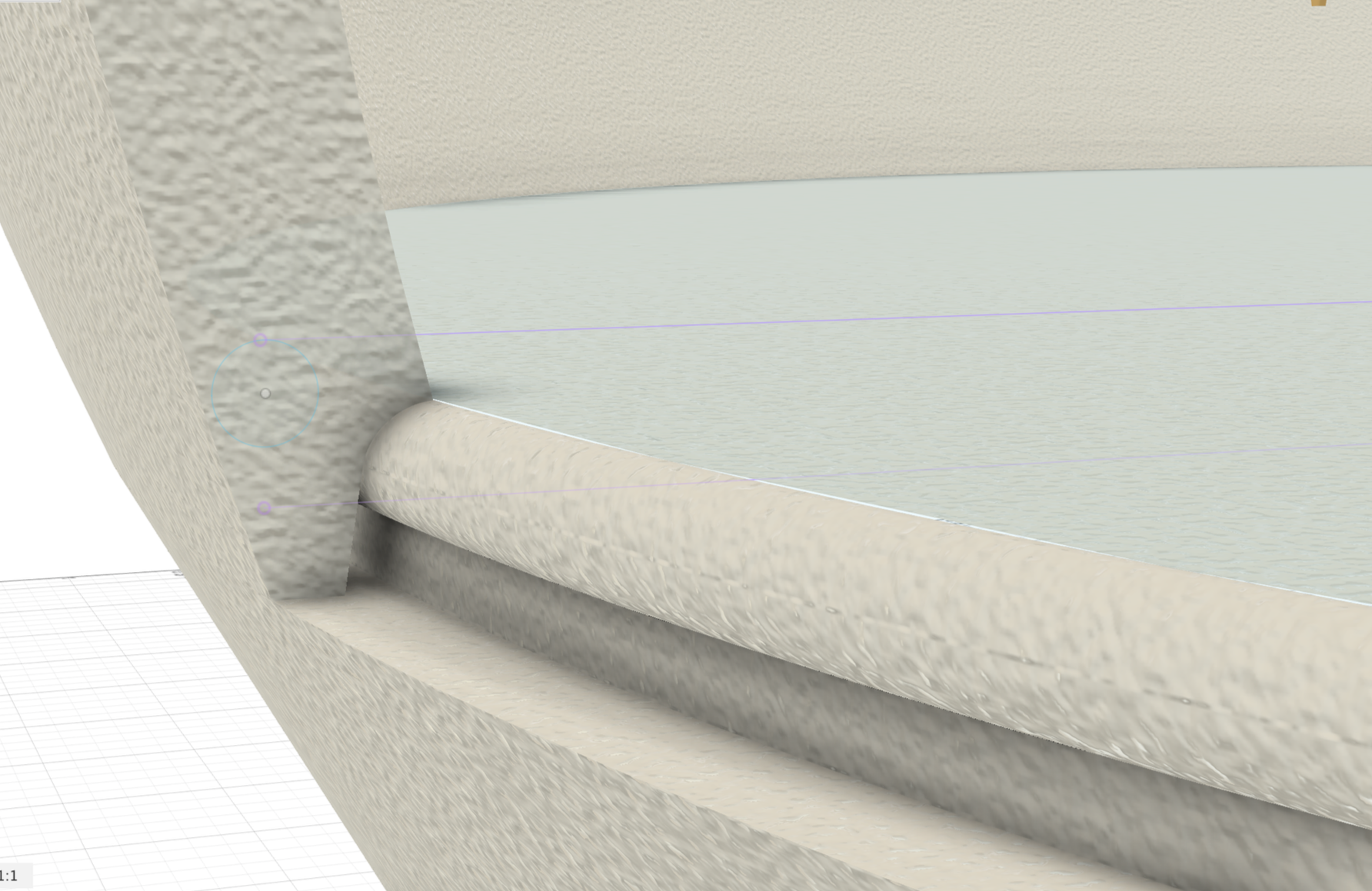
Creating joinery like lips, housing and screw ports was crucial in keeping the validity of the device being manufacturable.
Refined Form
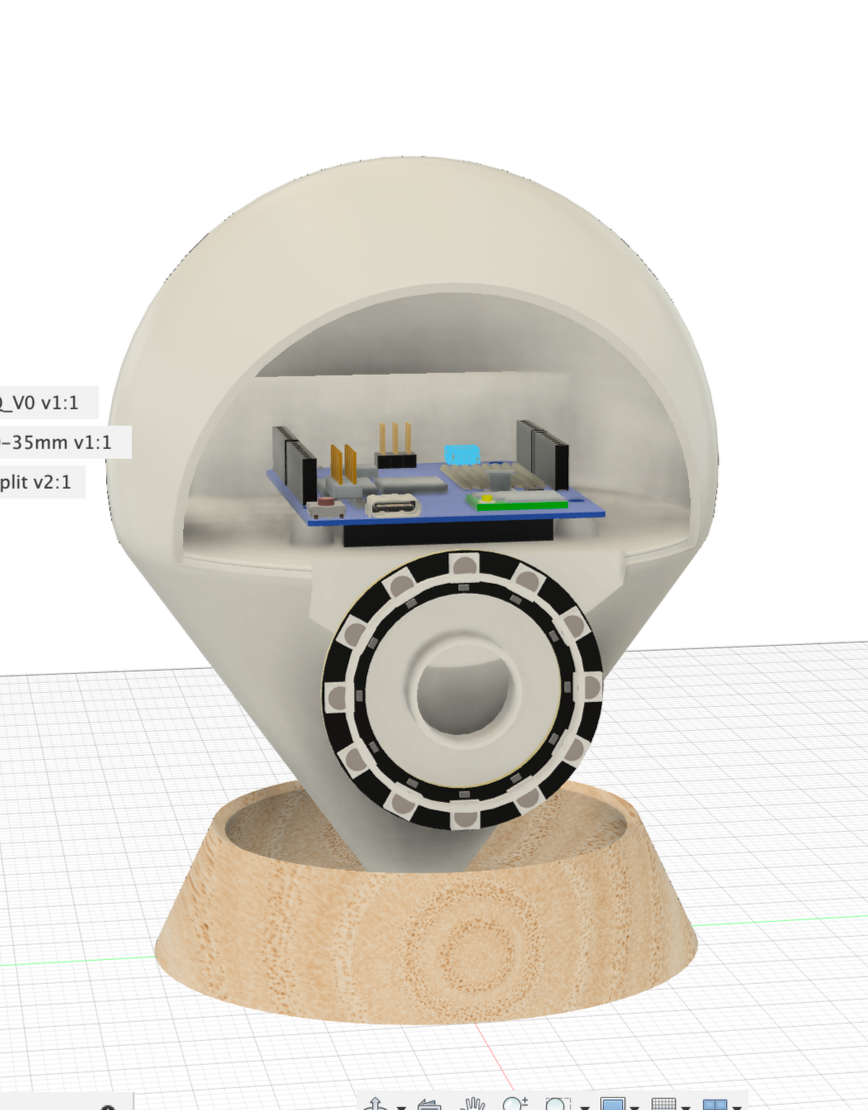
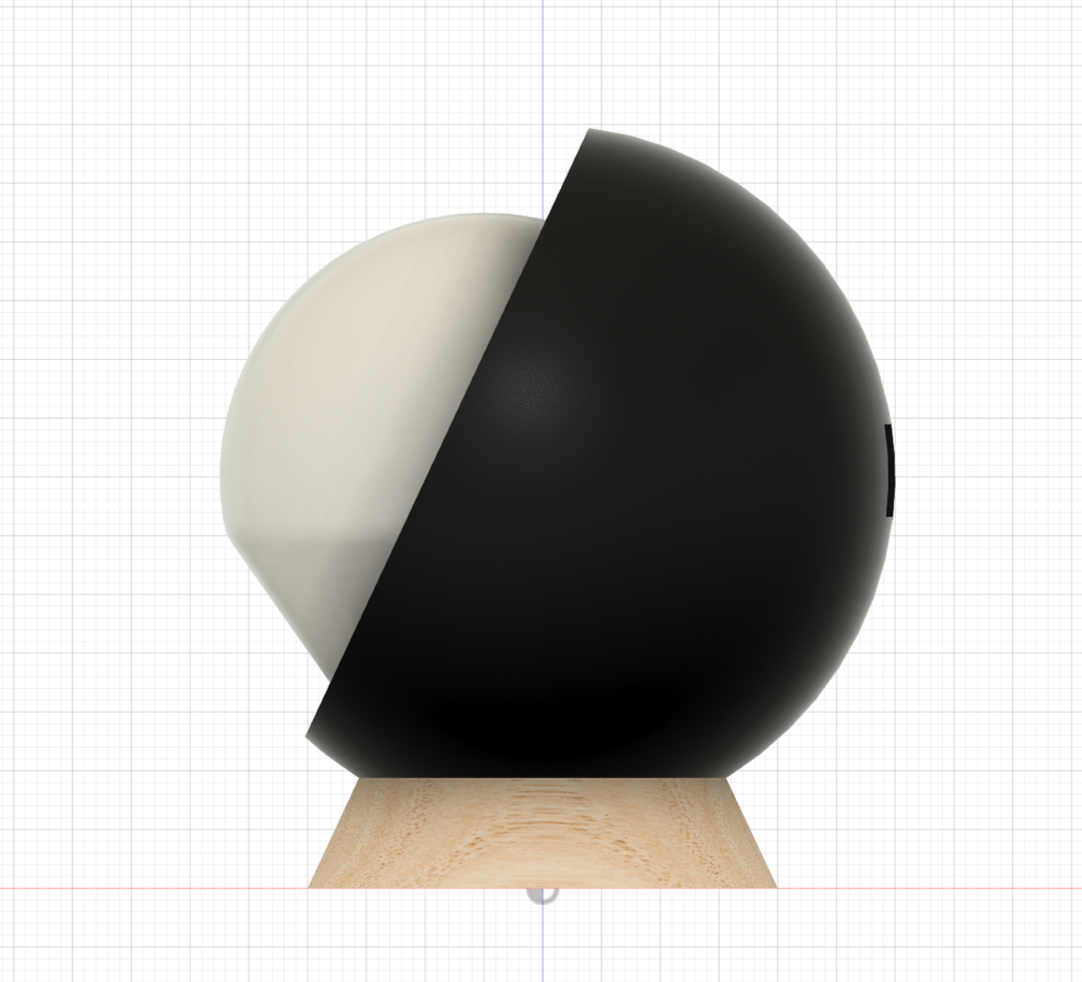
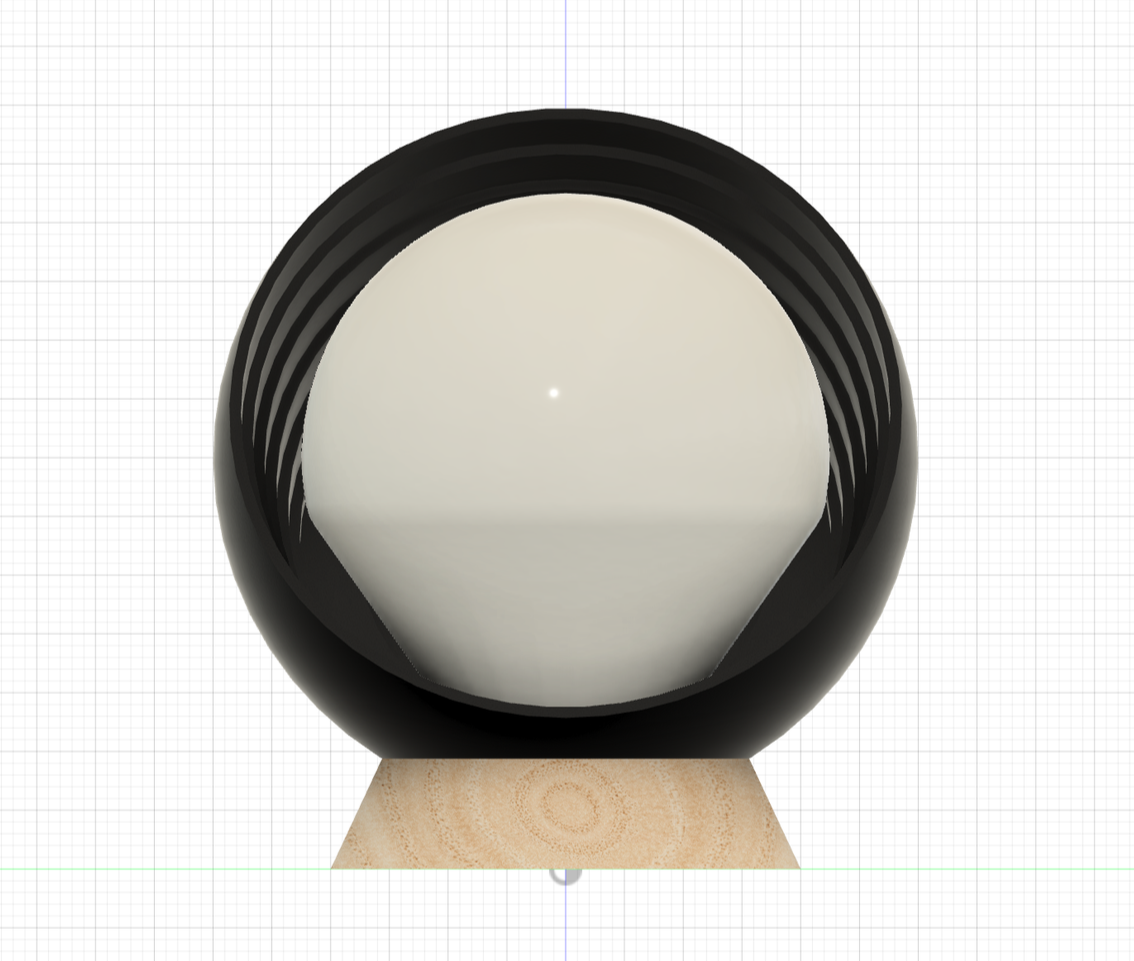
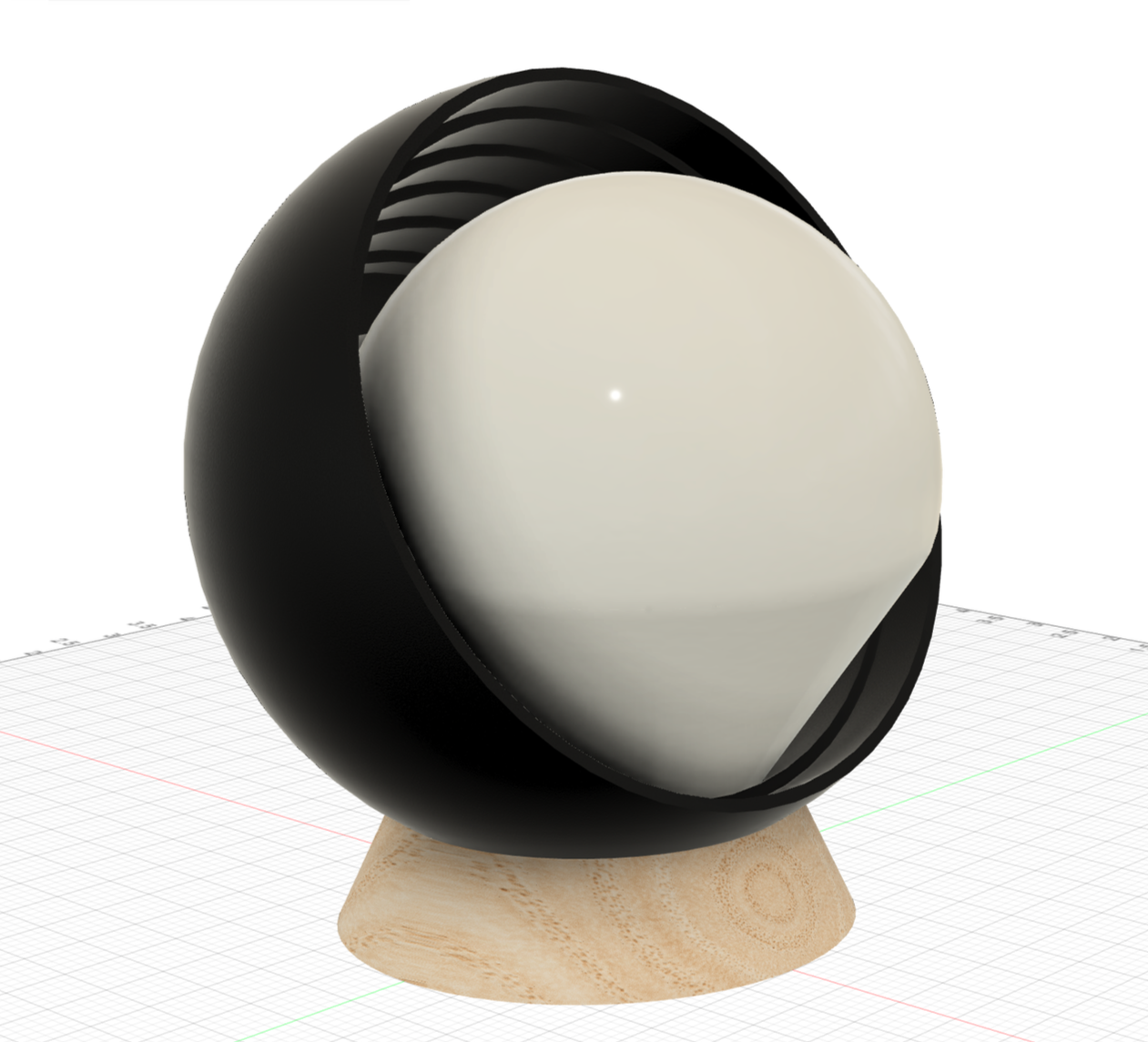
Some feedback I received from peer reviews and professor critiques was that the touchstone part was an awkward egg shape, and contributed to some odd proportions.
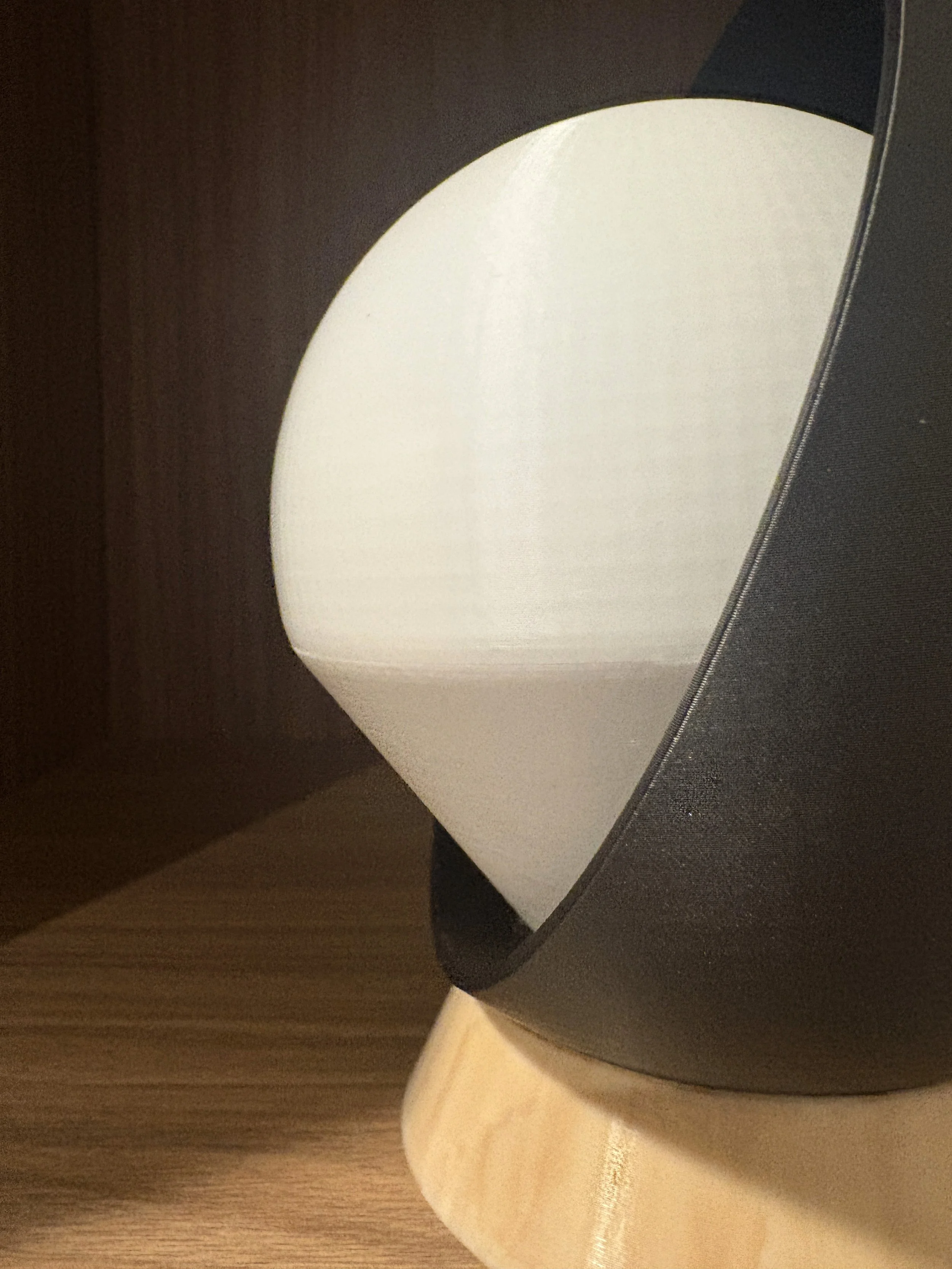
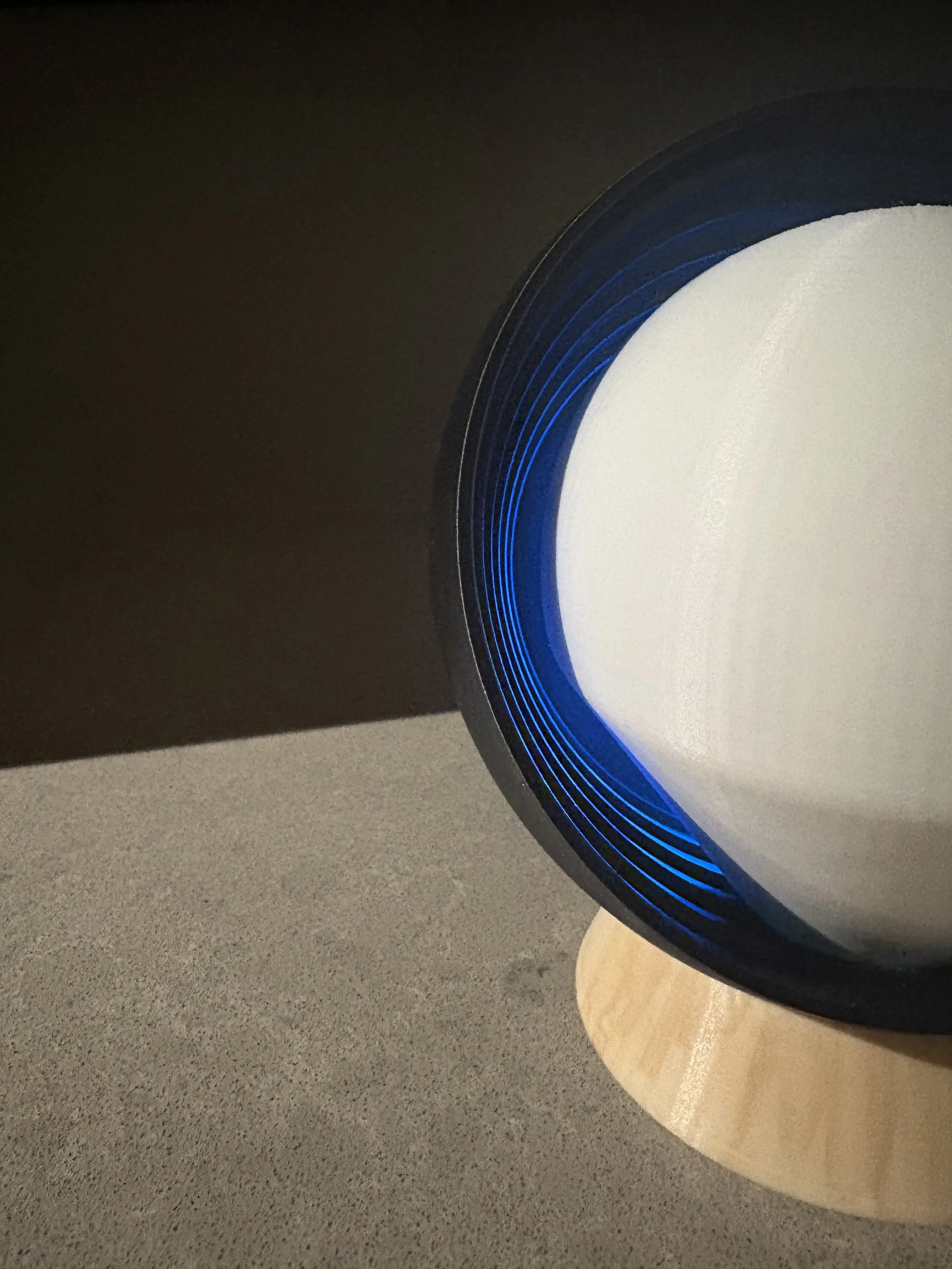
With this feedback, I focused on tapering the base of the touchstone to create some more negative space from a frontal orthographic view, and honing in on revising the concentric design inside the outer sphere.
Coding & Circuitry
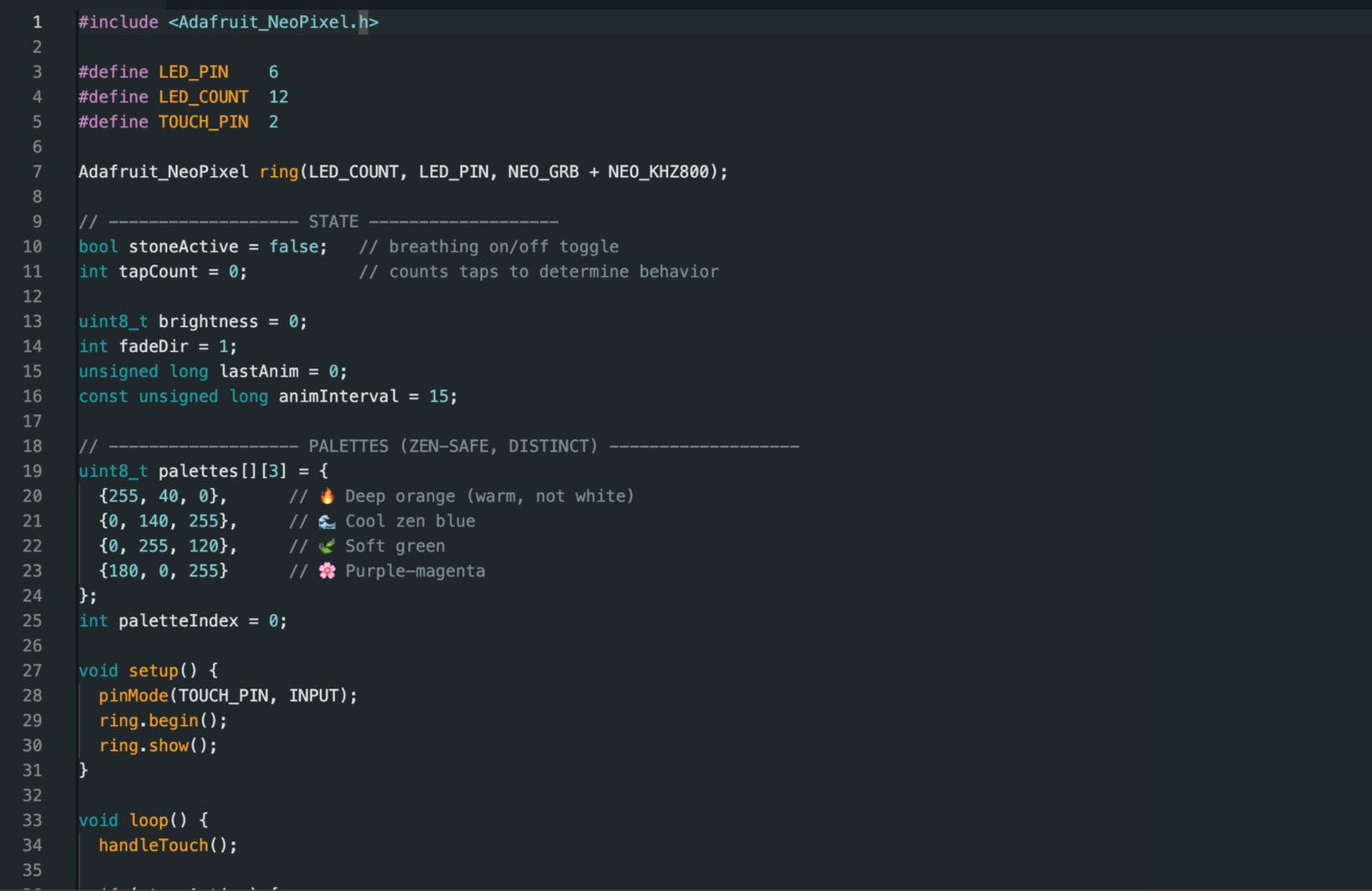
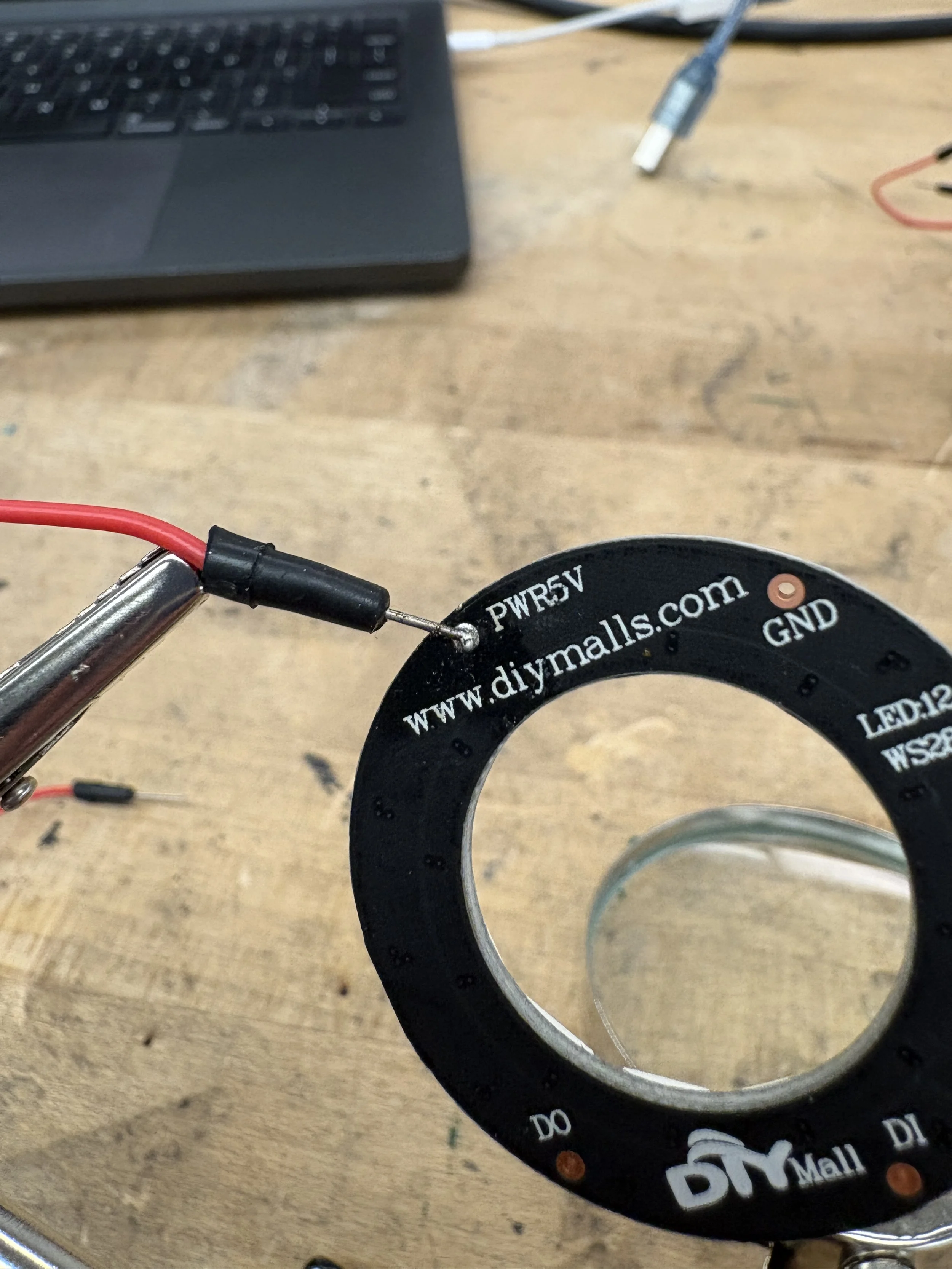
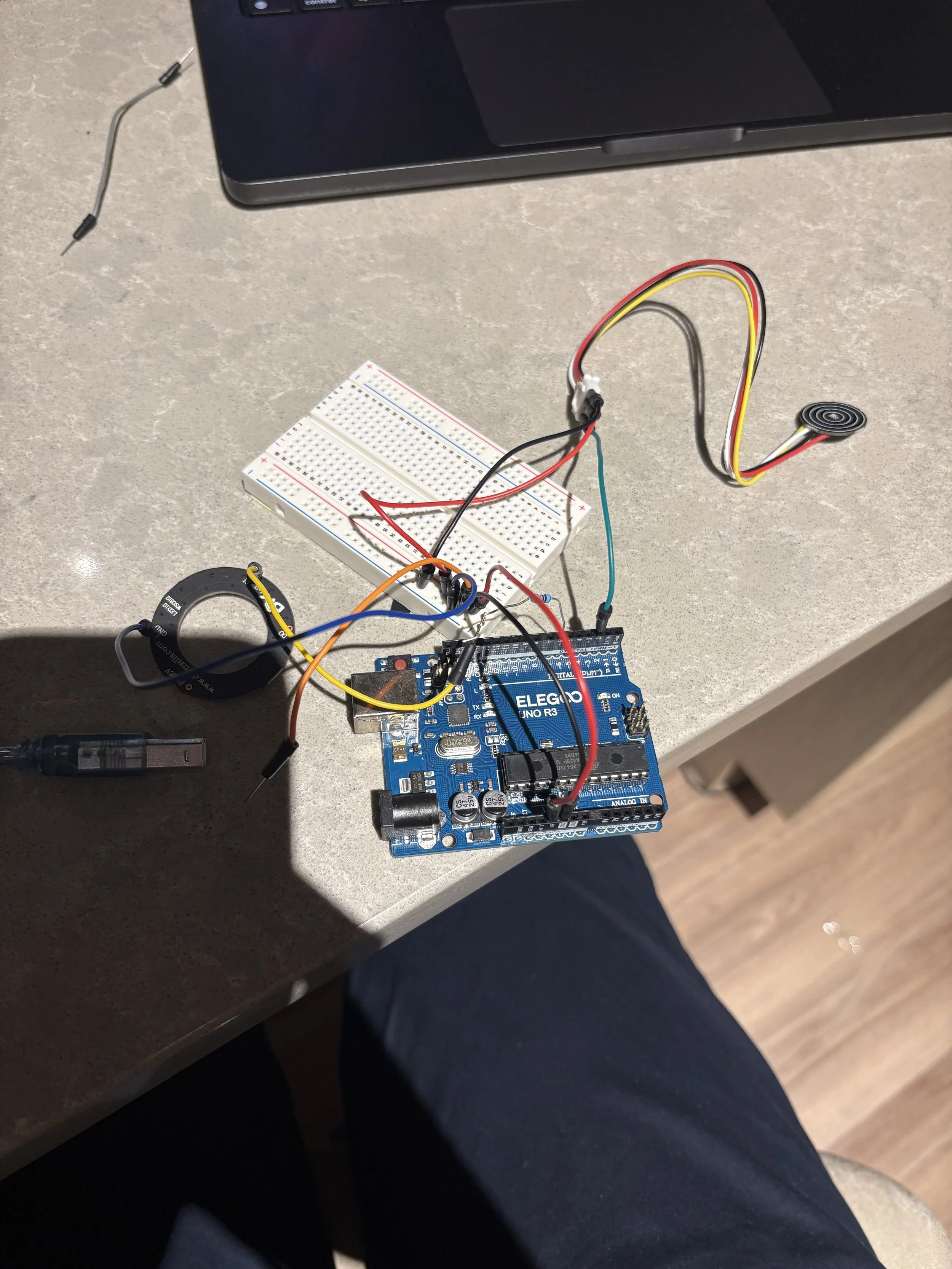
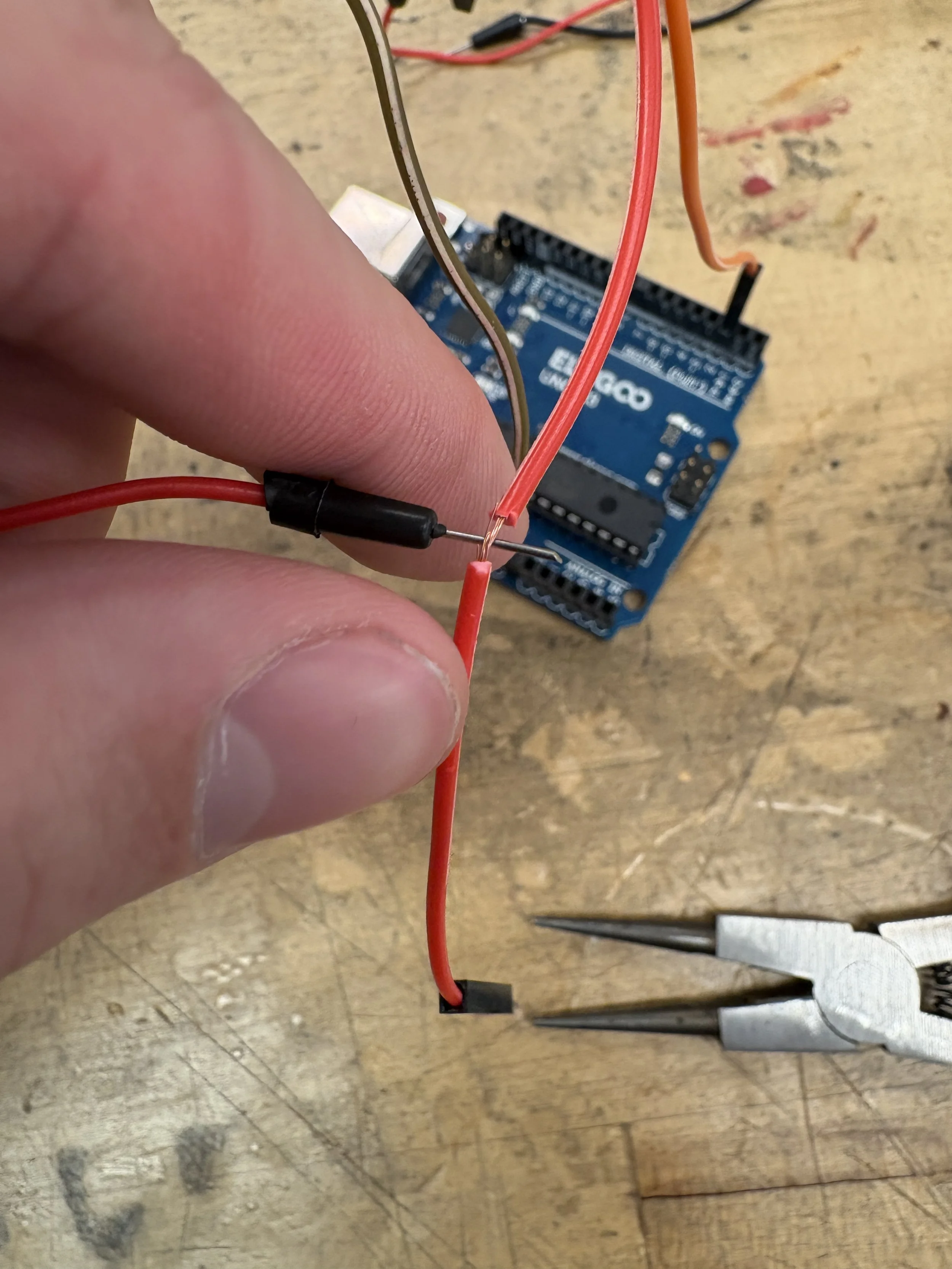
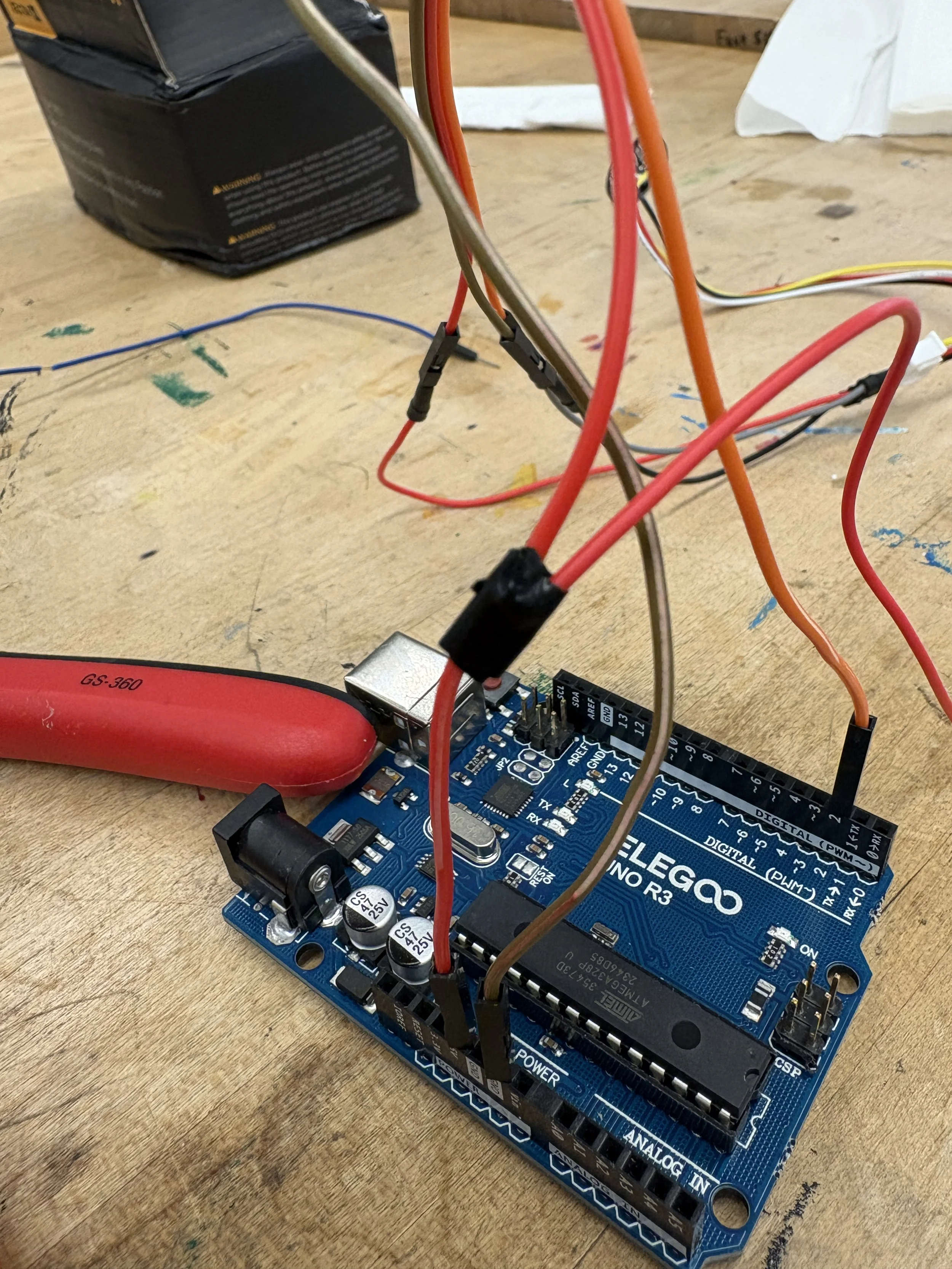
After soldering the entire circuit together and ensuring a safe connection with each wire, utilizing AI to help code the circuit was the next step.
Print & Assembly
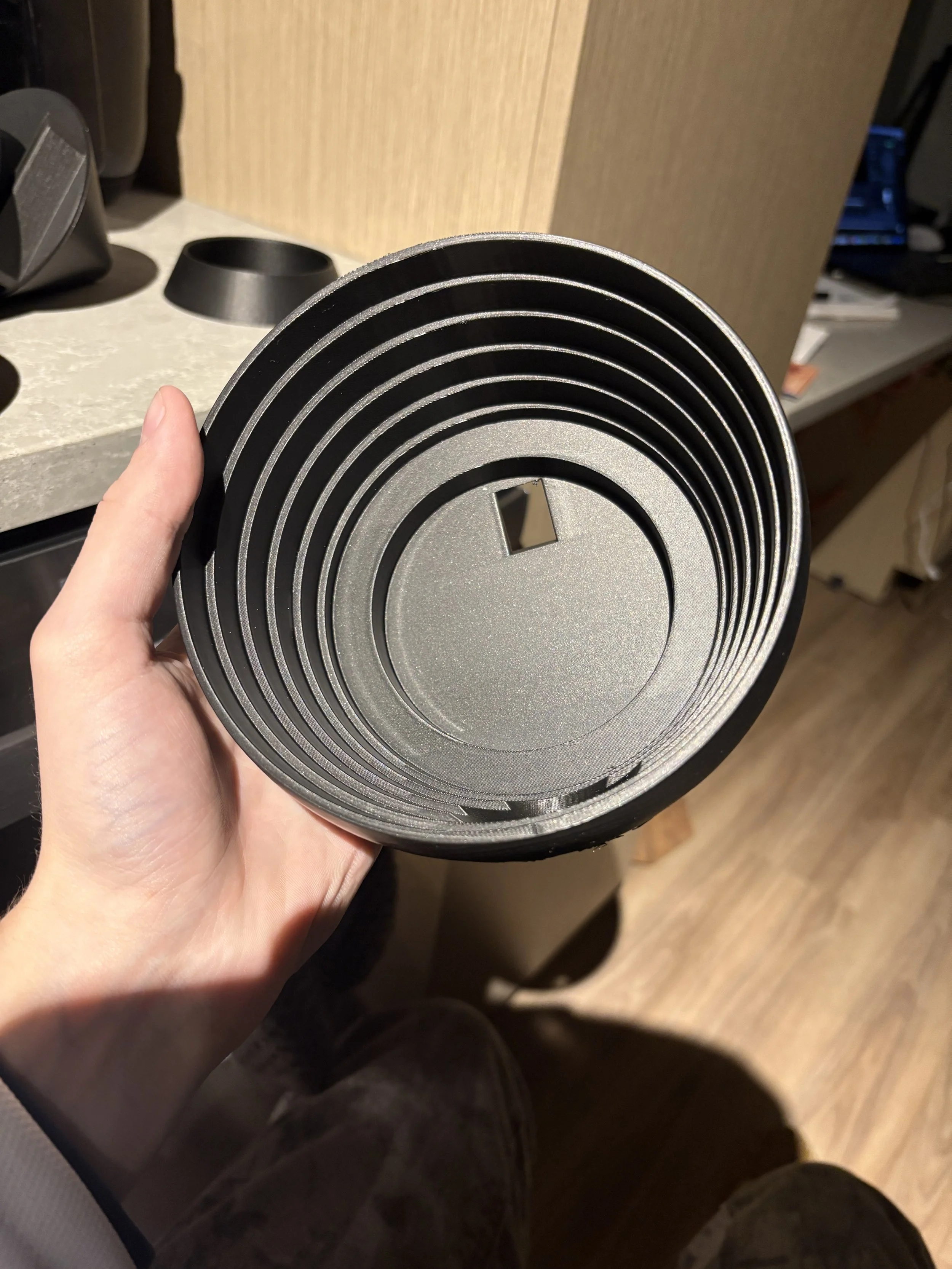
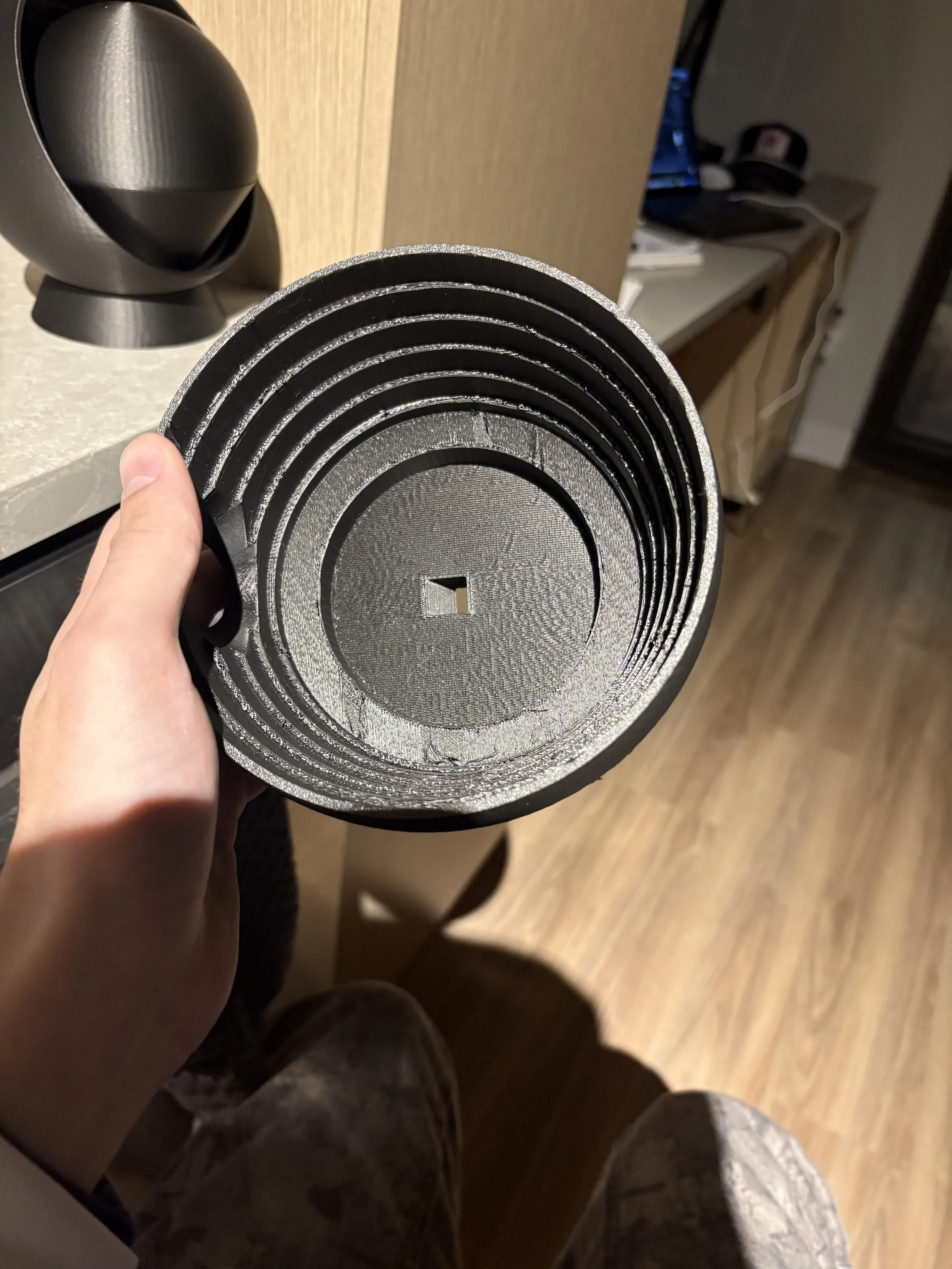
I finally achieved the quality I strived for after a wave of prints, which was particularly seen on the surface of the concentric design.
Renders
Final Shots
Serenity Sphere
Credits & Disclosures
Photos used in the inspiration board are for reference purposes only and are not my original photography.
Photos used in both the Project Goals and Research Analysis slides are sourced from the Squarespace stock photo library and are not my original photography.
All in-context render scenes were entirely set up and rendered by me in Keyshot. ChatGPT was used as a supplemental tool to assist with render refinement, including lighting and shadow adjustments.