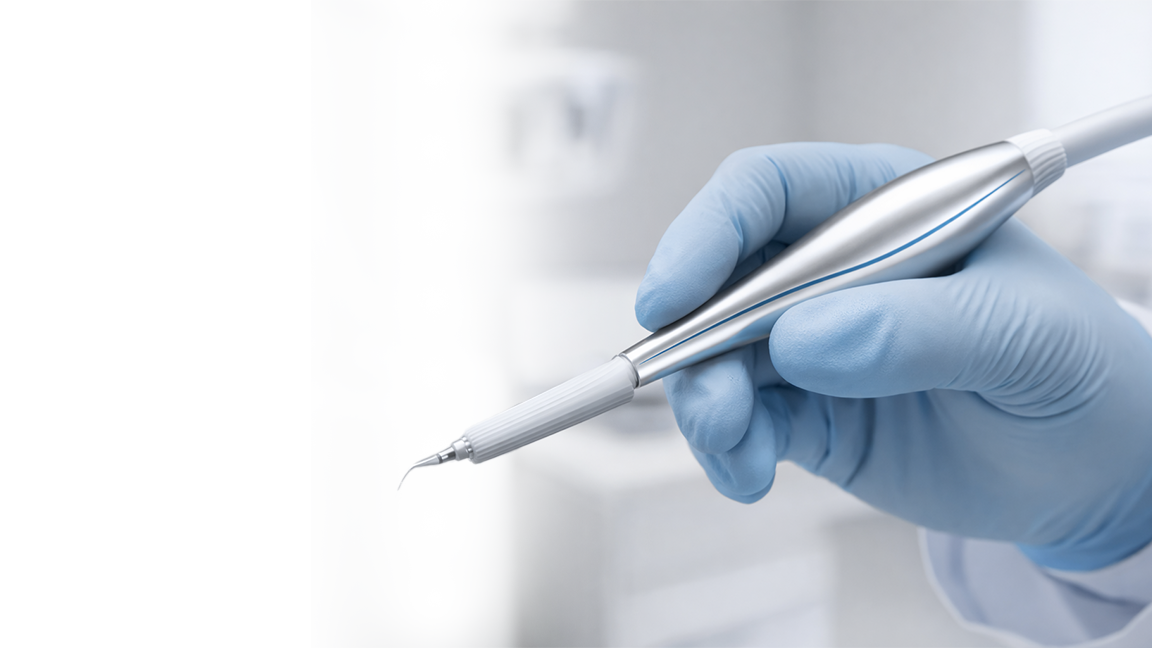
Cavitron AERO
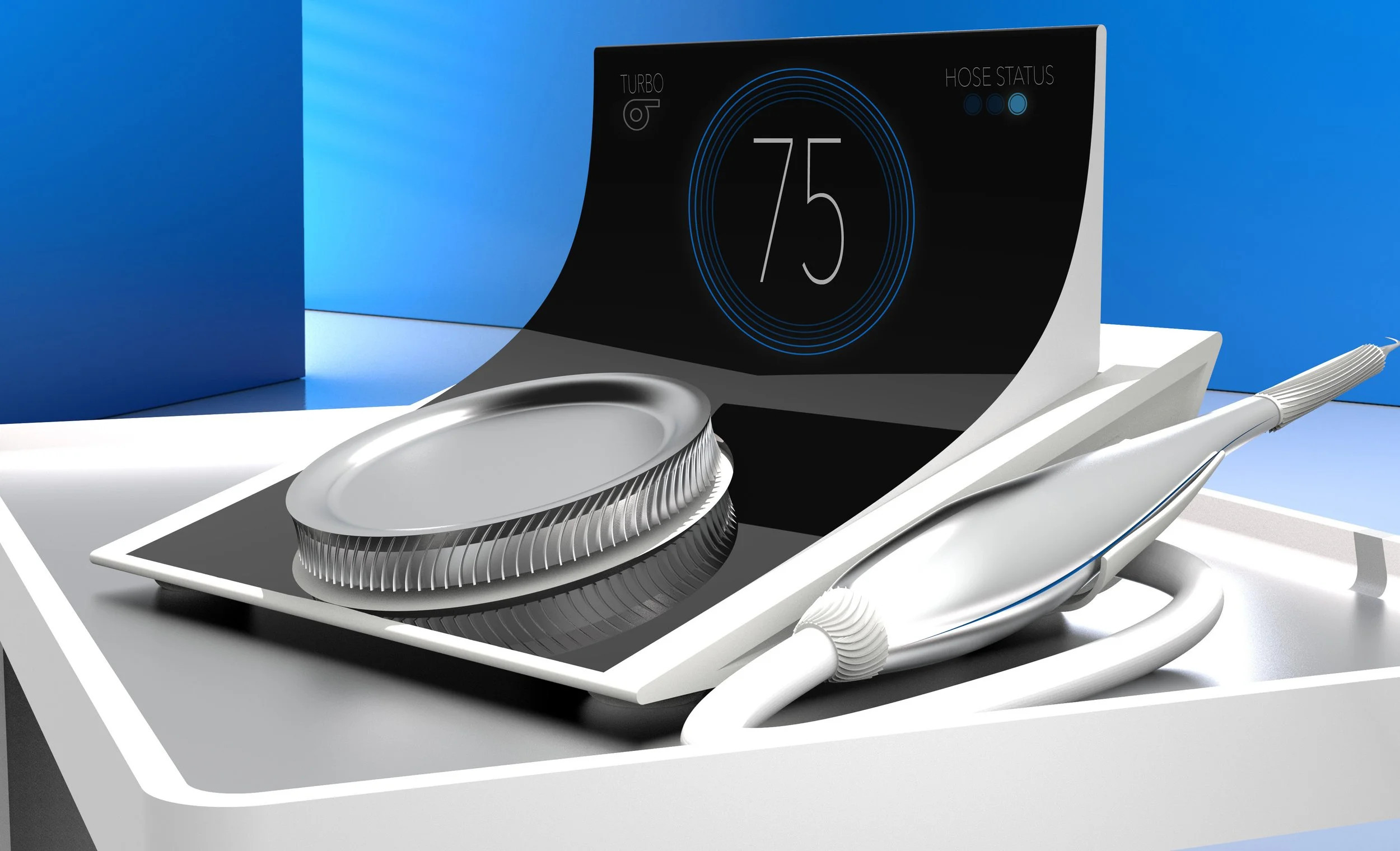
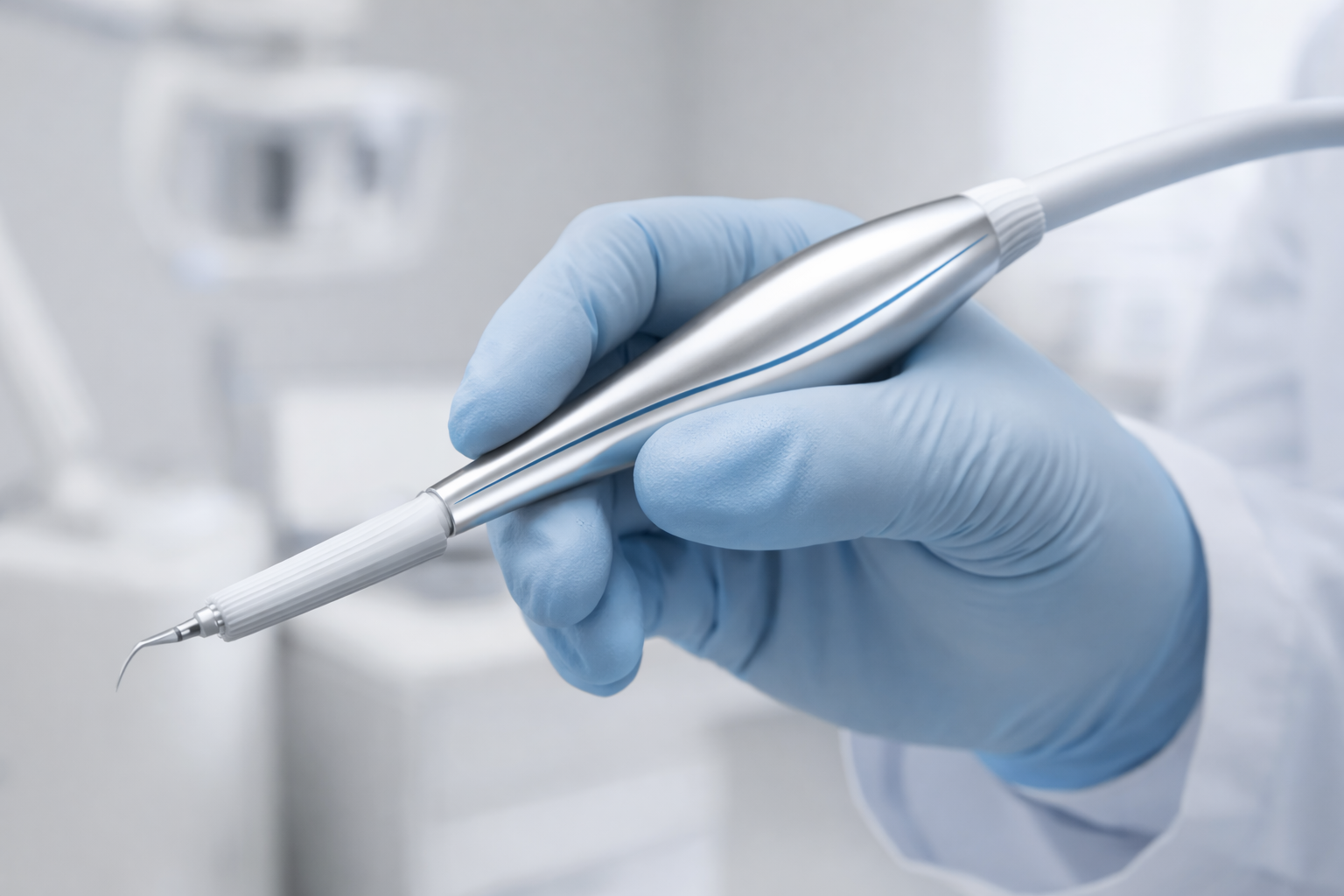
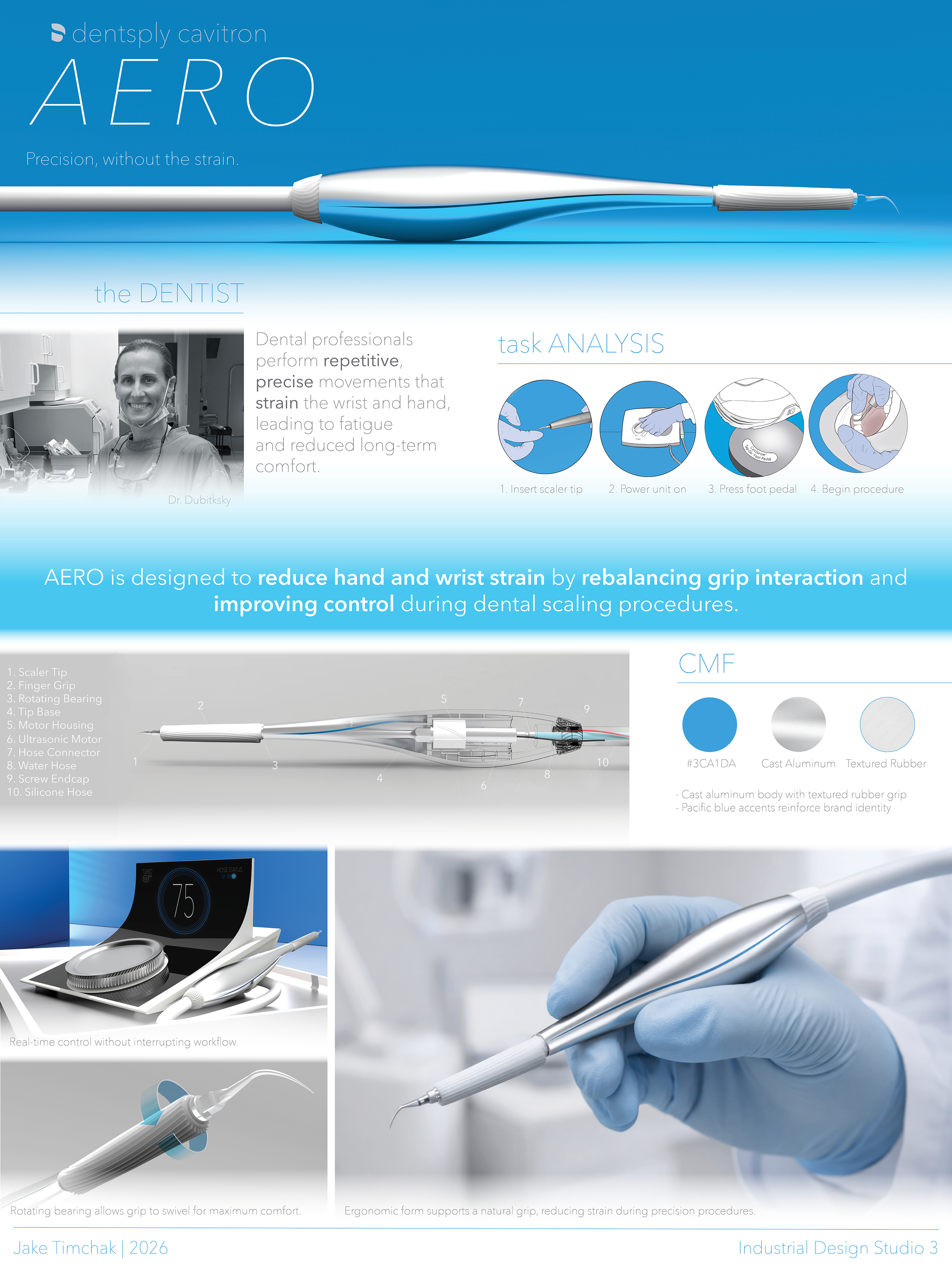
Cavitron AERO is an ultrasonic dental scaler designed to reduce hand and wrist strain by rebalancing grip interaction and improving control during dental scaling procedures.
Duration - 12 Weeks
Skills Used - Research & Market Analysis, Gestural Ideation Sketching, CAD, Photoshop Concept Rendering, Keyshot
The Professional
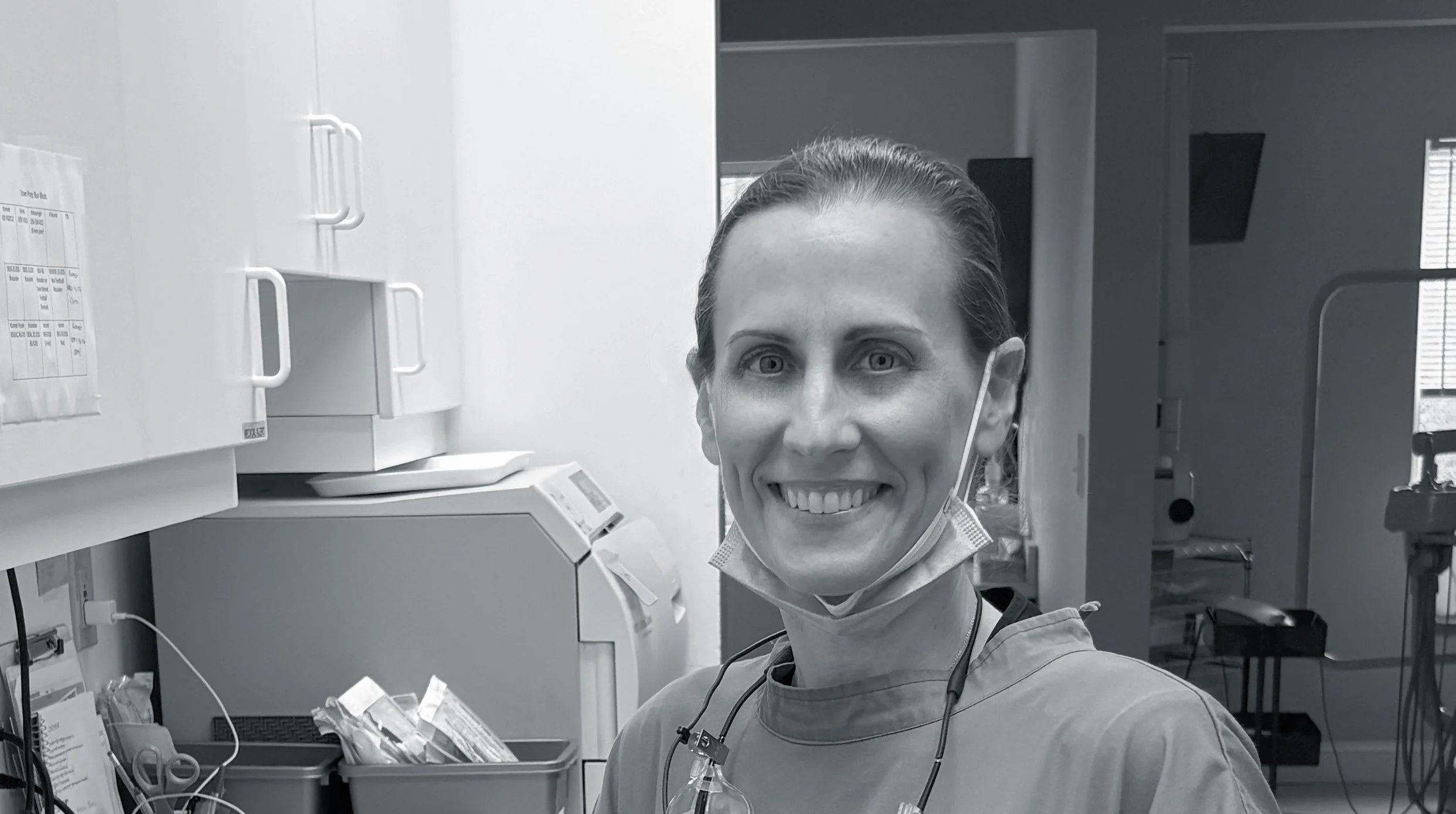
Dr. Heather Dubitsky holds a neuroscience degree from the University of Fairfield and a dental degree from the University of Medicine and Dentistry of New Jersey. She has owned her own dental practice for 2 decades.
Everyday, she is tasked with performing precise, repetitive movements that strain the wrist and hand, leading to fatigue and reduced long-term comfort.
Tool Analysis
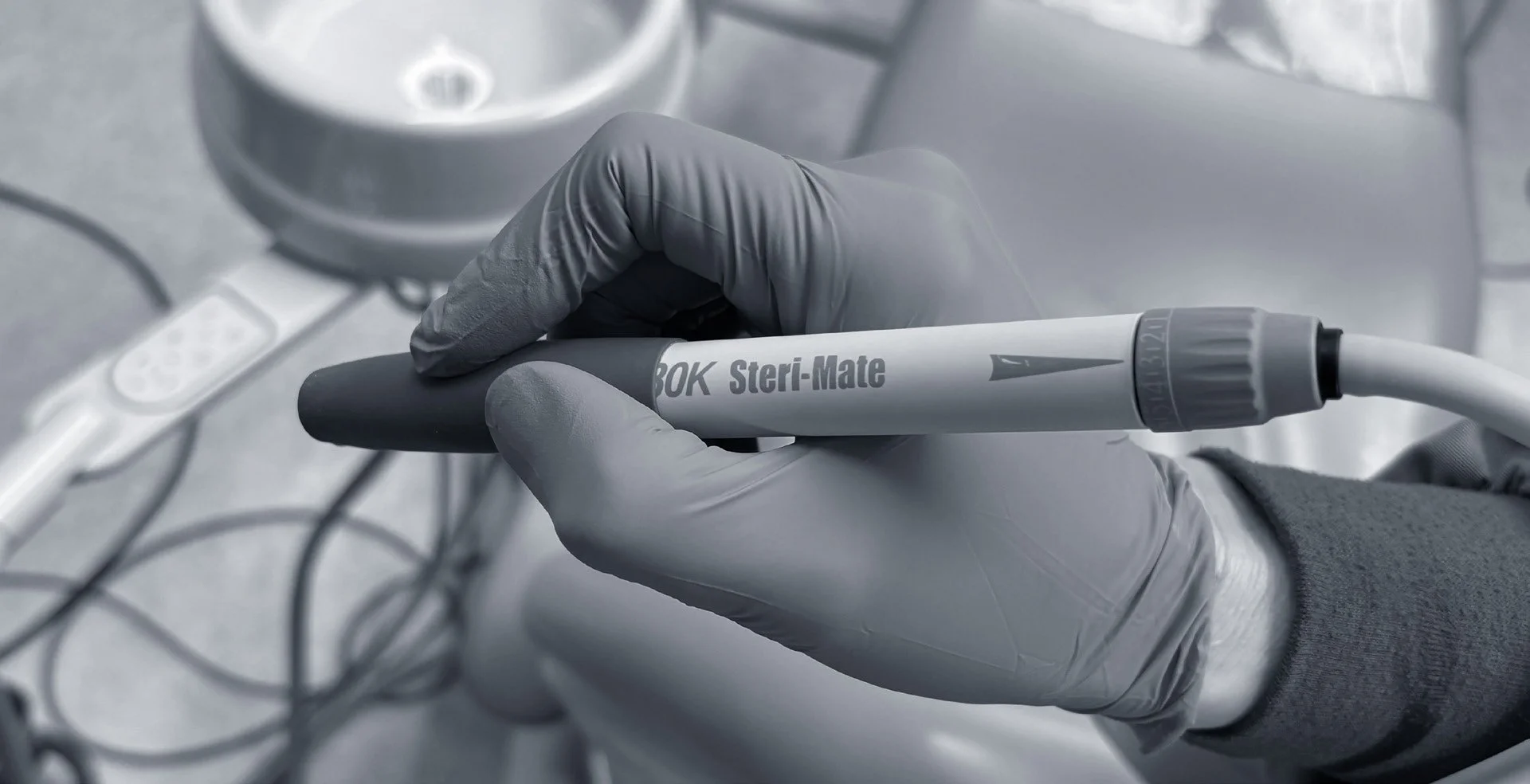
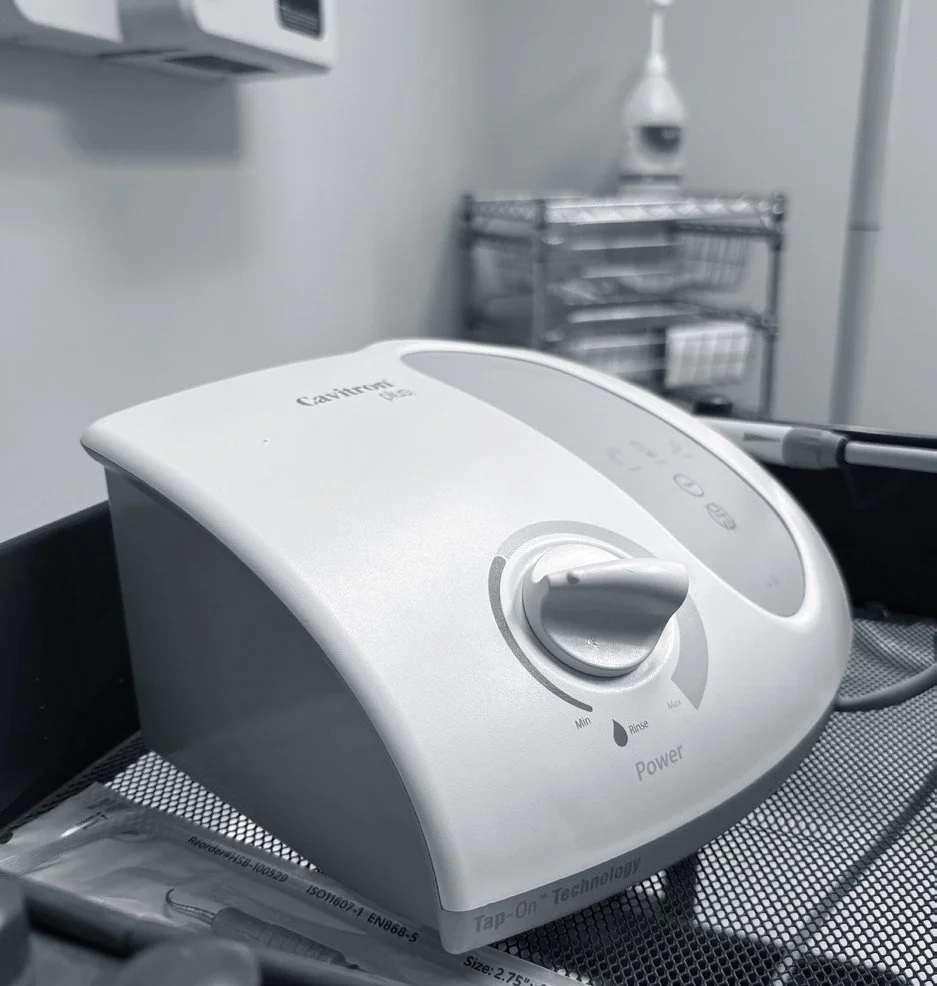
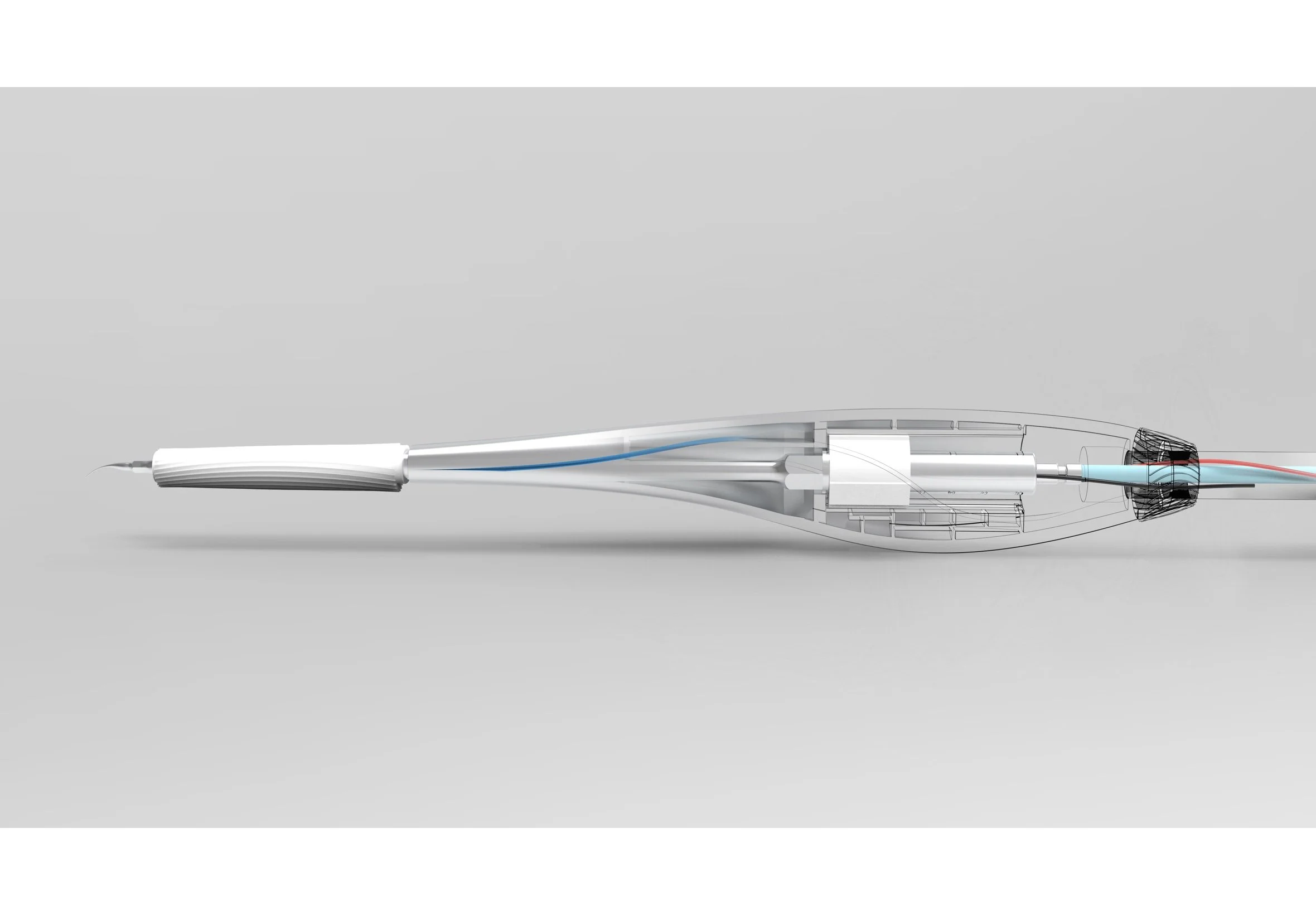
The ultrasonic scaler is an everyday tool used by all dentists and hygienists. This tool can be powered by air or electricity and vibrates at a high frequency, removing plaque around the mouth.
Using the tool requires active cooling around the ultrasonic tip to prevent it from heating up too much. This cooling is done by water irrigation which is built into the tool.
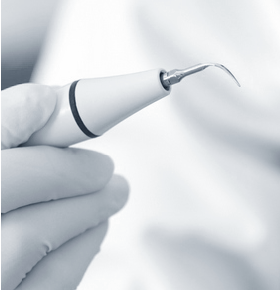
Task Analysis
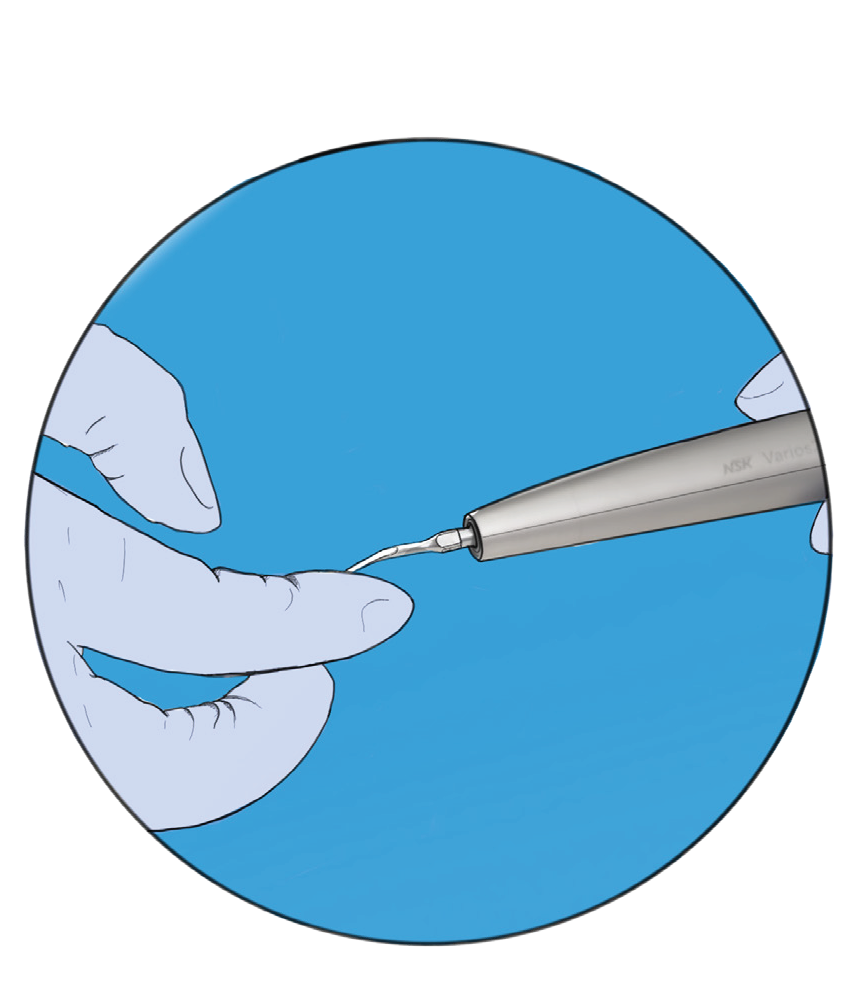
1. Insert scaler tip
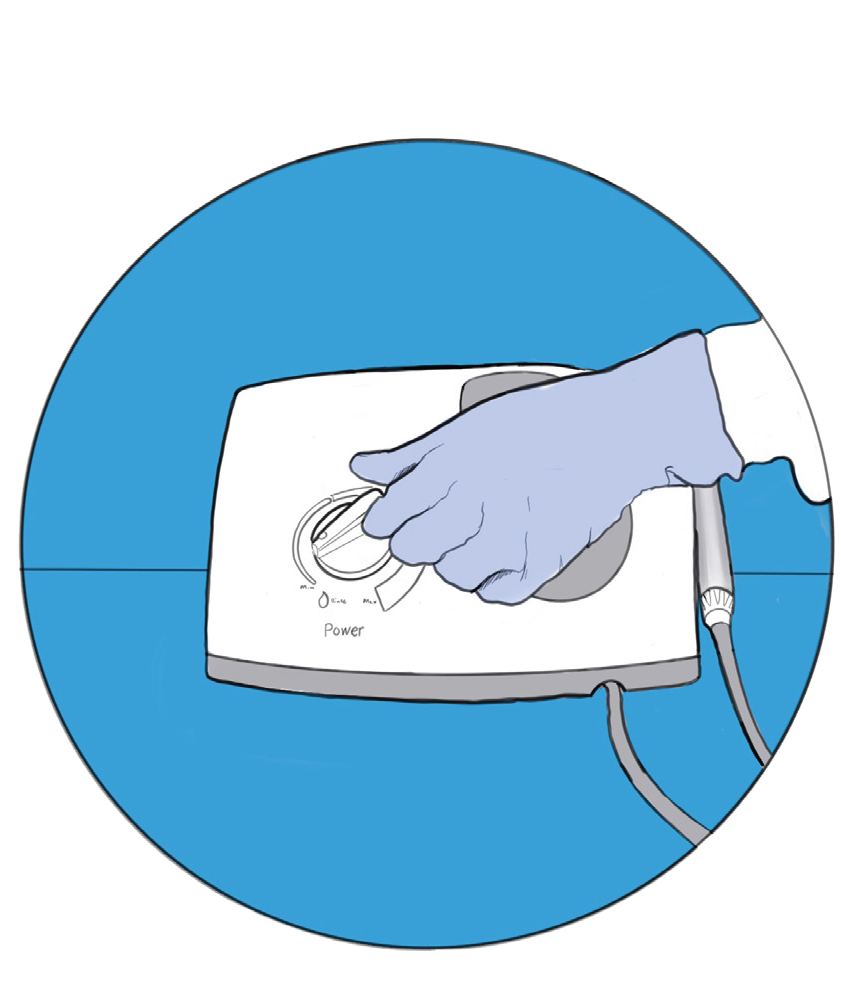
2. Power unit on
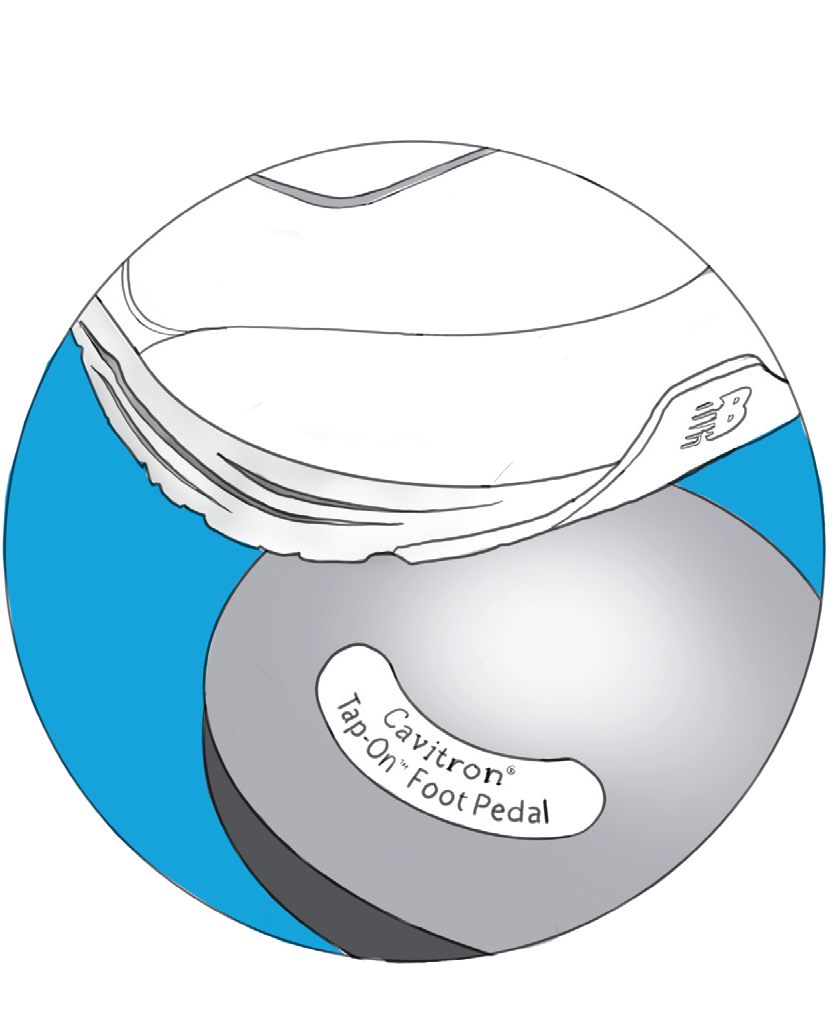
3. Press Foot Pedal
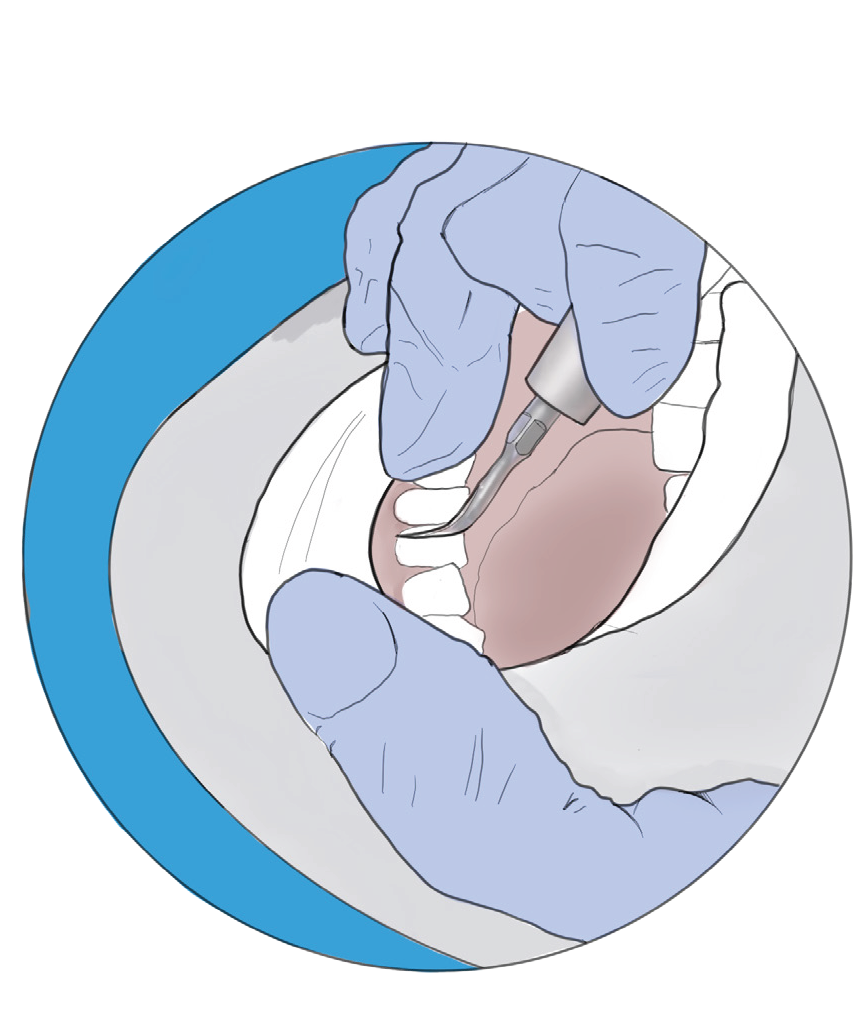
4. Begin Procedure
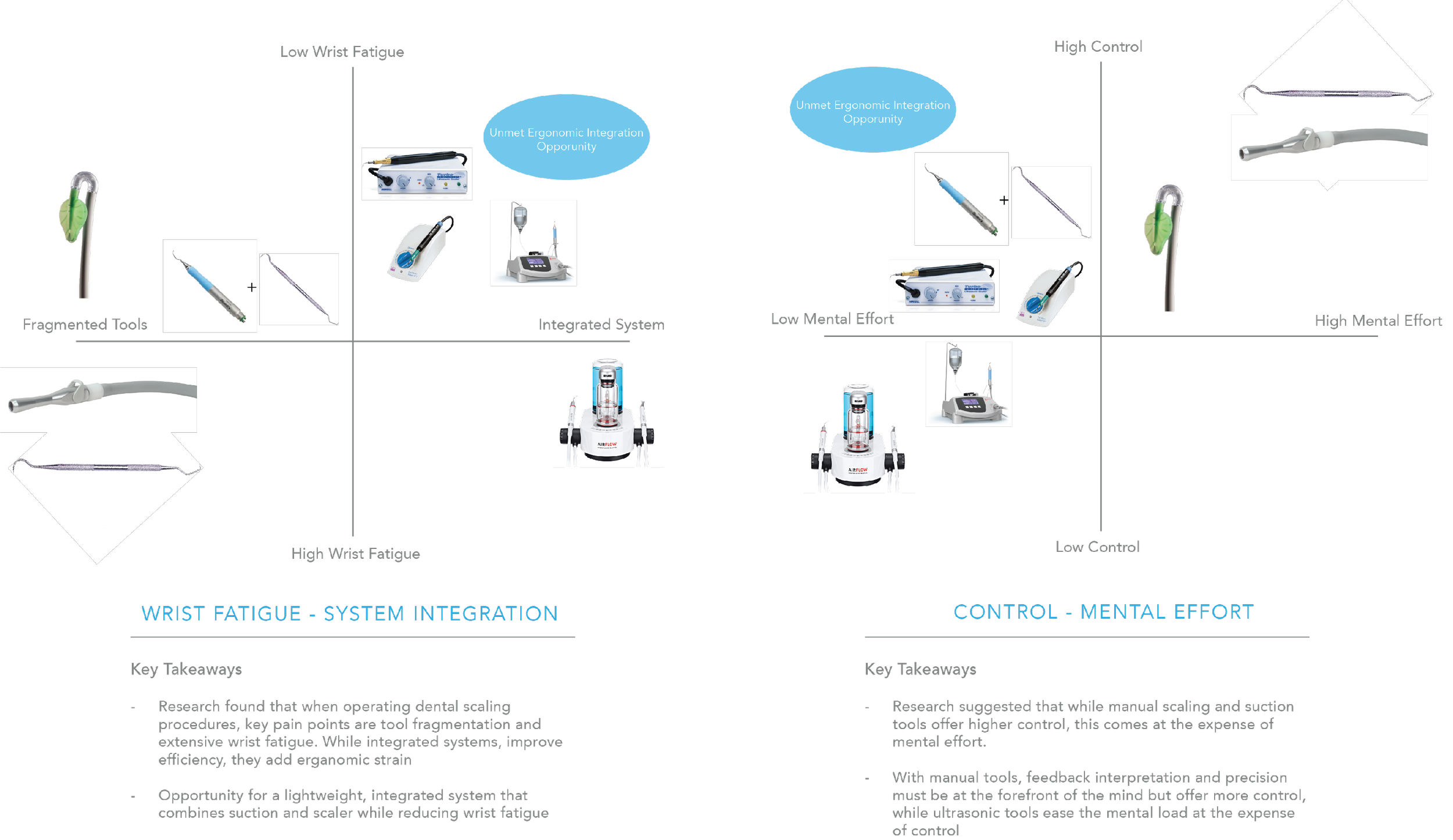
Market Placement
Design Opportunity
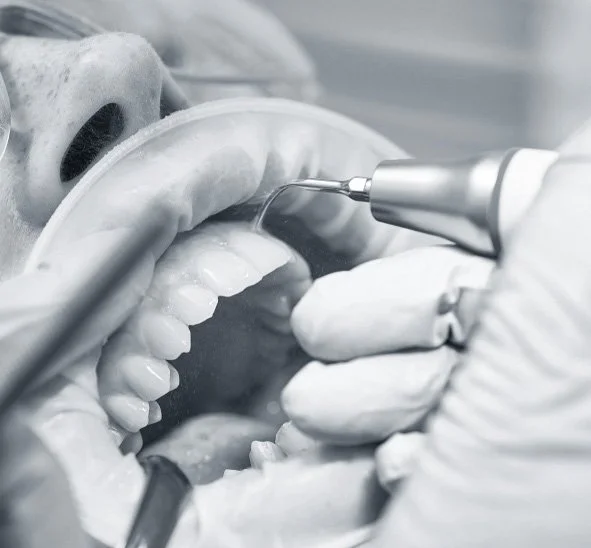
The redesigned ultrasonic scaler should aim to reduce hand and wrist strain by rebalancing grip interaction and improving control during dental scaling procedures.
Inspiration
Initial Ideation
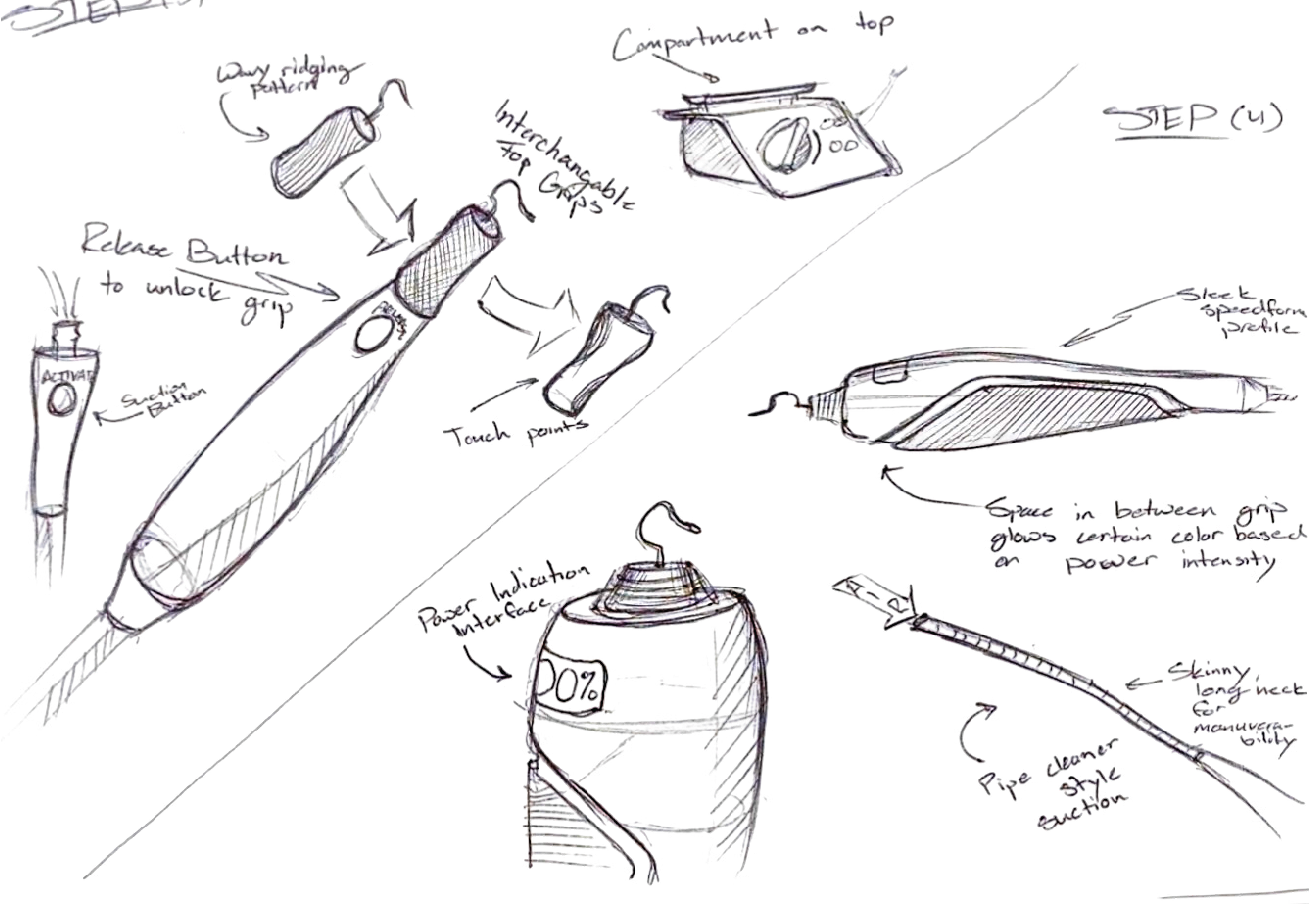
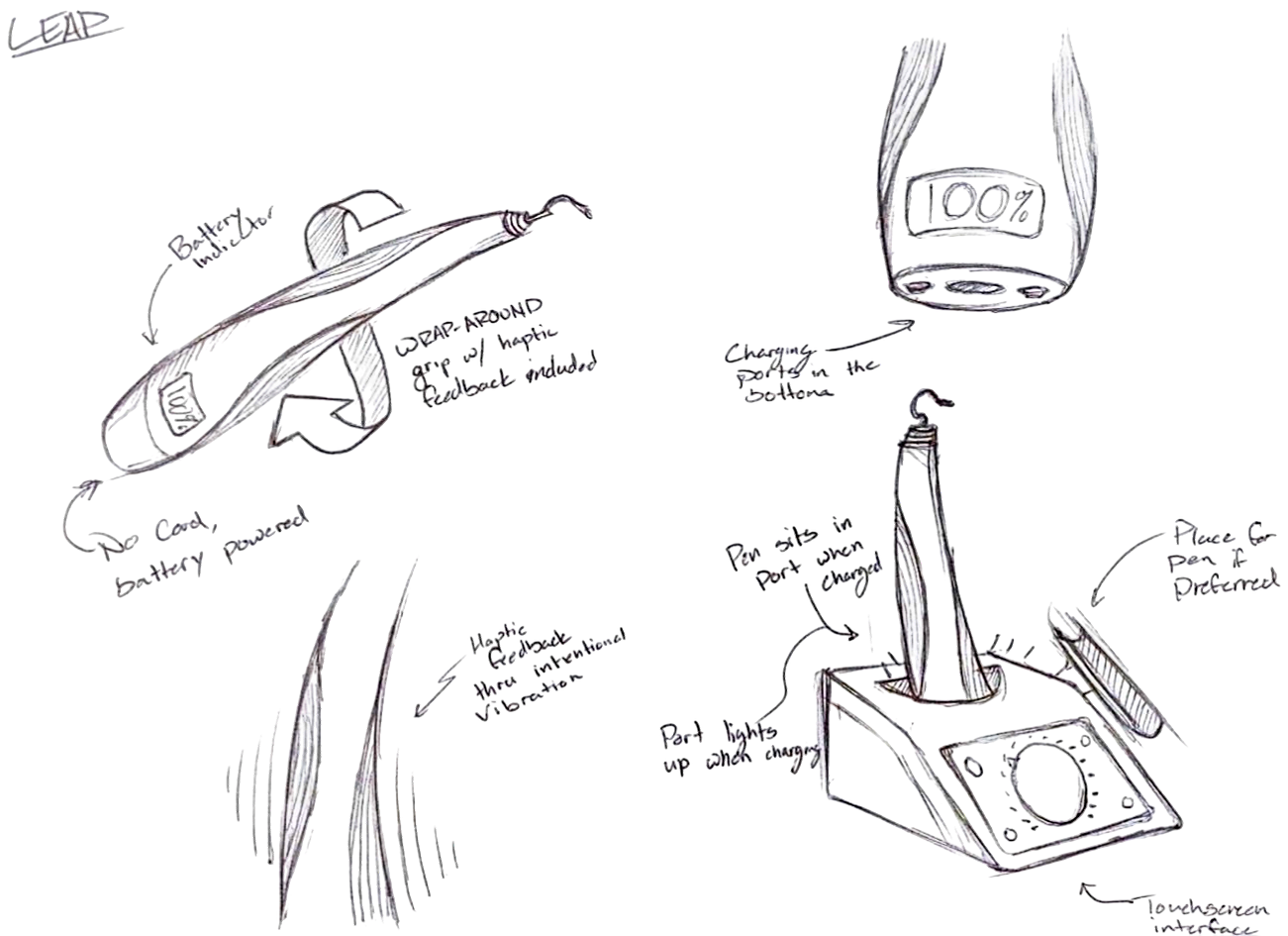
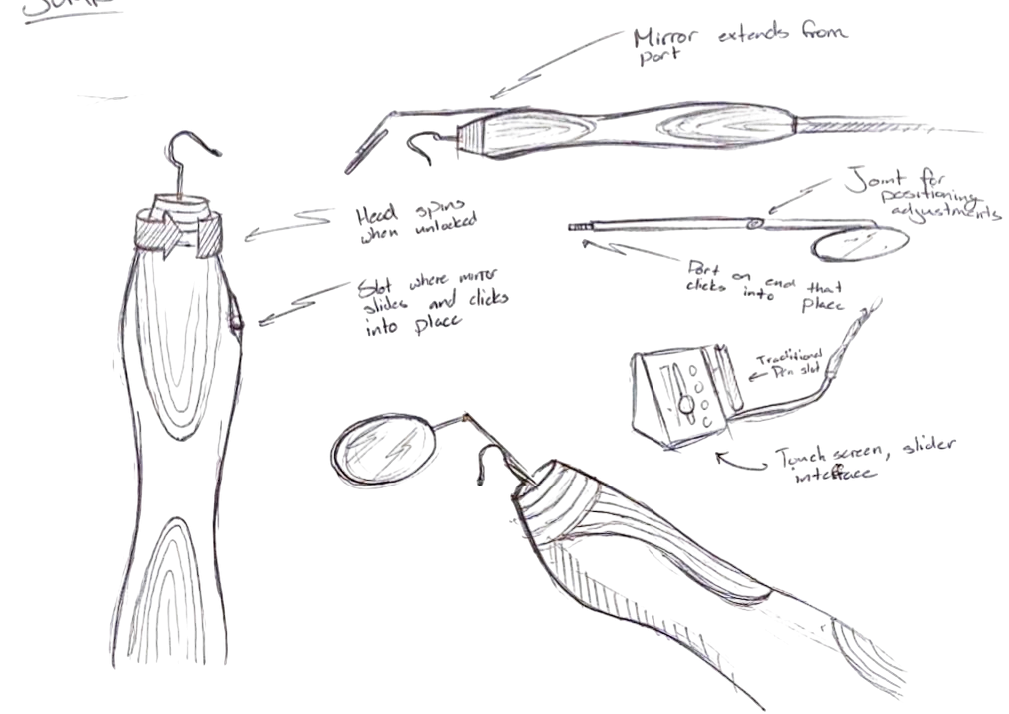
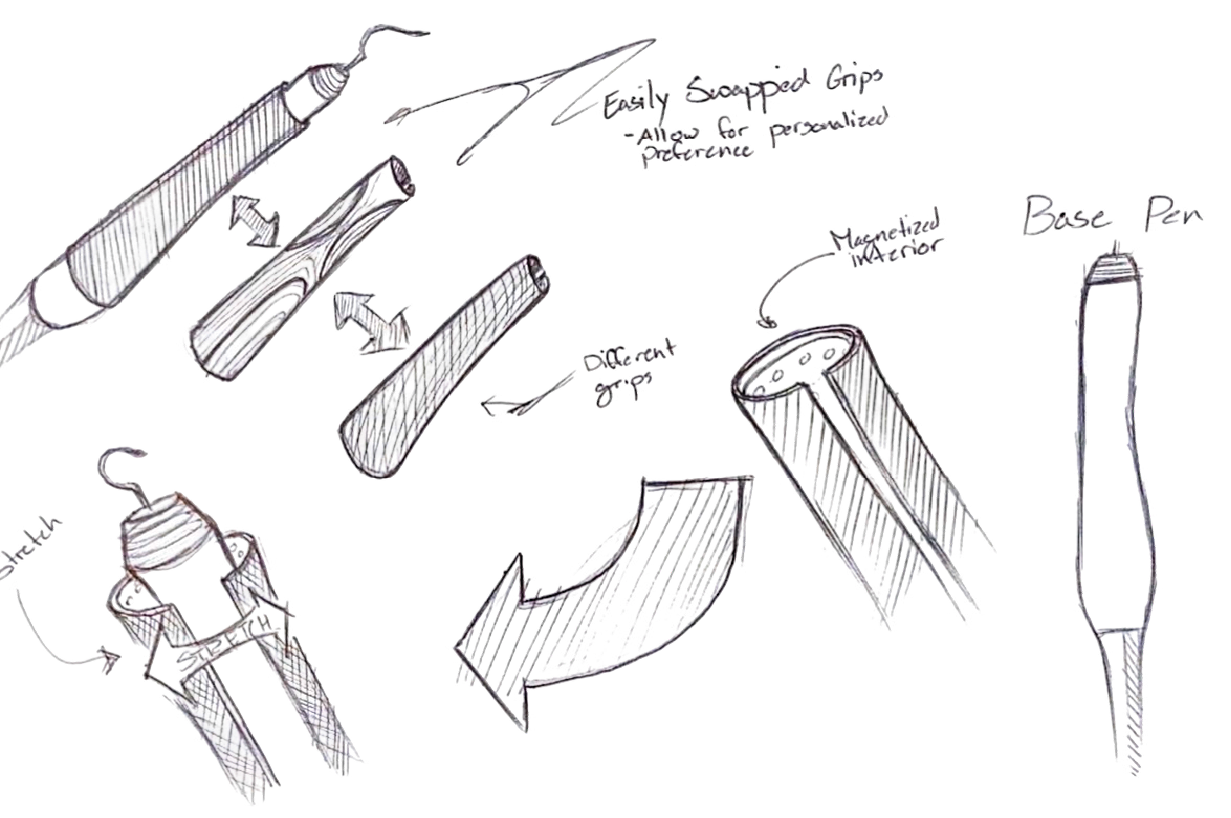
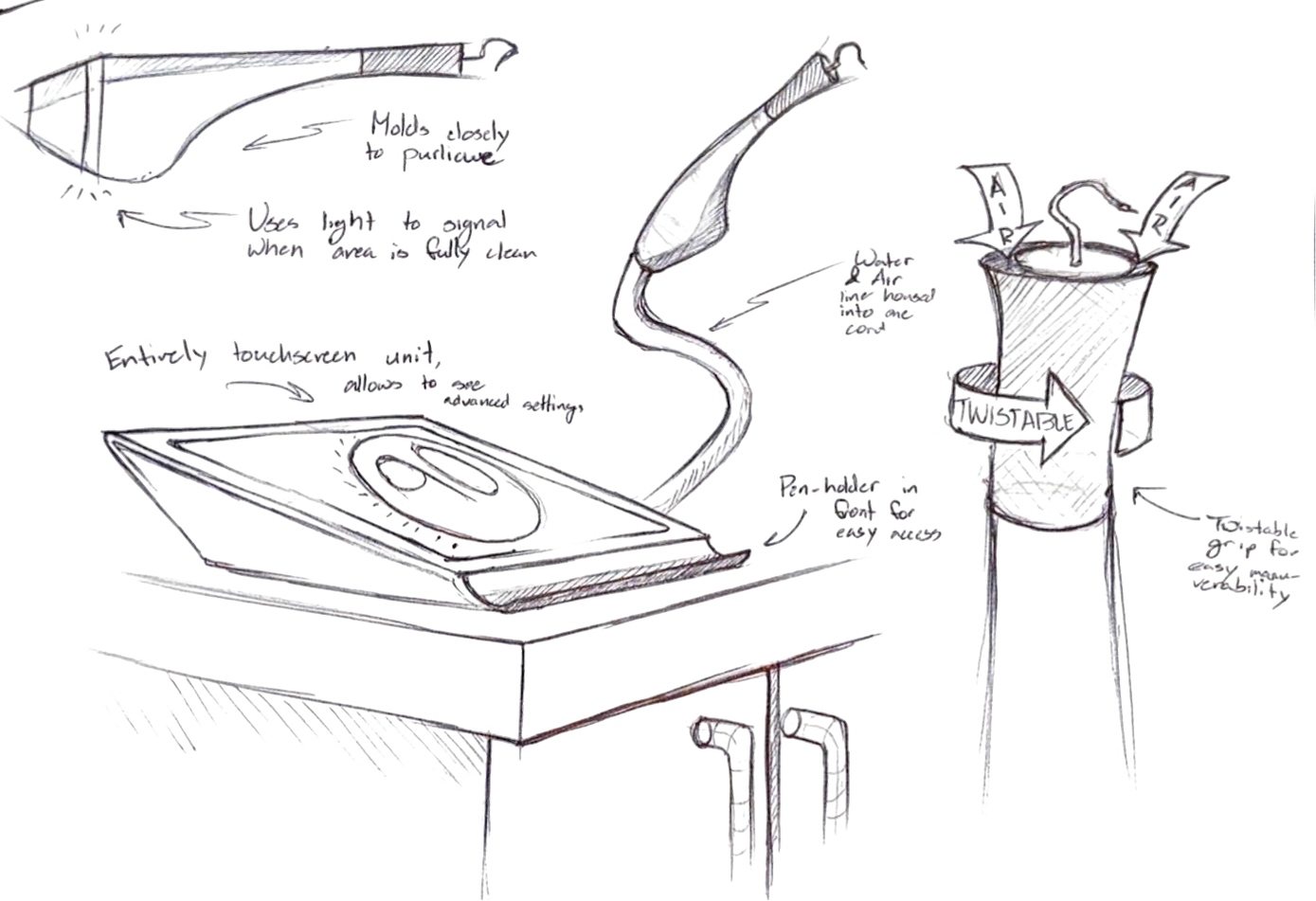
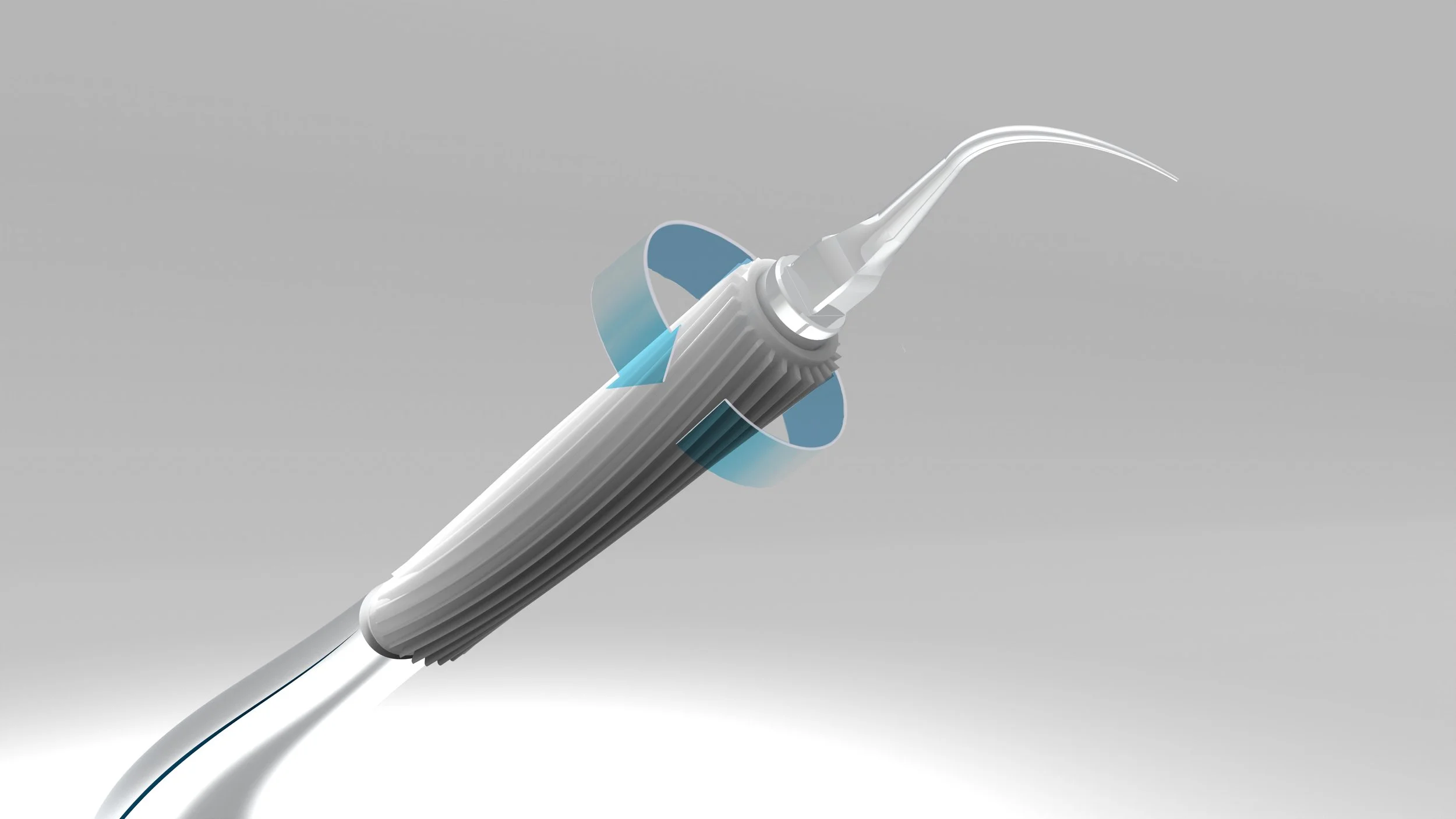
Initial ideation included exploring ways to include modularity and comfort elements into the Cavitron hand piece. Rotating and swappable grips, incorporated suctions, and ergonomic-centric forms were all considered.
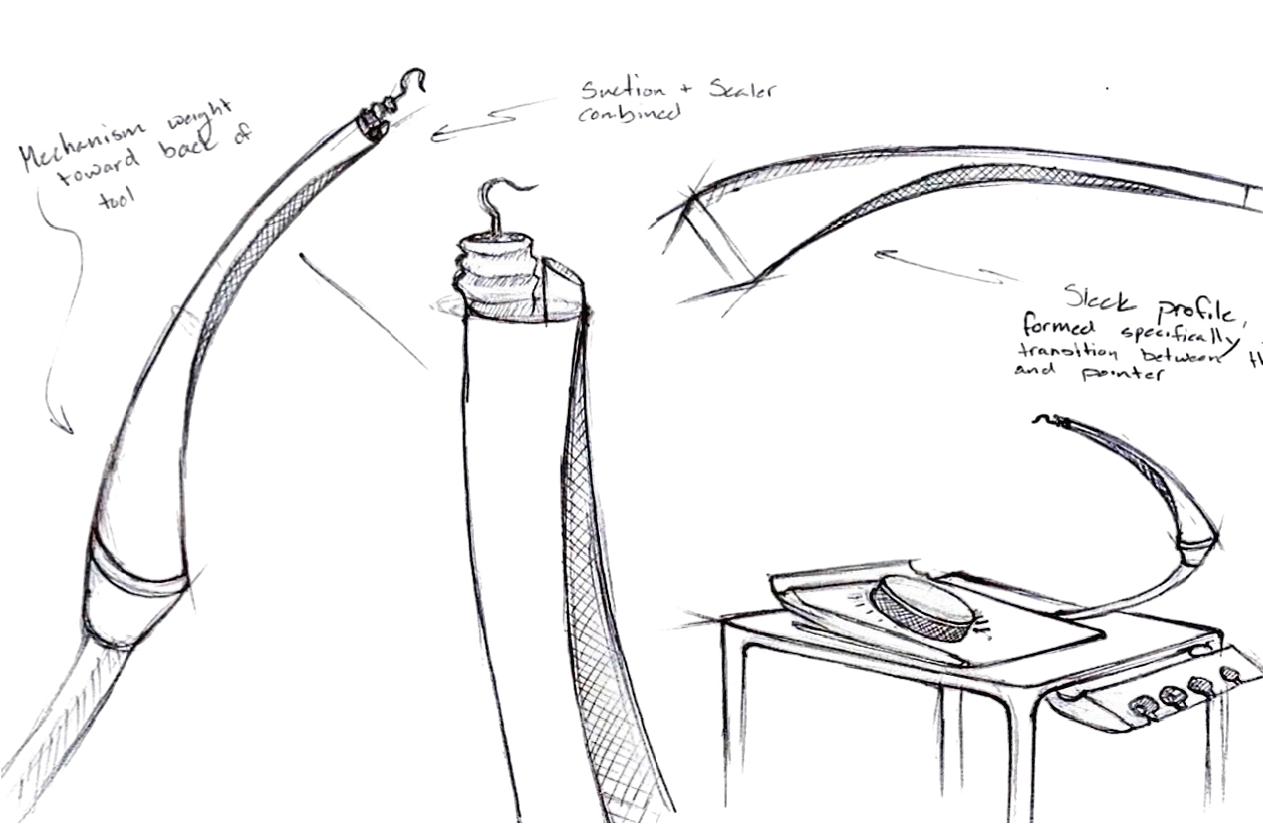
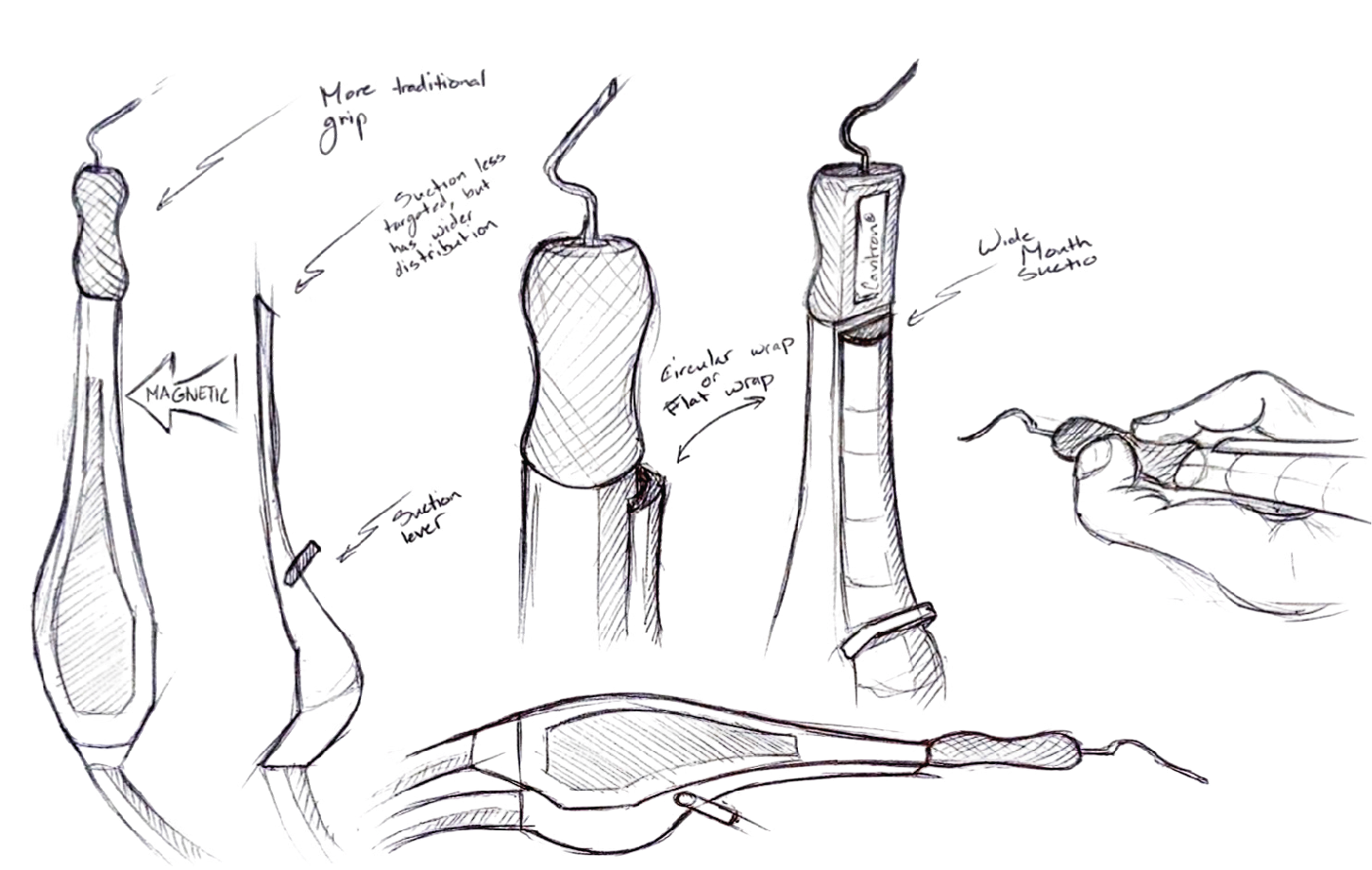
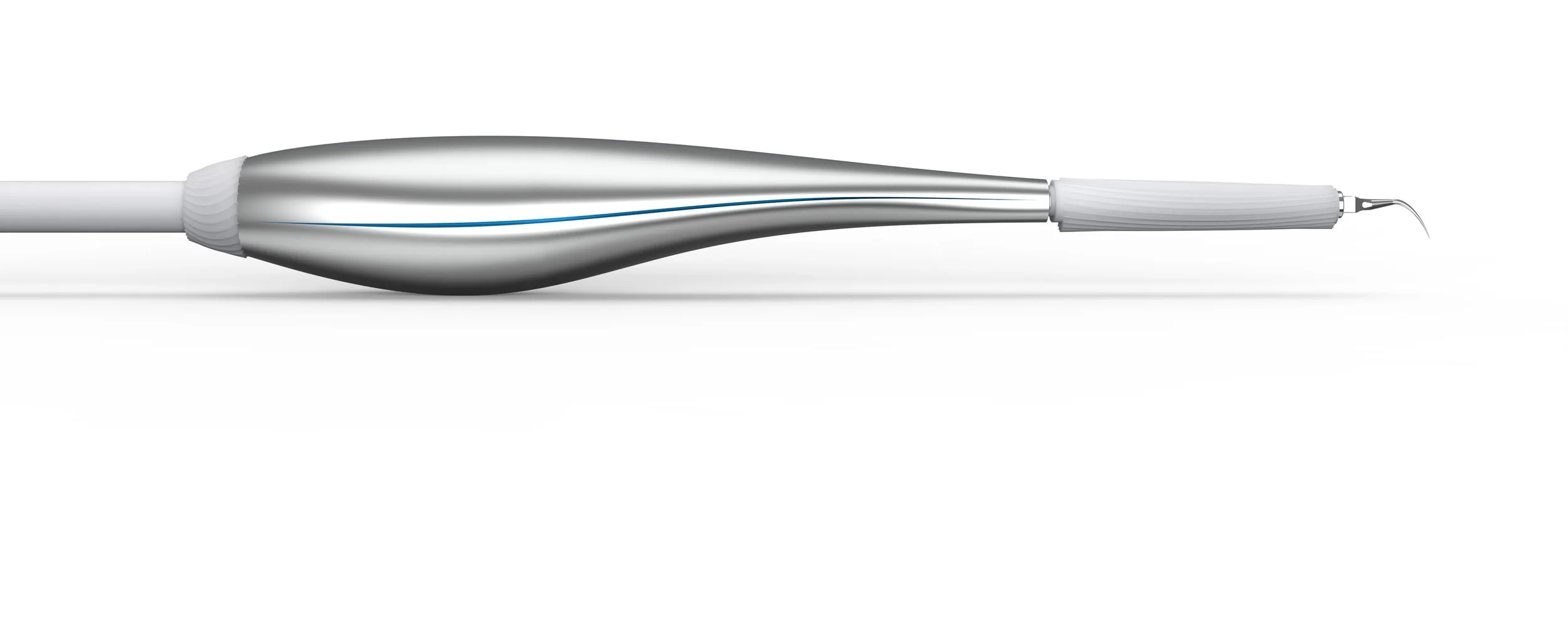
The main chosen direction features a sleek design with a subtle arched top line and a prominently sloped underside that fits seamlessly around the web-space between the thumb and pointer finger.
Prototyping and Modeling
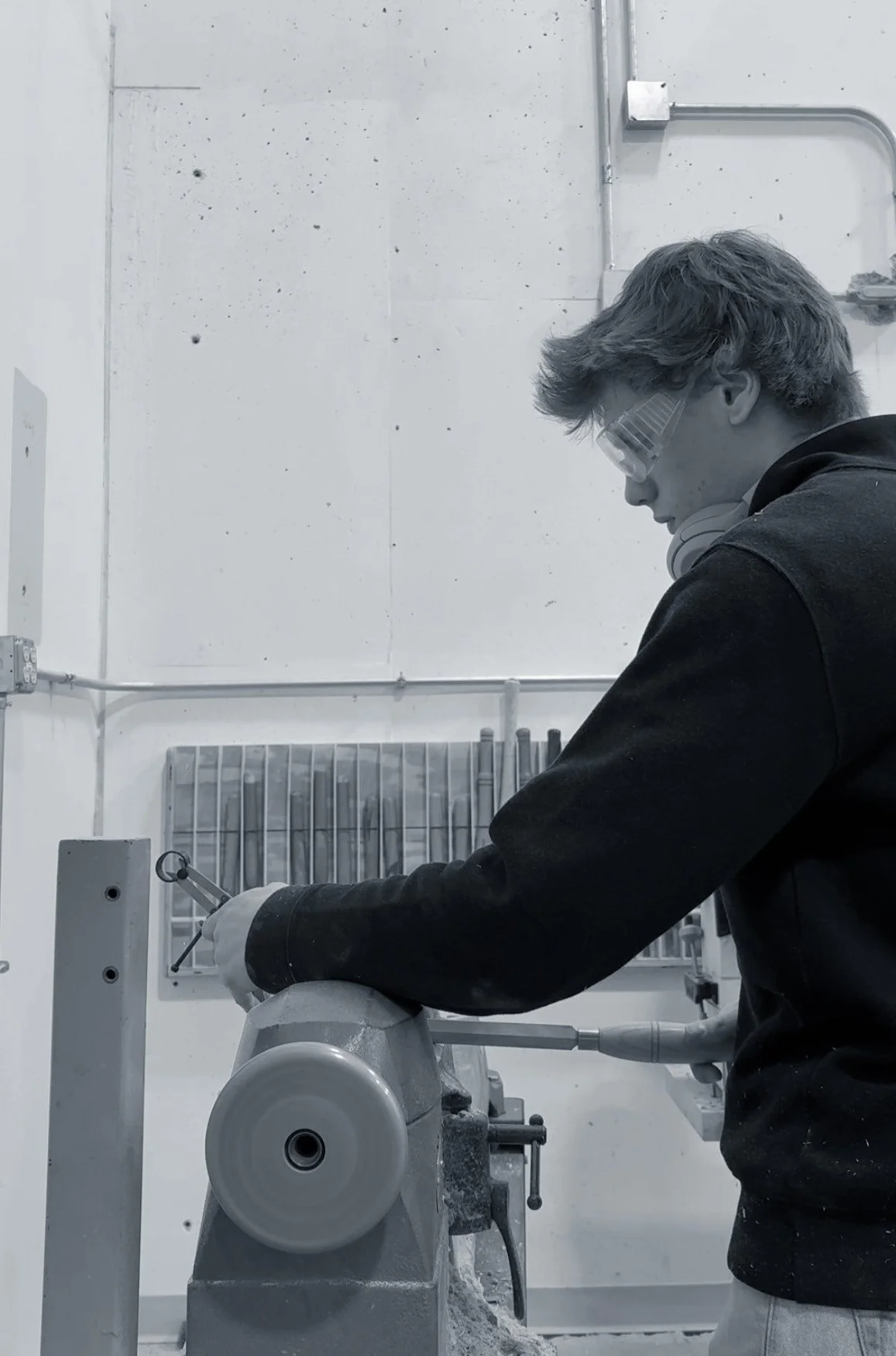
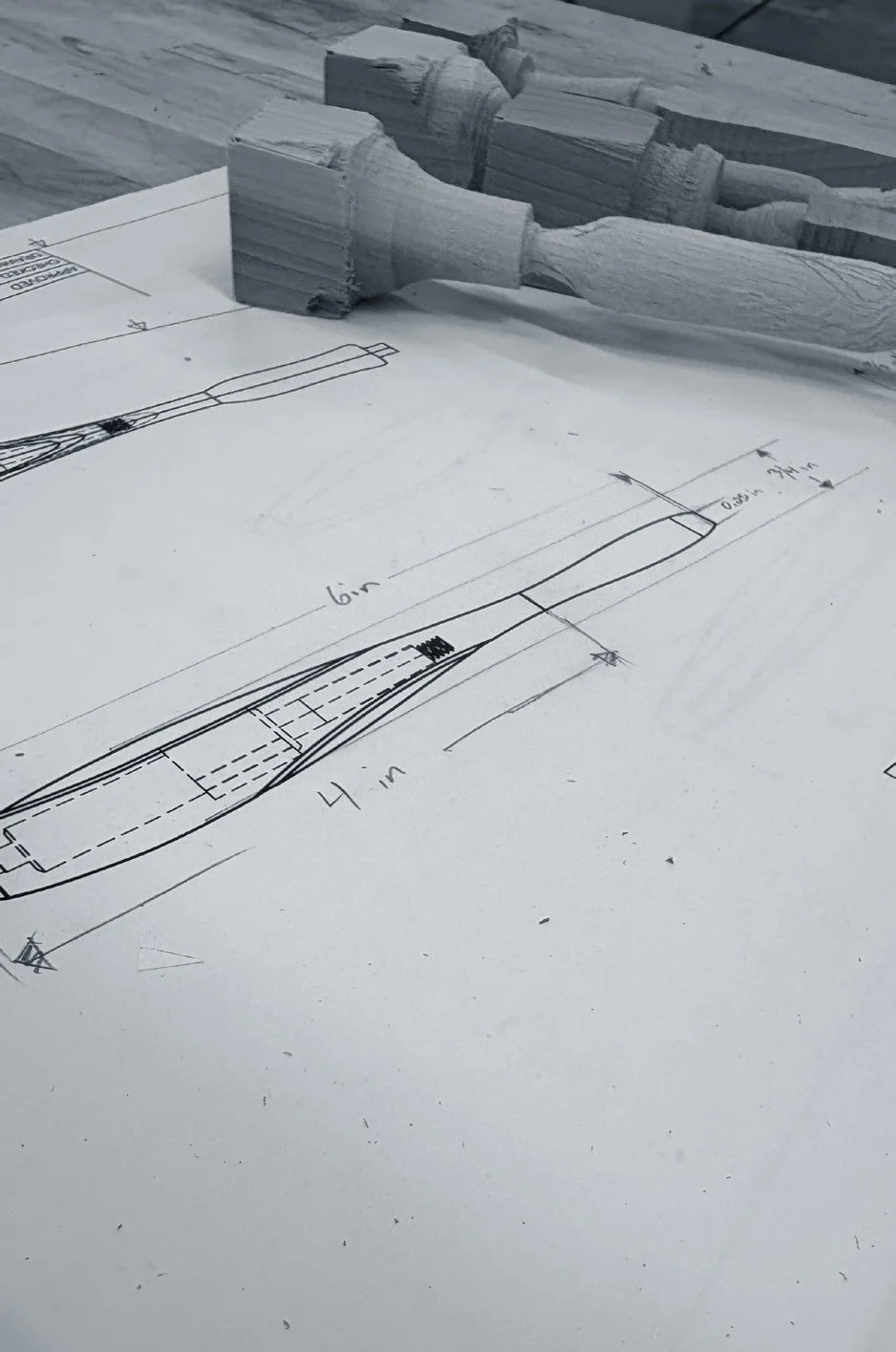
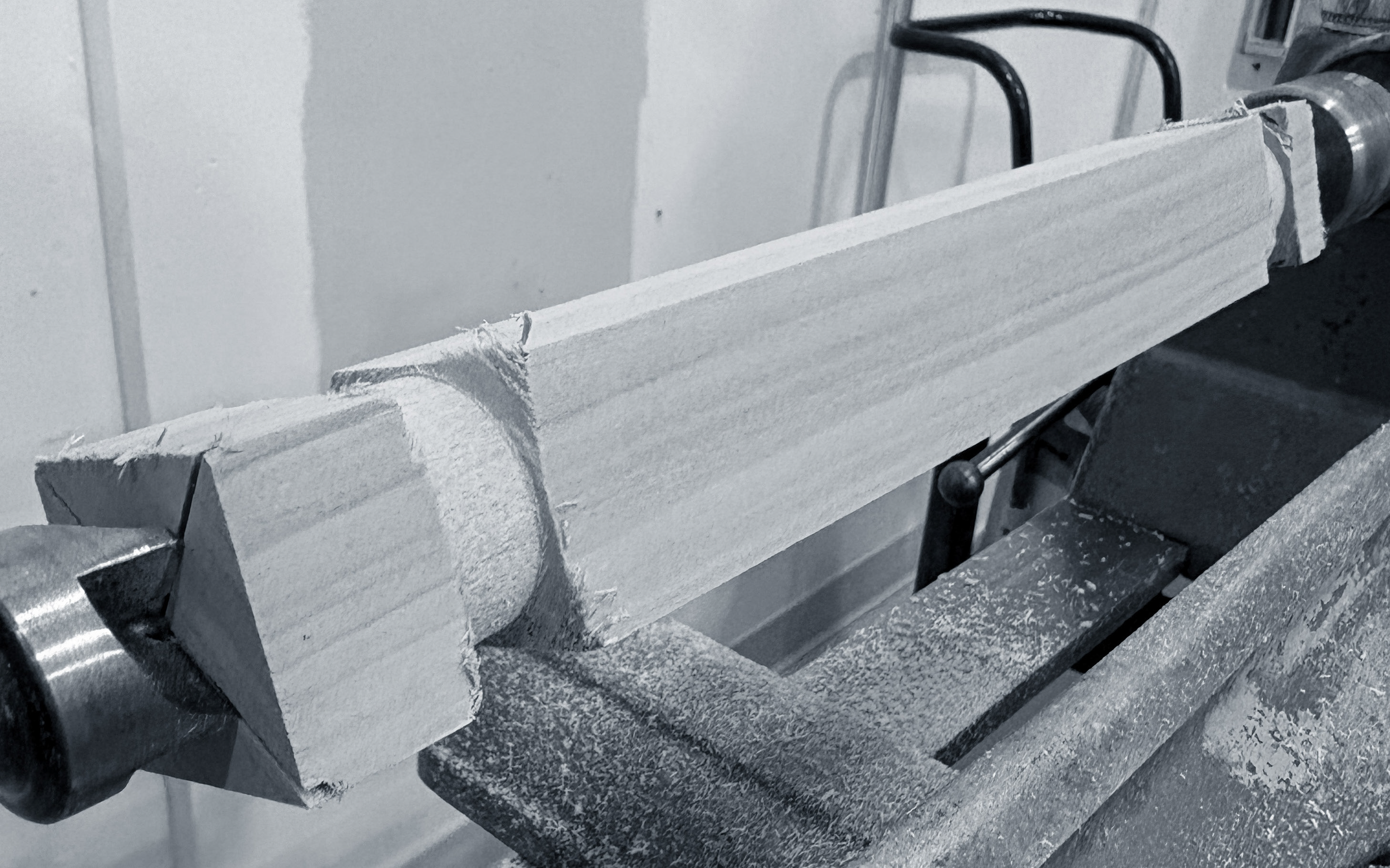
After establishing a few core concept ideas, the next step was translating them into physical forms. Hours were spent on the lathe shaping concept models, followed by extensive sanding to refine the geometry and dial in the desired feel.
Ergonomics Testing
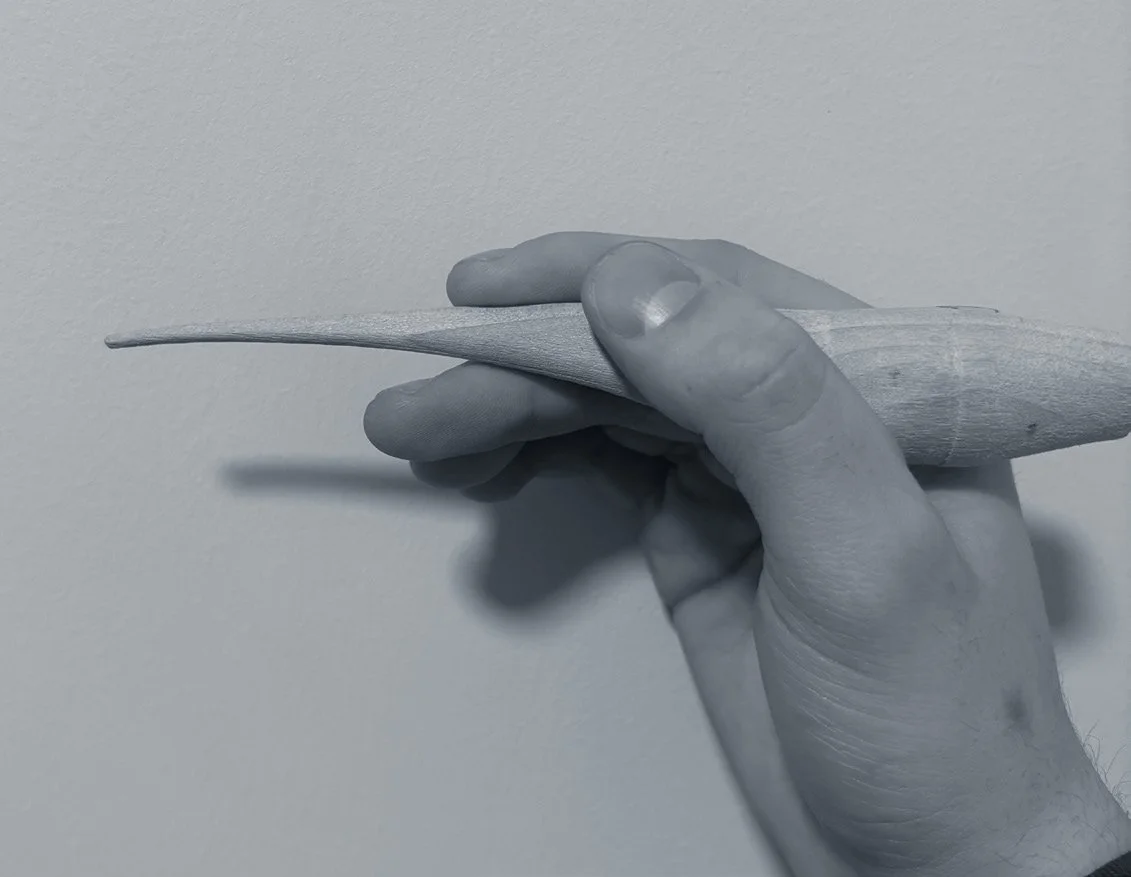
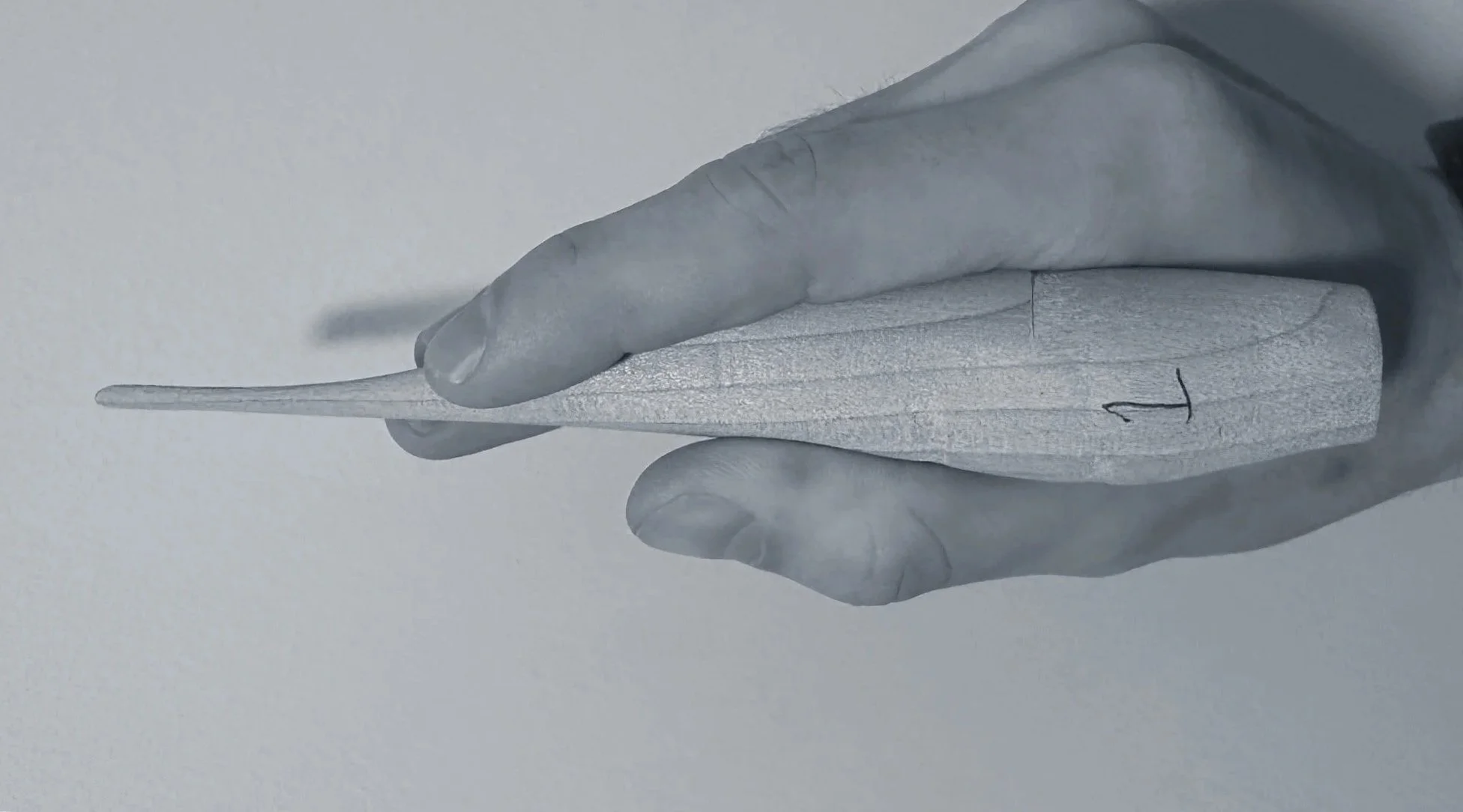
The most natural and complete feeling model in hand was selected, defining the surface and form for further refinement in CAD.
This particular design initially raised concerns about proportions and rearward weight distribution. However, shifting more weight onto the thumb wedge rather than the fingers proved more comfortable for prolonged use with less strain.
Final Direction
Graphics
Credits & Disclosures
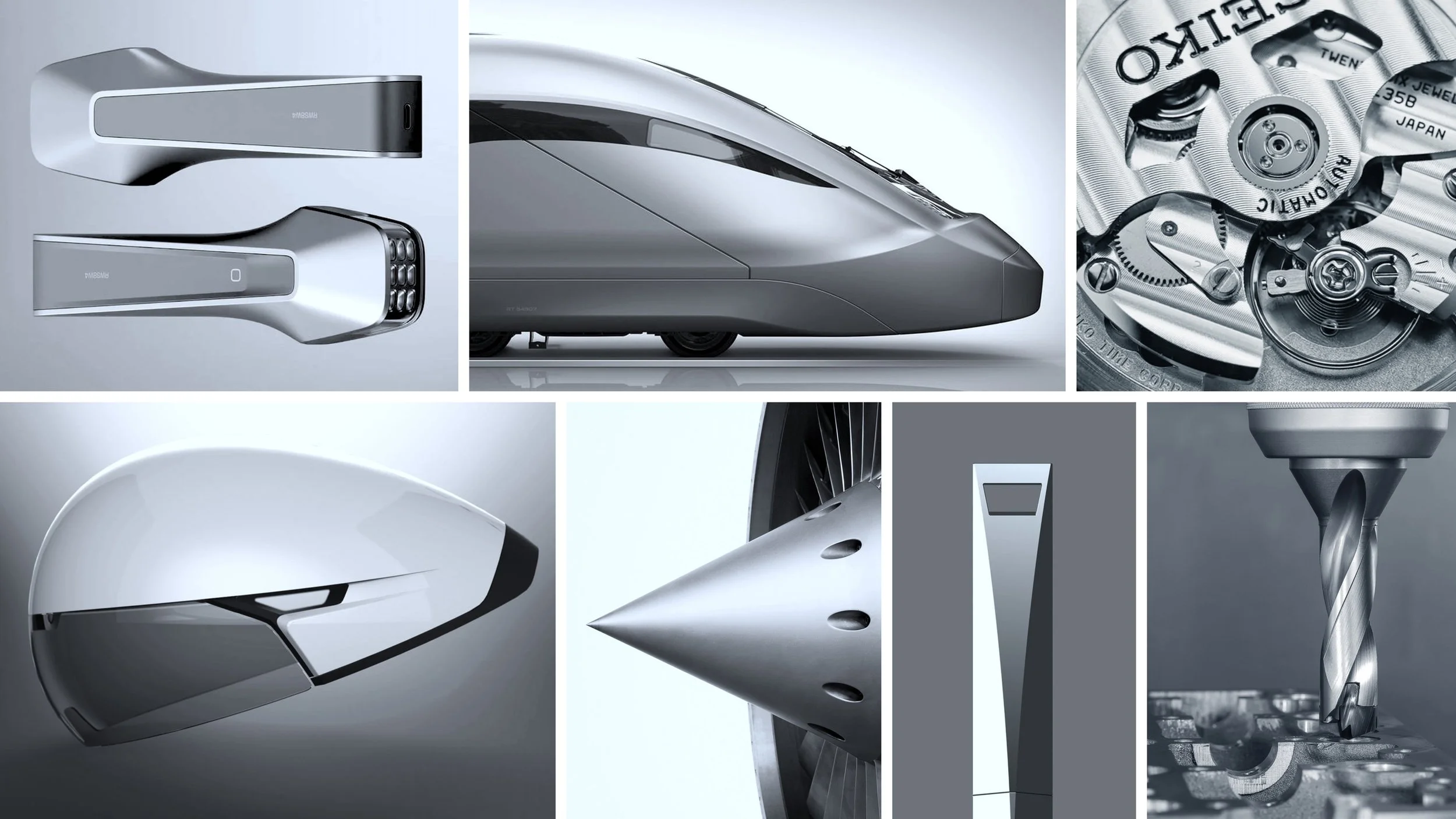
Photos used in the inspiration board are for reference purposes only and are not my original photography.
All in-context render scenes were entirely set up and rendered by me in Keyshot. ChatGPT was used as a supplemental tool to assist with render refinement, including lighting and shadow adjustments.